
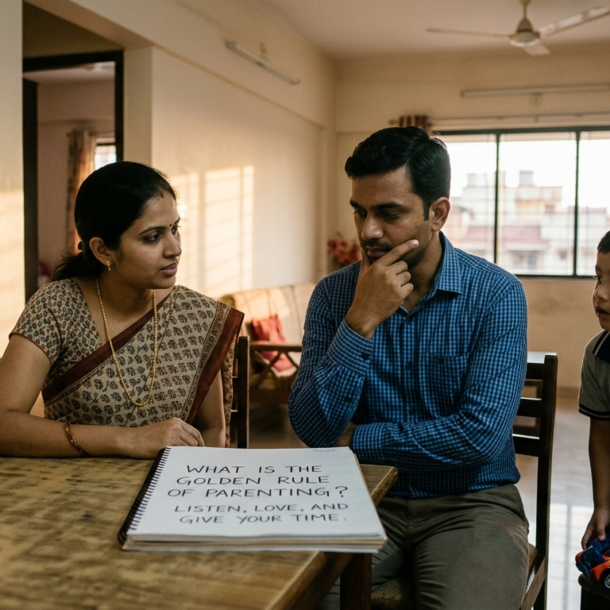

Every parent wants to see their child grow into a confident, happy, and successful individual. Yet one question often remains unanswered:
“Why does my child think so differently from other children?”
One child loves solving puzzles, another enjoys painting for hours. One remembers everything they hear, while another learns only by doing. Some children ask endless questions, while others quietly observe before speaking.
The truth is simple: every child has a unique thinking style.
As a DMIT Consultant, Parent & Career Coach, I’ve seen countless parents become less worried and more confident once they understand how their child naturally thinks, learns, and processes information. Instead of forcing children into one learning pattern, parents can guide them according to their natural strengths.
Let’s understand what really influences a child’s thinking style.
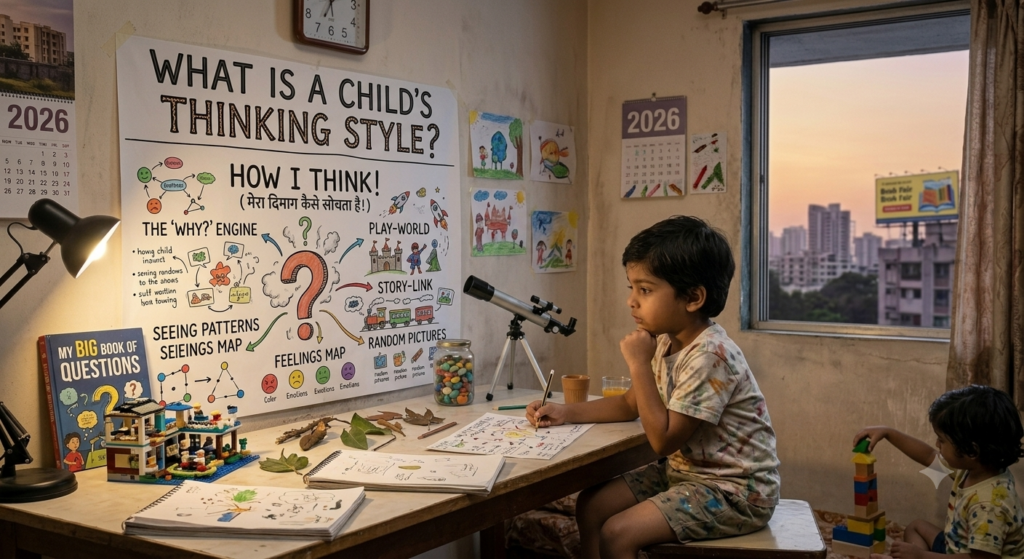
A child’s thinking style is the natural way they:
Thinking style isn’t about intelligence alone.
Two children can be equally intelligent but think completely differently.
For example:
Neither approach is right or wrong—they’re simply different.
BY MR. Santosh Hariharan—DMIT Consultant, Parent & Career Coach, and Success Mindset Coach—has helped hundreds of parents better understand and guide their children with greater confidence.
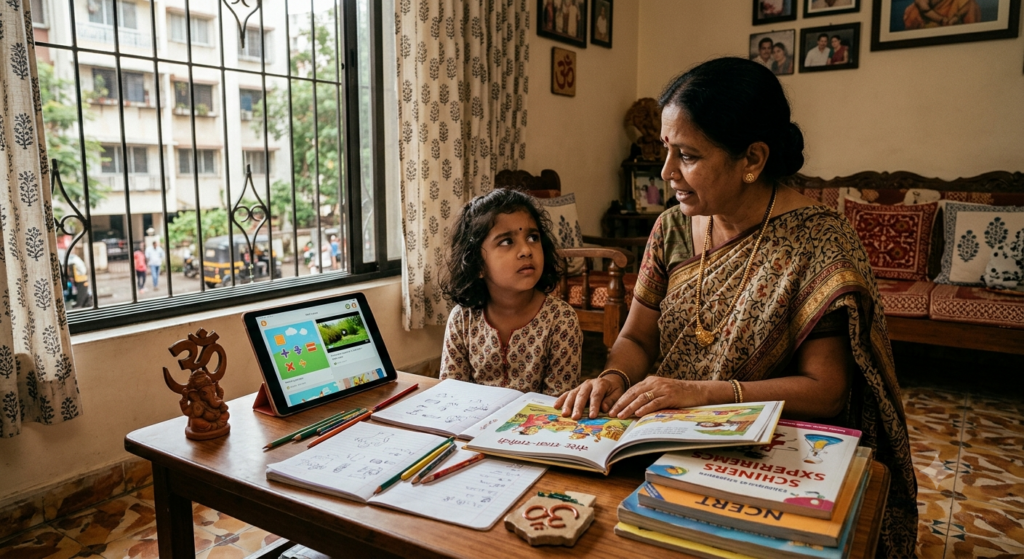
Many factors shape the way children think and learn.
Every child is born with unique inborn strengths and tendencies. Some naturally enjoy numbers and logical reasoning, while others are drawn toward creativity, music, communication, or sports.
These natural preferences often become visible from an early age.
The brain develops rapidly during childhood.
Experiences, learning opportunities, play, conversations, and emotional support all influence how different areas of the brain grow and connect.
A stimulating environment helps children develop flexible thinking and stronger problem-solving skills.
Parents play the biggest role in shaping a child’s mindset.
Children who are encouraged to ask questions, make decisions, and explore new ideas often become more confident thinkers.
On the other hand, constant comparison or excessive pressure may reduce confidence and curiosity.
A positive learning environment can significantly influence thinking patterns.
Teachers who encourage curiosity, creativity, teamwork, and independent thinking often help children discover abilities beyond textbooks.
Children also learn through interaction.
Playing with friends, participating in group activities, solving conflicts, and sharing ideas improve communication, empathy, and decision-making skills.
Technology has become a major part of childhood.
Used wisely, it supports creativity and learning.
Used excessively, it can reduce attention span, patience, and deep thinking.
The key is balance.
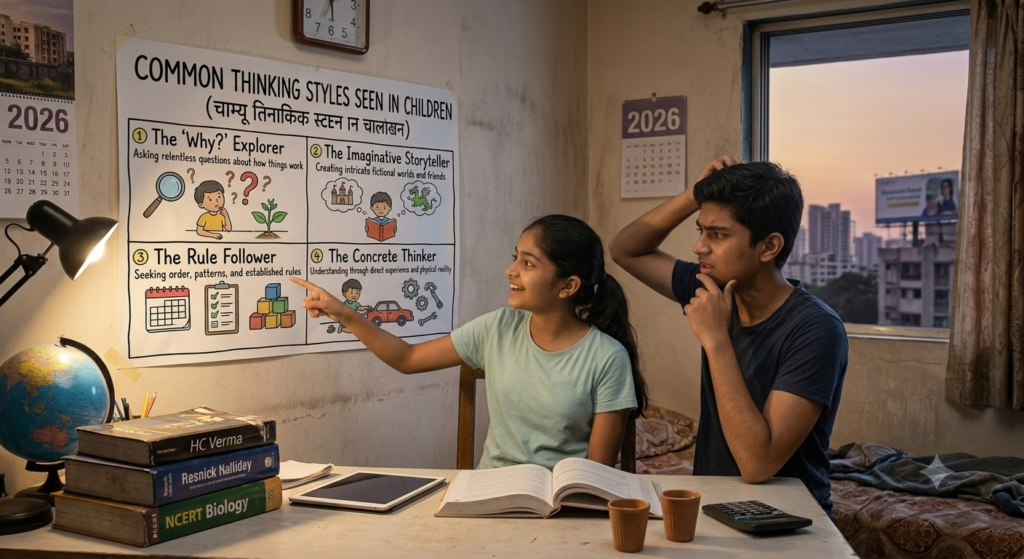
Although every child is unique, many children naturally show preferences toward certain thinking styles.
These children enjoy:
Creative children often love:
These children learn best through:
They enjoy:
Understanding your child’s preferred thinking style allows you to support learning in a way that feels natural rather than stressful.
When parents understand how their child thinks, everyday parenting becomes easier.
It helps you:
Most importantly, it allows your child to feel understood rather than compared.
Yes—and no.
Natural tendencies generally remain consistent, but thinking skills continue to develop throughout life.
With the right environment, practice, and guidance, children become more adaptable, creative, emotionally aware, and confident.
The goal isn’t to change who they are.
The goal is to help them become the best version of themselves.
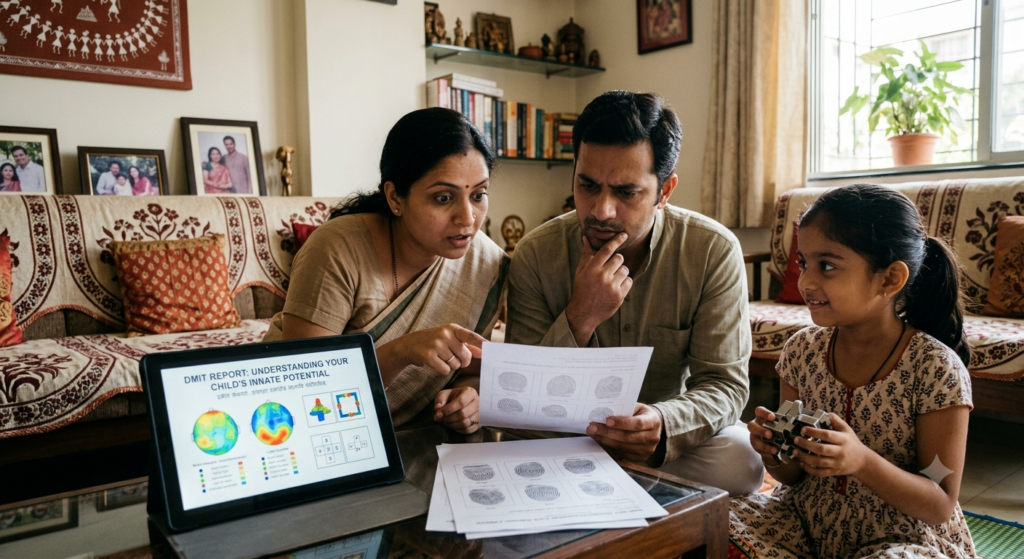
Many parents ask,
“How can I identify my child’s natural thinking style?”
A professionally interpreted DMIT (Dermatoglyphics Multiple Intelligence Test) can provide valuable insights into a child’s:
DMIT should be viewed as a guidance tool that helps parents better understand their child. It should not be treated as a medical diagnosis or a guarantee of future outcomes. When combined with observation, experience, and professional counselling, it can support more informed parenting and educational decisions.
Regardless of your child’s natural preferences, you can nurture healthy thinking by:
Small changes in parenting often create lifelong confidence.
Every child sees the world differently.
The biggest parenting mistake isn’t that children think differently—it’s expecting every child to think the same way.
When parents understand their child’s natural thinking style, learning becomes more enjoyable, communication improves, and career guidance becomes much more meaningful.
Instead of asking,
“Why isn’t my child like others?”
Start asking,
“How does my child learn and think best?”
That single shift can transform your parenting journey.
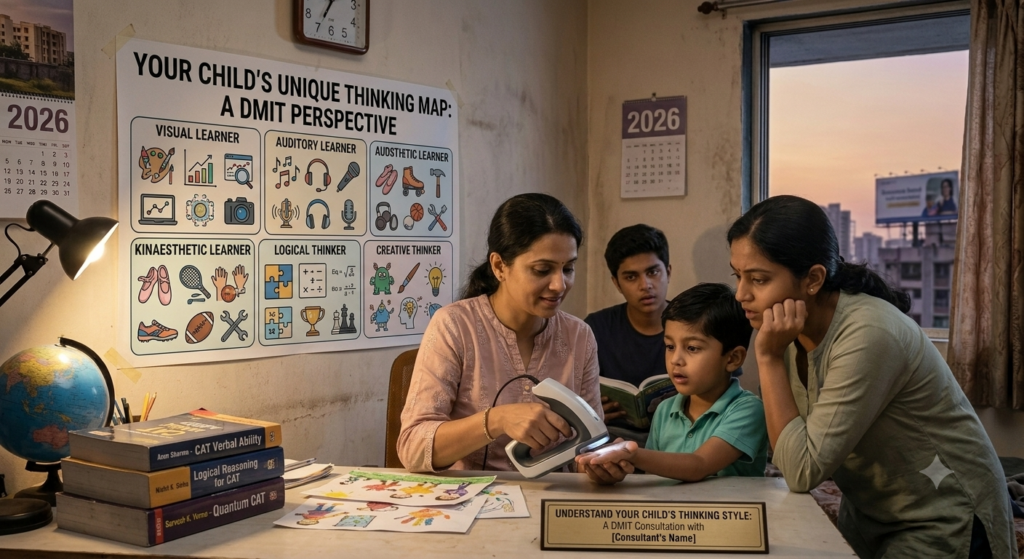
If you’d like deeper insights into your child’s natural learning style, personality, strengths, and thinking patterns, a DMIT Consultation can be a valuable starting point.
At SH Development Academy, Santosh Hariharan—DMIT Consultant, Parent & Career Coach, and Success Mindset Coach—has helped hundreds of parents better understand and guide their children with greater confidence.
⭐ 400+ parents have shared their experience.
Click here to see 400+ Google Reviews: https://share.google/ac9hkh20zcXadkJs9
👉 https://docs.google.com/forms/d/e/1FAIpQLSd6-u-BEr3ESzoHq2CXjkYZIr41O1eqh3ip97Lj3JbZ-6xSPA/viewform
📞 Call or WhatsApp:
+91 8421315400
+91 7303290862
Understanding your child today can help you make better parenting decisions for years to come.
Success & Happiness are the two most important yet elusive things which every human being yearns to achieve in life. Real success and happiness can be savoured only when one enjoys good health and good family relations, along with a good professional career and sound financial stability.
Our Visitor


 Users Today : 19