
❤️ Child Behaviour Explained: A Mother’s Day Guide
By Site Administrator
On this Mother’s Day ❤️, one of the most beautiful gifts a mother can give her child is not just love… but understanding.
Many parents today silently struggle with questions like:
❓ Why is my child becoming angry so quickly?
❓ Why does my child not listen to me?
❓ Why is my child distracted all the time?
❓ Why is one sibling calm while the other is hyperactive?
❓ Is this normal child behaviour—or should I be worried?
The truth is, every child behaves differently because every child’s brain, emotions, personality, environment, and learning style are different 🌱
As a DMIT Expert & Career Coach working with students and parents, one thing we’ve observed repeatedly is this:
👉 Most children are not “problematic.”
👉 Most children are simply “misunderstood.”
In 2026, with increasing screen exposure 📱, academic competition 📚, emotional stress 😟, social media influence, and changing parenting dynamics, understanding child behaviour has become more important than ever before.
This blog will help parents understand:
✔ Why children behave differently
✔ What affects child behaviour
✔ Common behaviour patterns in kids
✔ When parents should be concerned
✔ How to improve parent-child communication
✔ How DMIT & Psychometric Guidance can help parents understand children better
What Is Child Behaviour?
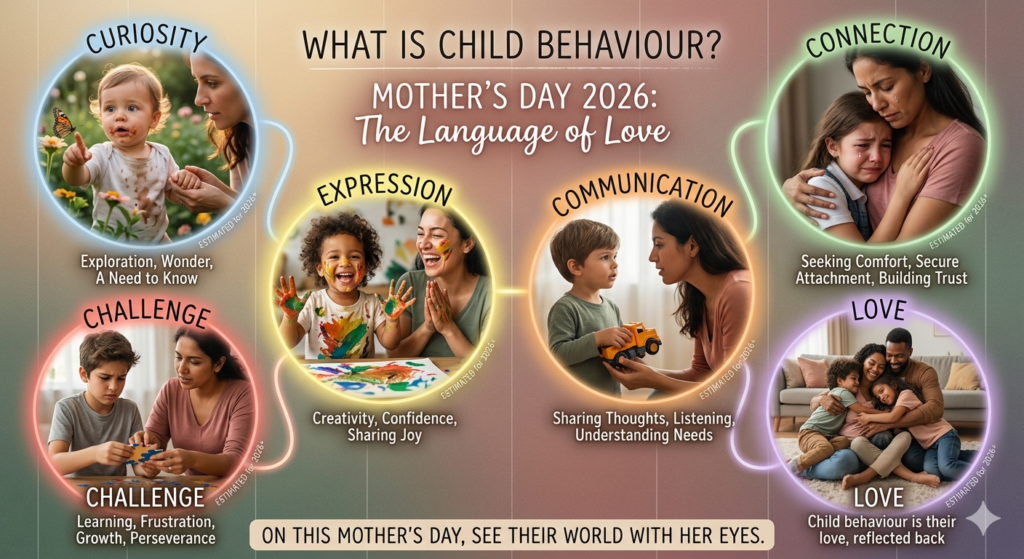
Child behaviour refers to the way a child:
- Thinks
- Reacts
- Communicates
- Expresses emotions
- Learns
- Responds to situations and people
Behaviour is not random. It is influenced by many factors including:
🧠 Brain development
👨👩👧 Parenting style
🏫 School environment
📱 Digital exposure
😔 Emotional experiences
🧬 Natural personality traits
🌍 Social surroundings
Every child has a unique emotional and psychological makeup.
That’s why comparing children often creates more harm than growth.
Why Children Behave Differently
One of the biggest parenting mistakes is expecting every child to behave the same way.
Some children are naturally:
- Calm and observant 🌸
- Energetic and expressive ⚡
- Emotional and sensitive 💕
- Logical and analytical 🧠
- Creative and imaginative 🎨
- Independent and stubborn 🚀
This difference often comes from:
1. Inborn Personality Traits
Some children are naturally introverted while others are extroverted.
This doesn’t mean one child is “better.”
It simply means their brains process the world differently.
2. Parenting Environment
Children absorb energy more than instructions.
If a home environment has:
- Frequent shouting
- Emotional stress
- Constant comparison
- Lack of communication
…it directly affects child behaviour.
3. Screen Time & Digital Addiction
In 2026, excessive screen exposure has become one of the biggest reasons for:
📱 Irritability
📱 Reduced concentration
📱 Emotional outbursts
📱 Low patience levels
📱 Sleep issues
Many parents notice behaviour changes but don’t connect them with digital overload.
4. Academic Pressure
Today’s children face pressure much earlier than previous generations.
Even primary school children experience stress related to:
- Marks
- Tuition
- Competition
- Performance comparison
This pressure often appears as:
😠 Anger
😔 Withdrawal
😴 Laziness
📚 Lack of interest in studies
Common Child Behaviour Patterns Explained
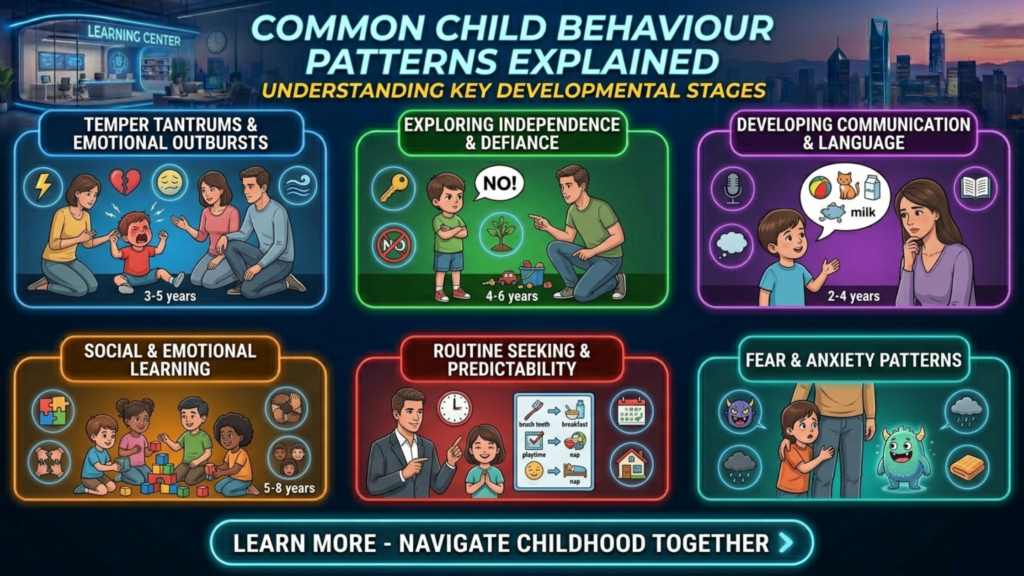
Child Gets Angry Quickly
This may happen because of:
- Emotional frustration
- Poor expression skills
- Feeling unheard
- Overstimulation from screens
Children often express emotions through behaviour because they lack emotional vocabulary.
Child Does Not Focus on Studies
Lack of concentration does not always mean laziness.
Possible reasons:
- Wrong learning style
- Lack of interest
- Anxiety
- Excessive pressure
- Digital distraction
Some children are visual learners while others learn through practical activities.
Child Is Very Shy
Shyness is not always a weakness.
Some children naturally take time to open up socially.
Forcing them constantly can reduce confidence further.
Child Is Hyperactive
Highly energetic children may simply have:
⚡ Strong kinesthetic intelligence
⚡ High curiosity
⚡ Need for movement-based learning
Such children usually struggle in rigid classroom systems.
Child Talks Back Frequently
This is increasingly common in 2026.
Reasons may include:
- Emotional disconnect
- Exposure to aggressive online content
- Lack of boundaries
- Need for attention
Children often misbehave when they feel emotionally disconnected—not necessarily because they are “bad.”
What Child Behaviour Is Trying to Tell Parents
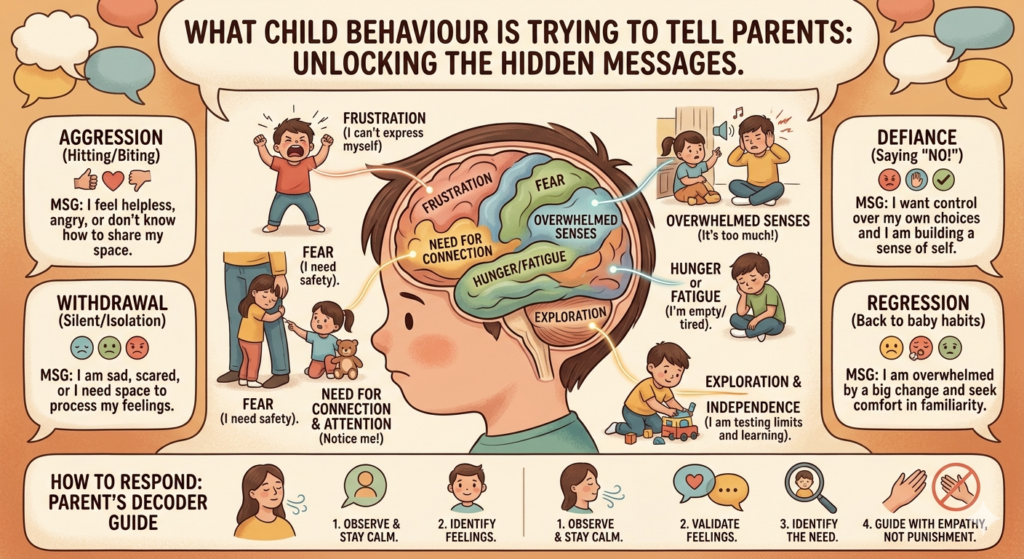
Every behaviour is communication.
A child who:
- Shouts may be asking for attention
- Avoids studies may be struggling emotionally
- Becomes silent may be feeling unheard
- Acts aggressively may be carrying stress internally
Parents should learn to observe behaviour beyond surface reactions.
Signs Parents Should Not Ignore
Some behaviour patterns may require professional guidance if they continue for long periods:
🚩 Extreme aggression
🚩 Sudden isolation
🚩 Severe anxiety
🚩 Sleep disturbances
🚩 Emotional breakdowns
🚩 Extreme fear or low confidence
🚩 Social withdrawal
🚩 Sudden academic decline
Early understanding always helps.
How Mothers Influence Child Behaviour
Since this blog is being shared on Mother’s Day 🌷, it’s important to acknowledge something powerful:
A mother’s emotional environment deeply shapes a child’s behaviour.
Children emotionally mirror their mothers more than most parents realize.
When mothers provide:
❤️ Emotional safety
❤️ Listening
❤️ Encouragement
❤️ Patience
❤️ Positive communication
…children naturally develop healthier emotional behaviour.
Perfection is not required.
Connection is.
How Parents Can Improve Child Behaviour Naturally
1. Stop Comparing Your Child
Comparison destroys confidence.
Every child develops differently.
2. Listen More, Lecture Less
Children open up when they feel heard.
3. Understand Their Learning Style
Some children learn through:
👀 Seeing
👂 Listening
✋ Doing
One teaching method cannot work for every child.
4. Reduce Excessive Screen Time
Digital detox can dramatically improve:
- Mood
- Focus
- Sleep
- Emotional stability
5. Encourage Strengths
Instead of focusing only on weaknesses, nurture natural talents.
This builds confidence faster.
How DMIT Helps Parents Understand Child Behaviour
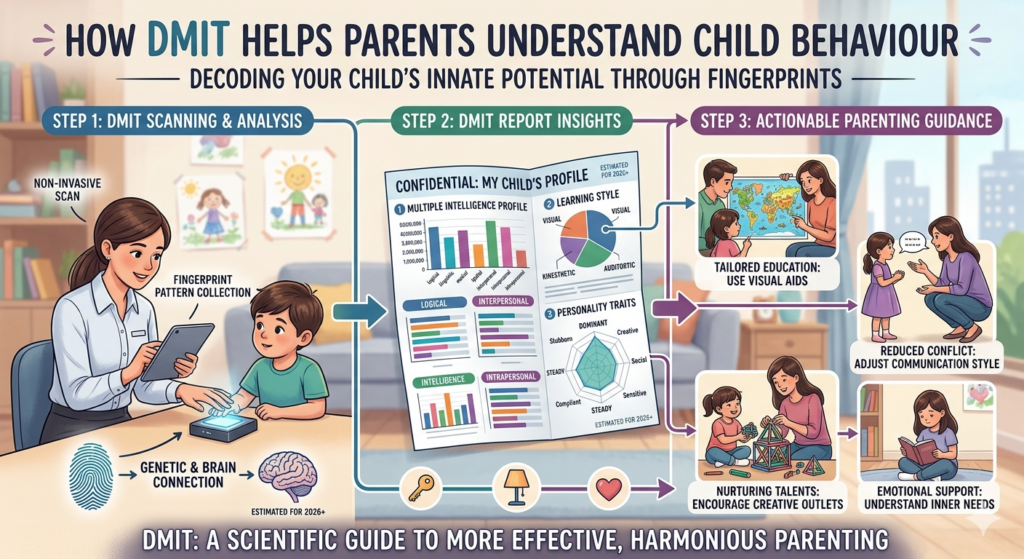
One of the reasons many parents now explore DMIT in 2026 is because it helps decode a child’s natural tendencies.
A DMIT assessment can help identify:
✔ Learning style
✔ Personality traits
✔ Brain dominance
✔ Natural intelligence areas
✔ Emotional tendencies
✔ Strengths & improvement areas
This helps parents stop guessing—and start understanding.
When parents understand why a child behaves a certain way, parenting becomes more peaceful and effective 🌱
Child Behaviour and Career Development Are Connected
Many parents don’t realize this early enough:
A child’s natural behaviour often gives clues about future strengths and career inclinations.
For example:
🎨 Creative children may thrive in design/media
🧠 Analytical children may enjoy engineering or research
🗣️ Expressive children may do well in leadership or communication-based careers
Understanding behaviour early helps parents guide children more wisely.
Final Thoughts: Understanding Is the Greatest Parenting Skill
This Mother’s Day 💐, instead of asking:
❌ “What’s wrong with my child?”
Try asking:
✅ “What is my child trying to express?”
Children don’t always need stricter parenting.
Sometimes they simply need deeper understanding ❤️
When parents understand a child’s emotions, personality, learning style, and natural strengths, parenting becomes less stressful and more meaningful.
And that understanding can positively shape a child’s confidence, academics, relationships, and future career path.
Want to Understand Your Child Better?
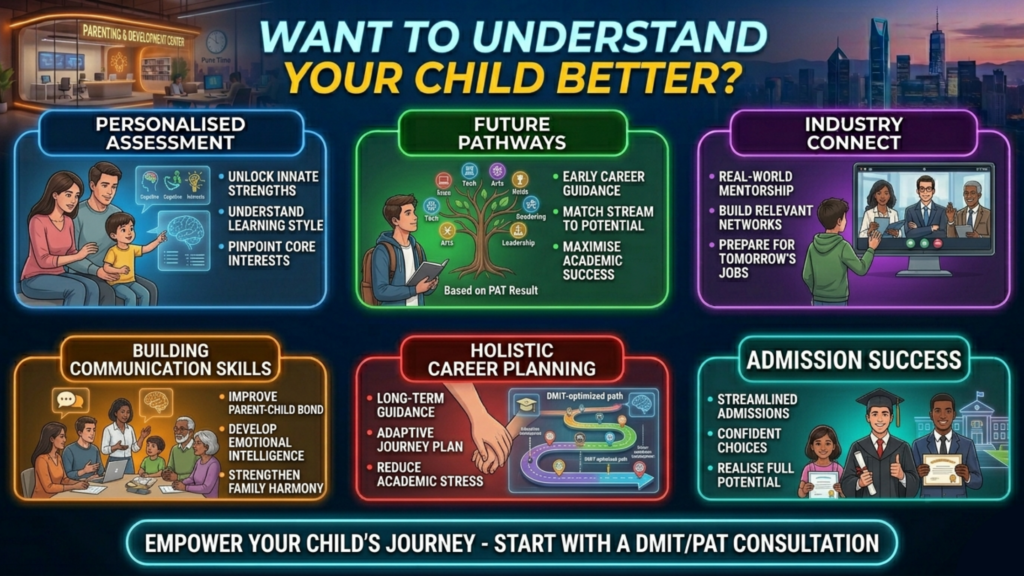
At SH Development Academy, we help parents discover their child’s natural strengths, behaviour patterns, learning style, and career potential through professional DMIT & Psychometric Career Guidance Consultations.
Guided by Santosh Hariharan — experienced DMIT Consultant, Parent & Career Coach, and Success Mindset Coach for Students — our sessions are designed to help parents move from confusion to clarity 🌱
Whether your child is:
✔ Struggling in studies
✔ Easily distracted
✔ Emotionally sensitive
✔ Confused about career direction
✔ Losing confidence
✔ Showing behavioural challenges
…understanding the root cause can make all the difference.
💬 Book a personalized consultation today and take the first step toward smarter parenting and a brighter future for your child ✨
Contact us for details -> Phone : +91 8421315400 | +91 7303290862
Success & Happiness are the two most important yet elusive things which every human being yearns to achieve in life. Real success and happiness can be savoured only when one enjoys good health and good family relations, along with a good professional career and sound financial stability.
Our Visitor


 Users Today : 7