




We all start with big dreams.
A student promises to study consistently from tomorrow. A working professional decides to learn a new skill. A parent wants to build healthier habits. An entrepreneur plans to grow their business.
But after a few days or weeks, reality kicks in. The excitement fades, distractions take over, and motivation slowly disappears.
Does this sound familiar?
If yes, you’re not alone.
One of the most common questions I hear from students, parents, and professionals during counselling sessions is:
“How can I stay motivated every day?”
The truth is, motivation isn’t something you’re born with. It’s something you build, nurture, and protect through the right mindset and daily habits.
In this guide, we’ll explore 10 practical ways to keep yourself motivated, backed by psychology, real-life experience, and coaching insights. Whether you’re preparing for exams, building your career, running a business, or simply trying to become a better version of yourself, these strategies can help you stay consistent even when motivation is low.
Let’s begin.
Today’s world offers incredible opportunities—but it also brings endless distractions.
Within minutes of waking up, many people are already checking social media, watching short videos, replying to messages, or comparing themselves with others online.
For students, the pressure to score high marks, choose the right career, and keep up with peers can feel overwhelming.
For parents, balancing work, family responsibilities, and children’s education is becoming increasingly challenging.
Even professionals struggle with burnout, constant notifications, and information overload.
The biggest challenge isn’t a lack of ability.
It’s a lack of consistent motivation and focused action.
The good news?
Motivation can be developed. It isn’t dependent on luck, personality, or intelligence. Once you understand what drives you and adopt the right habits, staying motivated becomes much easier.

Motivation is the inner drive that pushes you to take action toward a goal.
It is the reason you wake up early to exercise, study for an exam, complete an important project, or continue working even when things become difficult.
There are two main types of motivation.
This comes from within.
You do something because you genuinely enjoy it or find meaning in it.
Examples include:
Intrinsic motivation usually lasts longer because it is driven by personal satisfaction.
This comes from external rewards.
Examples include:
While external rewards can motivate us initially, long-term success often depends on developing intrinsic motivation.
Many people assume they are lazy.
In reality, most people lose motivation because they lack clarity, direction, or a meaningful purpose.
Some of the most common reasons include:
Understanding why motivation disappears is the first step toward building it again.
Now let’s look at practical strategies that actually work.
One of the biggest mistakes people make is confusing wishes with goals.
“I want to become successful.”
“I want good marks.”
“I want a better job.”
These are wishes—not goals.
A goal should be specific and measurable.
For example:
✔ Score above 90% in the board exams.
✔ Read one book every month.
✔ Exercise for 30 minutes, five days a week.
When your brain knows exactly what it’s working toward, it becomes much easier to stay focused.
Before beginning any journey, ask yourself:
What exactly do I want to achieve?
Write it down.
Visible goals create visible progress.
Big goals often feel overwhelming.
Imagine telling yourself:
“I have to study the entire syllabus.”
That sounds exhausting.
Now compare it with:
“I’ll complete one chapter today.”
Suddenly, the task feels manageable.
This simple strategy reduces procrastination and builds momentum.
Success is rarely achieved through one giant leap.
It comes from hundreds of small, consistent actions repeated every day.
Remember:
Small wins create big confidence.
Comparison is one of the fastest ways to lose motivation.
Social media often shows only the highlights of someone’s life—the achievements, awards, vacations, and celebrations.
What it doesn’t show are the failures, struggles, sacrifices, and hard work behind those moments.
Every individual has a different journey.
Different strengths.
Different opportunities.
Different timelines.
Instead of asking,
“Why am I behind?”
Ask,
“Am I better than I was yesterday?”
The only competition that truly matters is the person you were yesterday.
Focus on your own growth.
That’s where real confidence begins.
Here’s an important truth:
Motivation comes and goes.
Habits stay.
If you only study when you feel motivated, you’ll rarely study consistently.
Instead, create routines.
Examples:
When an action becomes a habit, you no longer depend on motivation to do it.
Successful people aren’t motivated every day.
They’re disciplined every day.
Your environment influences your mindset more than you realize.
If you’re surrounded by people who constantly complain, discourage you, or doubt your abilities, staying motivated becomes difficult.
On the other hand, spending time with positive, growth-oriented people can completely change your perspective.
Look for people who:
As the saying goes,
“You become the average of the people you spend the most time with.”
Choose your environment wisely.
It can either fuel your dreams or slowly drain your motivation.
Many people lose motivation because they only celebrate the final destination.
They think,
“I’ll be happy once I score 95%.”
“I’ll celebrate only after getting the job.”
“I’ll feel successful after achieving my goal.”
But here’s the reality…
Big achievements are made up of hundreds of small victories.
Did you complete your daily study target?
Celebrate it.
Did you exercise for an entire week?
Be proud of yourself.
Did you overcome procrastination today?
That’s progress.
Every small achievement sends a positive signal to your brain that says, “I’m moving forward.” This builds confidence and makes it easier to stay motivated for the next challenge.
Remember, success is not one big moment—it’s a collection of small wins.
One failed exam.
One rejected interview.
One unsuccessful business idea.
These moments often make people believe they’re not good enough.
But failure is not the opposite of success.
It’s part of success.
Some of the world’s most successful people faced repeated failures before achieving greatness. The difference was that they didn’t stop—they learned, improved, and tried again.
Instead of asking:
❌ “Why did I fail?”
Ask:
✅ “What is this experience trying to teach me?”
Every setback carries a lesson.
The more you learn from your mistakes, the stronger and more confident you become.
As I often tell students during counselling,
“Failing doesn’t define your future. Quitting does.”
You cannot stay motivated if you’re physically exhausted or mentally drained.
Many students try to study late into the night, skip meals, sleep for just a few hours, and expect their brain to perform at its best.
It doesn’t work that way.
Your brain needs fuel.
Simple habits can make a huge difference:
🥗 Eat nutritious meals.
💧 Stay hydrated.
😴 Sleep for 7–8 hours.
🚶 Exercise or walk daily.
🧘 Practice meditation or deep breathing.
📵 Reduce unnecessary screen time.
A healthy body supports a focused mind.
When your energy levels improve, your motivation naturally follows.
One of the biggest reasons people lose motivation is because they’re trying to succeed in something that doesn’t match their natural strengths.
Imagine asking a fish to climb a tree.
No matter how hard it tries, it will always feel like a failure.
The same happens with many students.
Some children are naturally creative.
Some are analytical thinkers.
Some are excellent communicators.
Others excel in sports, leadership, music, design, or problem-solving.
When students understand their natural abilities, learning becomes more enjoyable and confidence grows.
Instead of constantly fixing weaknesses, they begin building on their strengths.
This is why self-awareness is so important.
When you know who you are, you stop comparing yourself with everyone else.
You start creating your own path.
Whenever motivation drops, go back to your “WHY.”
Ask yourself:
Your “WHY” is more powerful than temporary emotions.
A student who studies only because parents force them will eventually lose motivation.
But a student who studies because they dream of becoming a doctor, engineer, entrepreneur, artist, or teacher has a deeper reason to continue.
Write your purpose somewhere you can see every day.
It will remind you to keep moving even on difficult days.
Sometimes, it’s not a lack of motivation that holds us back—it’s the habits we unknowingly develop.
Avoid these common mistakes:
Progress isn’t about perfection.
It’s about consistency.
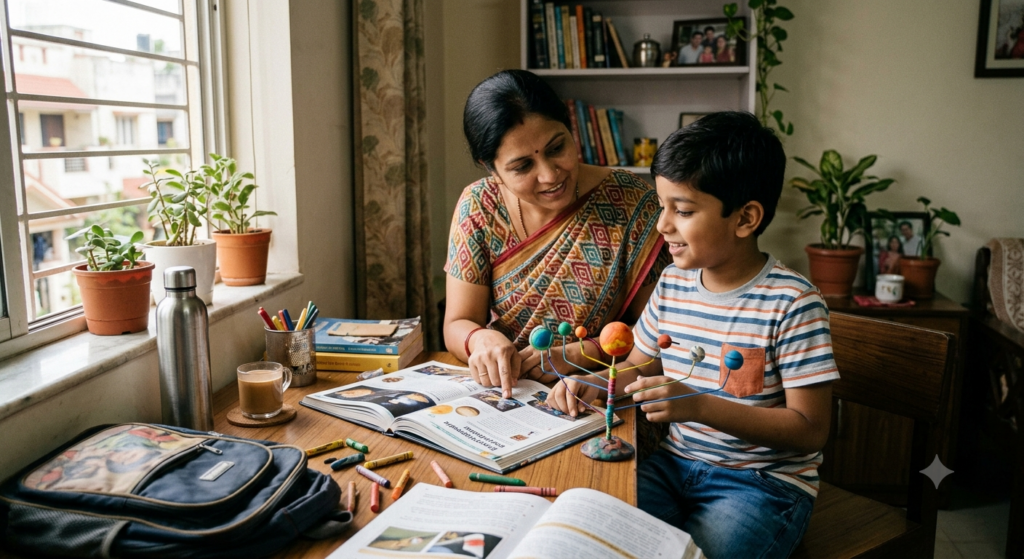
As a Parent & Career Coach, one thing I’ve learned over the years is this:
Children don’t need constant pressure.
They need understanding.
Instead of asking,
“Why didn’t you score more?”
Try asking,
“How can I help you do better next time?”
Parents can motivate children by:
A motivated child grows best in a supportive home.
Many people spend years trying to stay motivated without first understanding themselves.
Think about it.
If you don’t know:
…how can you confidently choose the right career or learning path?
This is where self-awareness becomes a powerful advantage.
Understanding yourself helps you:
I’ve met many hardworking students who were highly motivated but lacked direction.
I’ve also met talented students who lost motivation simply because they were following someone else’s dream.
True success happens when motivation meets clarity.
When students understand how they naturally learn, think, and solve problems, they stop forcing themselves into paths that don’t suit them.
Instead, they begin growing with confidence.
If there’s one message I’d like you to remember from this article, it’s this:
Don’t wait to feel motivated before taking action. Take action, and motivation will follow.
Every successful person has days when they don’t feel like working.
The difference is that they continue anyway.
Stay focused on your purpose.
Celebrate your progress.
Learn from setbacks.
Trust the process.
And most importantly, believe in yourself—even before the results appear.
Because success isn’t built in one extraordinary day.
It’s built through ordinary actions repeated consistently.
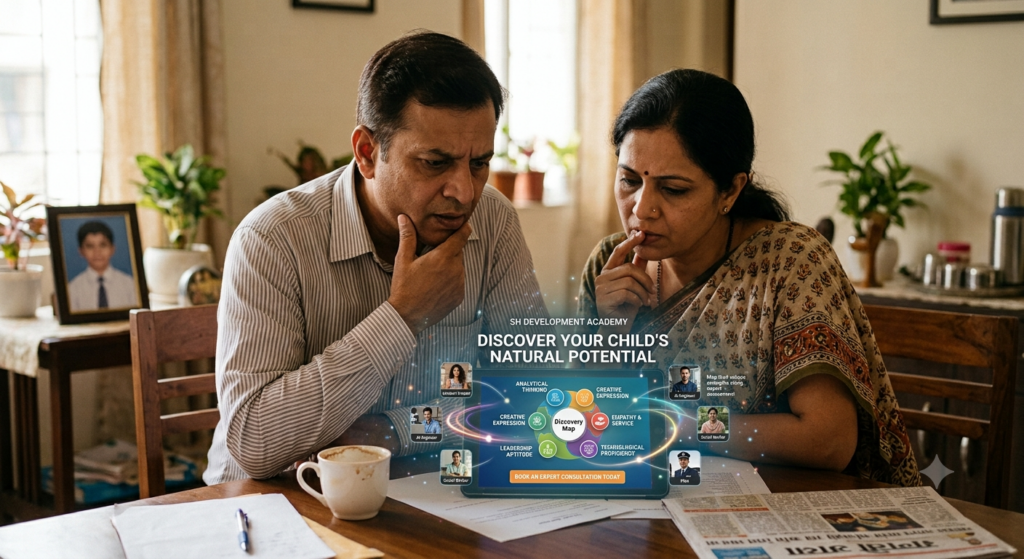
Sometimes, a lack of motivation isn’t the real problem. The real challenge is that students don’t fully understand how they learn best, what their natural strengths are, or which career path truly suits them.
At SH Development Academy, we help students and parents gain this clarity through our DMIT & Career Guidance Consultation, led by Santosh Hariharan—DMIT Consultant, Parent & Career Coach, and Success Mindset Coach for Students.
Our consultation helps students discover:
✅ Natural strengths and hidden talents
✅ Learning style and study approach
✅ Personality traits and behavioural patterns
✅ Career interests and suitable career options
✅ Practical guidance for parents to support their child’s growth
When students understand themselves better, they become more confident, focused, and motivated to achieve their goals.
👉 Consultation Booking: https://docs.google.com/forms/d/e/1FAIpQLSd6-u-BEr3ESzoHq2CXjkYZIr41O1eqh3ip97Lj3JbZ-6xSPA/viewform
⭐ See what parents have to say: https://share.google/ac9hkh20zcXadkJs9
📞 Call Us: +91 8421315400 | +91 7303290862
Because sometimes, the biggest motivation comes from finally understanding your true potential. 🌱
Success & Happiness are the two most important yet elusive things which every human being yearns to achieve in life. Real success and happiness can be savoured only when one enjoys good health and good family relations, along with a good professional career and sound financial stability.
Our Visitor


 Users Today : 20