
“A happy child doesn’t just grow into a successful adult… a happy child enjoys the journey of becoming one.”
As parents, we all dream of seeing our children smile, laugh, learn, and succeed. We work hard to give them the best education, nutritious food, comfortable homes, and endless opportunities. But amidst all this, one question often goes unanswered:
Is my child truly happy?
In today’s fast-paced world, children face pressures that previous generations never experienced. Academic competition, social media, screen addiction, peer pressure, and high parental expectations have made childhood far more stressful than it used to be.
According to various child well-being studies, emotional health plays a significant role in a child’s ability to learn, build relationships, solve problems, and develop resilience. Happiness is no longer just a “nice-to-have” emotion—it’s one of the strongest foundations for lifelong success.
As a DMIT Consultant, Parent & Career Coach, I’ve interacted with hundreds of parents who initially approached me seeking better academic performance or career guidance for their children. But after our conversations, many realized that their child’s biggest need wasn’t another tuition class—it was emotional understanding, confidence, and a supportive environment.
The good news?
Raising a happy child doesn’t require expensive schools, expensive toys, or perfect parenting.
It requires intentional parenting.
In this article, I’ll share 7 practical parenting tips that can help your child become happier, emotionally stronger, and more confident in today’s world.
Let’s begin.
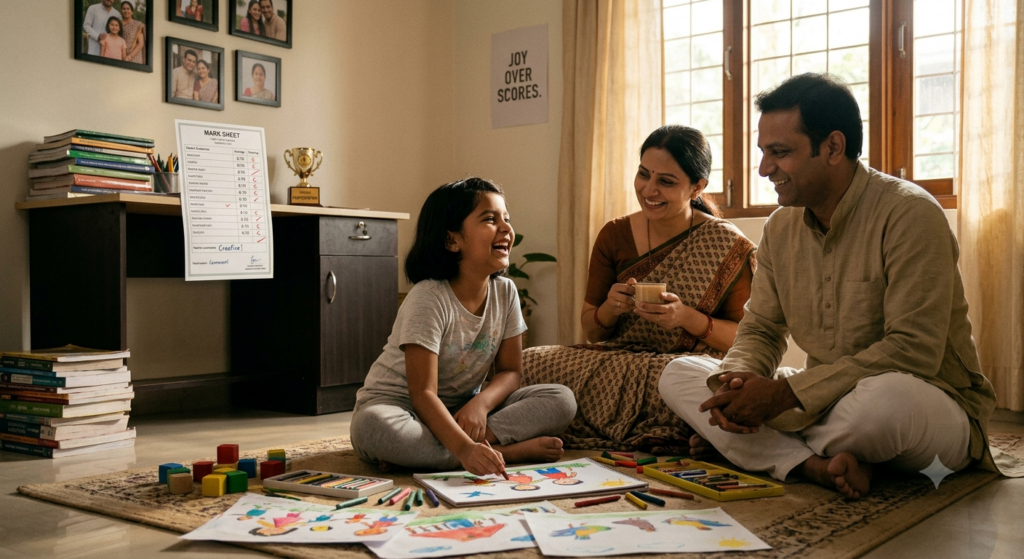
Many parents unknowingly measure success through report cards.
90%.
95%.
Top Rank.
First Prize.
While academic achievement certainly has its place, research consistently shows that children who develop emotional security, resilience, confidence, curiosity, and healthy relationships are better equipped to succeed in both their personal and professional lives.
Think about the adults you admire.
Most aren’t successful simply because they scored well in school.
They’re successful because they know how to communicate, handle setbacks, solve problems, work with people, and adapt to change.
These qualities begin developing during childhood.
A happy child is more likely to:
As parents, our goal shouldn’t be to raise children who only score well in exams.
Our goal should be to raise children who enjoy learning, believe in themselves, and grow into emotionally healthy adults.
One of the biggest parenting mistakes I see today is comparison.
“My neighbour’s son scored 98%.”
“Your cousin is already preparing for IIT.”
“Why can’t you be like your sister?”
Although these statements may come from concern, children often hear something very different:
“I’m not good enough.”
Every child is born with a unique combination of strengths, interests, personality traits, and learning styles.
Some children naturally love numbers.
Others enjoy drawing.
Some are excellent communicators.
Others quietly observe and think deeply.
Trying to make every child fit into the same mould often creates frustration—for both the parent and the child.
Instead of asking,
“Why isn’t my child like others?”
Ask,
“What makes my child unique?”
When children feel accepted without constant comparison, they become more confident, emotionally secure, and willing to explore their potential.
As parents, our role isn’t to create another version of someone else’s child.
Our role is to help our own child become the best version of themselves.
One of the greatest gifts you can give your child isn’t a new gadget.
It’s your undivided attention.
Today’s families often spend more time in the same house than together.
Parents are busy with work.
Children are busy with school, tuition, and screens.
Even family dinners are interrupted by mobile notifications.
Children don’t always need expensive vacations or luxury gifts.
They need conversations.
Eye contact.
Laughter.
Stories.
Listening.
Simple activities like:
can significantly strengthen emotional bonding.
When children feel emotionally connected to their parents, they naturally become more secure and happier.
Remember:
Children may forget the toys you bought.
But they’ll never forget how you made them feel.
Imagine two students.
Both work equally hard.
One scores 95%.
The other scores 75%.
If only the first child receives appreciation, what message does the second child receive?
That effort doesn’t matter.
Over time, this creates fear of failure.
Children begin avoiding challenges because they worry about disappointing their parents.
Instead of saying:
“You got 95%. Excellent!”
Try saying:
“I’m proud of how sincerely you prepared.”
Notice the difference.
The first praises the outcome.
The second praises the process.
Children who are appreciated for effort tend to:
Remember, success is a journey—not a single exam.
Not every child is born to become an engineer, doctor, or IAS officer.
And that’s perfectly okay.
One child may excel in public speaking.
Another may have artistic creativity.
Another may possess leadership qualities.
Another may be exceptionally compassionate.
Unfortunately, many children spend years trying to improve their weaknesses while their greatest strengths remain unnoticed.
As parents, our responsibility is to discover what energizes our child.
Observe them carefully.
Ask yourself:
When children are encouraged to build on their strengths, they naturally become happier, more confident, and more motivated.
This is also where tools like DMIT (Dermatoglyphics Multiple Intelligence Test) can provide valuable insights. A professionally interpreted DMIT report can help parents understand a child’s natural learning preferences, multiple intelligence areas, personality tendencies, and strengths. Rather than replacing observation or parenting, it can serve as one of several guidance tools to help parents support their child’s development more effectively.
As parents, we often spend a lot of time helping our children improve their marks, but how often do we teach them how to handle their emotions?
Think about it…
A child may score 95% in exams but still struggle to cope with failure, criticism, rejection, or stress.
Life isn’t just about solving mathematics problems—it’s also about handling life’s emotional challenges.
This is where Emotional Intelligence (EQ) becomes one of the greatest gifts you can give your child.
Emotionally intelligent children learn how to:
As parents, you can nurture emotional intelligence through simple daily conversations.
Instead of asking only,
“How many marks did you score today?”
Try asking,
When children feel emotionally safe at home, they are more likely to become confident, resilient, and mentally strong adults.
Remember…
Children don’t need parents who have all the answers. They need parents who are willing to listen. ❤️
Modern parenting often focuses on giving children everything they ask for.
A better school.
A better phone.
A better bicycle.
A better room.
While providing opportunities is important, giving responsibilities is equally essential.
Children who grow up doing age-appropriate responsibilities develop:
✅ Discipline
✅ Confidence
✅ Accountability
✅ Problem-solving skills
✅ Independence
Simple responsibilities can include:
These small habits teach children that they are capable of contributing to the family.
They begin to feel valued—not because of their marks, but because they are responsible individuals.
And that feeling builds genuine self-esteem.
This is perhaps the most important parenting tip of all.
Children should never feel that they are loved only when they perform well.
Unfortunately, many children begin believing:
“If I score well, my parents are happy.”
“If I fail, they will be disappointed in me.”
Over time, this creates anxiety, fear, and perfectionism.
Instead, let your child know:
“I may not always like your choices, but I will always love you.”
Celebrate:
✔ Their efforts.
✔ Their kindness.
✔ Their honesty.
✔ Their courage.
✔ Their progress.
Not just their achievements.
Your unconditional support becomes their emotional safety net.
It gives them the confidence to try, fail, learn, and try again.
That is how resilient children are raised.
Even the most loving parents make mistakes—and that’s completely normal.
The goal isn’t to become perfect parents.
The goal is to become more aware parents.
Here are some common mistakes worth avoiding:
Every child has a different pace of learning and development.
Comparison steals confidence.
A child’s calendar shouldn’t look like a corporate executive’s.
Children also need free play, creativity, and downtime.
Allow children to experience small failures.
They learn resilience through experience.
Sometimes children don’t need advice.
They simply need someone to listen.
Marks are important.
But they are only one part of a child’s personality.
Confidence, communication, creativity, leadership, empathy, and resilience matter just as much.
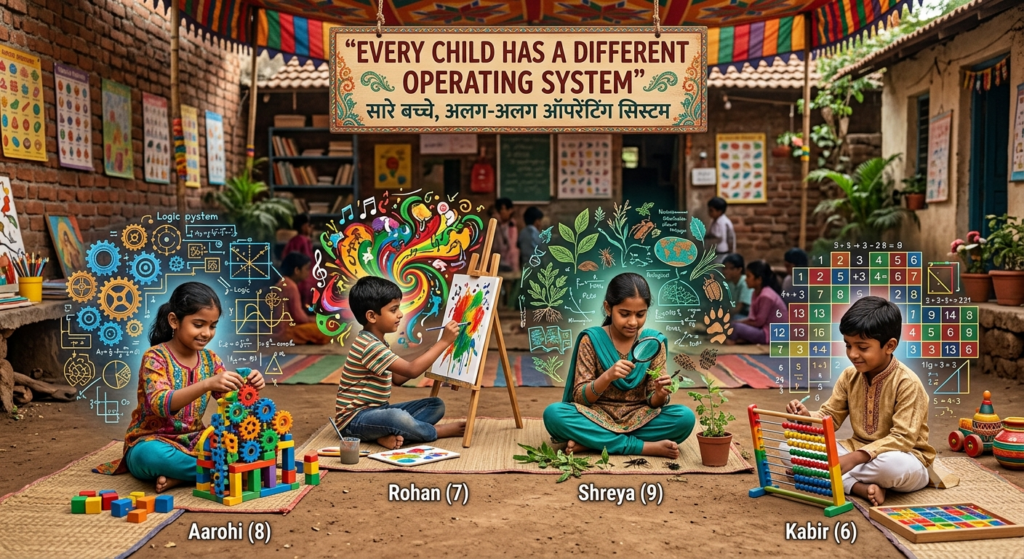
One lesson I’ve learned after working with hundreds of students and parents is this:
No two children learn, think, behave, or grow in exactly the same way.
Some children learn by seeing.
Some by listening.
Some by doing.
Some become motivated through appreciation.
Others need encouragement and gentle guidance.
This is why a parenting strategy that works beautifully for one child may completely fail with another.
Understanding your child’s natural learning preferences, personality, strengths, and behavioural tendencies allows you to guide them with far greater confidence.
That’s exactly why many parents today choose to explore tools like DMIT (Dermatoglyphics Multiple Intelligence Test)—not as a way to predict a child’s future, but as one source of insight into how they naturally learn and where their strengths may lie. When combined with your own observations, school feedback, and professional guidance, it can support more informed parenting decisions.
Here’s something every parent should remember…
Your child doesn’t expect you to be perfect.
They simply want you to understand them.
Years from now, your child probably won’t remember every exam score.
But they will remember:
❤️ Whether you believed in them.
❤️ Whether you listened without judging.
❤️ Whether you encouraged them after failure.
❤️ Whether you made them feel safe.
Happiness isn’t built through expensive schools or endless tuition classes.
It’s built through love, understanding, encouragement, patience, and meaningful guidance.
And when children grow up feeling understood, they naturally become more confident, emotionally stronger, and better prepared for life’s challenges.
Every child has unique strengths, talents, and a different way of learning. As parents, understanding these differences can make a lasting impact on how you guide, motivate, and support your child throughout their journey.
At SH Development Academy, we help parents move beyond guesswork through a detailed DMIT Consultation and personalised guidance.
Your consultation will be conducted by Santosh Hariharan—a DMIT Consultant, Parent & Career Coach, and Success Mindset Coach for Students—who has guided 1,000+ parents and students in understanding children’s natural potential, learning styles, and career direction.

✅ Your child’s natural strengths and abilities
✅ Preferred learning style
✅ Personality traits
✅ Areas that need encouragement
✅ Practical parenting strategies
✅ Long-term academic and career guidance
If you’re looking to become a more informed, confident, and supportive parent, this consultation can be a valuable first step.
📝 DMIT Consultation Booking:
https://docs.google.com/forms/d/e/1FAIpQLSd6-u-BEr3ESzoHq2CXjkYZIr41O1eqh3ip97Lj3JbZ-6xSPA/viewform
⭐ See what parents are saying:
https://share.google/ac9hkh20zcXadkJs9
310+ Google Reviews from Parents & Students
📞 Call Us: +91 8421315400 | +91 7303290862
Success & Happiness are the two most important yet elusive things which every human being yearns to achieve in life. Real success and happiness can be savoured only when one enjoys good health and good family relations, along with a good professional career and sound financial stability.
Our Visitor


 Users Today : 19