
If you have a toddler who happily eats one food today and refuses to even look at it tomorrow, welcome to one of the most common parenting struggles! 😄
One day, your child loves idli. The next day, the same idli suddenly becomes “No!”
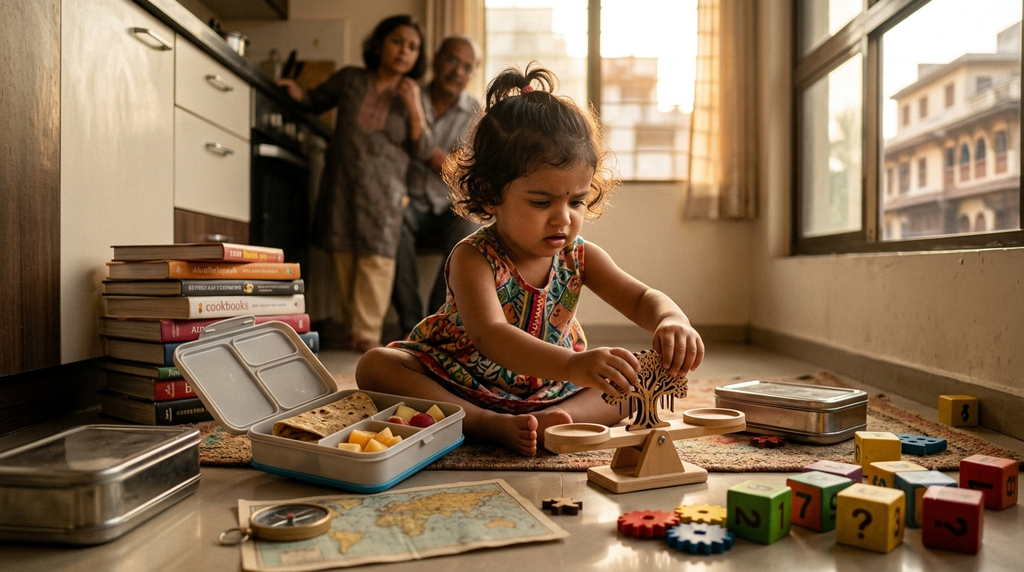
You pack a healthy lunch box, spend 20 minutes making it look attractive, and it comes back untouched.
Sound familiar?
Finding practical toddler meal ideas in India can be particularly challenging because parents are often trying to balance nutrition with what their child will actually eat. The good news is that picky eating doesn’t mean every meal has to become a negotiation.
The better approach is to offer variety, age-appropriate textures, familiar foods and nutritious choices without turning mealtimes into a battle.
WHO guidance emphasizes responsive feeding—recognising a child’s hunger and fullness cues, encouraging self-feeding, offering variety and avoiding pressure to eat.
So, instead of asking, “How do I make my toddler eat everything?”, a better question is:
“How can I make healthy food easier and more enjoyable for my child to accept?”
Here are seven simple Indian-friendly lunch box ideas to get you started.
This is one of the easiest toddler meal ideas in India because it combines familiar flavours with different textures.
Lunch box:
For a picky eater, keep the sambar mild and offer it separately as a dip rather than mixing everything together.
Idli is soft and easy to handle, while sambar can introduce vegetables and pulses in a familiar Indian meal.
Don’t worry if your toddler doesn’t eat the vegetables from the sambar on day one. Repeated, pressure-free exposure is part of helping children become comfortable with different foods.
Parathas can be a parent’s secret weapon when a toddler is suspicious of vegetables. 😉
Try a soft paratha made with finely grated or mashed:
Cut it into small strips or bite-sized pieces.
Add:
🥣 A small portion of plain curd
🍎 A familiar fruit your child enjoys
Don’t hide every vegetable.
If your child eventually discovers that every favourite food contains a “secret vegetable,” they may become more suspicious of new foods.
Instead, gradually make vegetables a normal part of the meal.
Poha is quick to prepare and easy to customise.
You can add finely chopped or grated:
Add small pieces of soft paneer on the side for an additional protein-rich option.
For toddlers, keep the texture soft and avoid making the meal excessively spicy.
A big plate can feel overwhelming.
Try serving a small portion first and offer more if your child is still hungry.
This also allows children to listen to their own hunger and fullness cues—an important part of responsive feeding.
If your toddler loves dosa, use that familiarity to introduce other foods.
Try a soft mini dosa with:
Option 1: Paneer filling
Option 2: Mild potato filling
Option 3: Finely chopped vegetables
Option 4: Plain dosa with vegetables offered separately
Add a small portion of fruit.
Picky eaters often accept a new food more easily when it is presented alongside something they already enjoy.
You don’t need to completely change the meal your child loves.
Build around it.
Rice is often a familiar food for Indian toddlers, so it can become the base for a balanced lunch.
Try:
🍚 Soft vegetable rice
🥣 Dal
🥛 Plain curd
You can use seasonal vegetables such as carrot, beans, peas, pumpkin or spinach.
For younger toddlers, make sure the consistency and pieces are appropriate for their developmental stage.
A toddler doesn’t need every nutrient in every individual lunch box.
Think about the overall pattern of eating across the day and week.
WHO recommends gradually increasing food variety and texture as children grow, with diverse, nutrient-dense foods forming an important part of complementary feeding.
Besan chilla is another versatile Indian option.
Prepare a soft chilla using besan and add finely chopped or grated vegetables.
You can serve it with:
Cut the chilla into strips or small pieces so your toddler can pick them up independently.
Toddlers often enjoy food more when they have some control.
Let them:
👉 Pick up pieces
👉 Choose between two fruits
👉 Dip food into curd
👉 Help place food into their lunch box
Mealtime is not just about nutrition. It is also an opportunity for children to develop independence and positive relationships with food.
Make a small, soft uttapam using dosa batter and top it with finely chopped vegetables.
You can try:
Keep the vegetables finely chopped and the uttapam soft.
Serve with a familiar side such as curd.
This is important.
If your toddler refuses the uttapam, don’t turn it into:
“You cannot leave the table until you finish it.”
That can turn food into a power struggle.
Instead, calmly offer it again another day.
Children may need repeated exposure before accepting a new food. Responsive feeding guidance specifically recommends encouraging children without forcing or pressuring them.
Instead of searching for a completely new recipe every morning, use this simple formula:
Something your child generally accepts.
Depending on your family’s diet, this could include dal, paneer, curd, egg, beans, pulses or other suitable foods.
Choose something age-appropriate and easy to eat.
Soft, manageable pieces that match your child’s developmental stage.
Let your toddler choose between two suitable options whenever possible.
This makes meal planning much easier.
First, don’t panic.
One untouched lunch box doesn’t automatically mean your child is not getting enough nutrition.
Look at the bigger picture:
What are they eating across the entire day?
Also consider:
IAP’s 2026 action plan continues to emphasise toddler-to-teen nutrition, complementary feeding, safe feeding practices and common parental concerns around nutrition.
If persistent food refusal, poor appetite, growth concerns, suspected allergy/intolerance, choking difficulties or other health concerns are present, speak with your paediatrician or a qualified child nutrition professional.
This may be the most useful advice in the entire article.
Your job as a parent is to offer appropriate food.
Your toddler’s job is to learn to eat, explore tastes and eventually regulate how much they need.
WHO recommends responsive feeding—responding to hunger and fullness cues and avoiding pressure to eat.
So instead of:
❌ “Just one more bite!”
❌ “Finish everything.”
❌ “Look, your friend eats everything.”
❌ “If you don’t eat, no play.”
Try:
✅ “Would you like the dosa or the paratha?”
✅ “You can try it if you want.”
✅ “You’re telling me you’re full? Okay.”
✅ “Let’s keep it here. You can try it another time.”
Small changes in the way we respond can make mealtimes much calmer.
If your toddler needs a phone or cartoon to eat every meal, gradually work toward making mealtimes more interactive and screen-free.
Talk to your child.
Sit together.
Let them observe what the family is eating.
Make eating a social experience rather than a task that has to be completed while watching a screen.
Responsive feeding guidance highlights pleasant mealtime experiences, positive role modelling and avoiding screen distraction as useful practices.
You don’t need seven completely different recipes every week.
Try this simple rotation:
| Day | Lunch Box |
|---|---|
| Monday | Mini idli + vegetable sambar + banana |
| Tuesday | Vegetable paratha + curd + fruit |
| Wednesday | Soft vegetable poha + paneer |
| Thursday | Mini dosa + paneer/potato filling + fruit |
| Friday | Vegetable rice + dal + curd |
| Saturday | Besan chilla + curd + fruit |
| Sunday | Vegetable uttapam + fruit |
You can repeat favourites and gradually introduce new foods.
The goal isn’t a perfect lunch box.
The goal is a child who gradually becomes comfortable with a wide variety of nutritious foods.
Picky eating can test your patience.
But your toddler doesn’t need a different fancy recipe every single day.
They need consistency, variety, patience and a relaxed feeding environment.
Keep offering nutritious Indian foods in different forms. Respect hunger and fullness cues. Give your child opportunities to explore food independently, and avoid turning every meal into a test of obedience.
And remember—your child’s eating pattern, temperament, preferences and developmental needs are individual. If you’re concerned about growth, nutrition, allergies, feeding difficulties or persistent food refusal, get personalised advice from a paediatrician or qualified nutrition professional.
Every child is different—not just in what they eat, but also in how they learn, communicate, respond, explore and develop.
As parents, we often wish someone would simply hand us a manual explaining:
“This is how your child works. This is how you can communicate with them. This is how you can support their strengths.”
There is no universal parenting manual.
At SH Development Academy, we use DMIT as one of the tools in our broader parent and child guidance approach to help parents understand their child’s individual traits, learning preferences and potential areas for development.
Santosh Hariharan, DMIT Consultant, Parent & Career Coach and Student Success Mindset Coach, works with parents to turn assessment insights into practical guidance.
👉 If you’d like to understand your child better, you can book a DMIT Consultation here:
https://docs.google.com/forms/d/e/1FAIpQLSd6-u-BEr3ESzoHq2CXjkYZIr41O1eqh3ip97Lj3JbZ-6xSPA/viewform
⭐ 400+ Google Reviews:
https://share.google/ac9hkh20zcXadkJs9
📞 Call / WhatsApp: +91 8421315400 | +91 7303290862
Because better parenting doesn’t begin with having all the answers. It begins with understanding your child.
Success & Happiness are the two most important yet elusive things which every human being yearns to achieve in life. Real success and happiness can be savoured only when one enjoys good health and good family relations, along with a good professional career and sound financial stability.
Our Visitor


 Users Today : 6