

Every parent has heard this complaint at least once:
“I studied everything yesterday… but I forgot it during the exam.”
Or perhaps your child spends hours studying, only to struggle remembering important concepts when it matters most.
If this sounds familiar, you’re not alone.
One of the most common concerns parents bring to me as a DMIT Consultant, Parent & Career Coach is:
“How can I improve my child’s memory power?”
The good news is that memory is not something children are simply born with or without. In most cases, memory can be improved significantly with the right habits, learning techniques, environment, and understanding of how a child naturally learns.
Let’s explore practical and scientifically supported ways to improve memory power in students.

Memory power refers to the brain’s ability to:
For students, memory affects:
However, many parents misunderstand memory.
A child forgetting information doesn’t necessarily mean they have poor memory.
Sometimes the real issue is:
Before improving memory, we must understand what causes poor retention.
If a student studies while:
the brain never properly stores the information.
No concentration = weak memory formation.
Many students memorize without understanding concepts.
Information learned this way is often forgotten quickly.
Understanding creates stronger memory connections.
In 2026, one of the biggest challenges students face is digital distraction.
Constant scrolling, gaming, and short-form content can reduce attention span and affect memory retention.
Memory weakens over time if information is not revisited.
Students who revise strategically retain information much longer.
Sleep plays a major role in memory consolidation.
Students who sleep less often struggle with concentration and recall.

One of the biggest mistakes students make is trying to memorize everything.
Instead:
The brain remembers meaning better than isolated facts.
Active recall is one of the most effective learning techniques.
Instead of repeatedly reading notes:
Ask yourself questions.
For example:
Instead of reading a chapter five times:
Close the book and try to explain the topic from memory.
This strengthens recall ability significantly.
Many students revise only before exams.
A better approach is:
This helps move information into long-term memory.
The brain remembers images better than plain text.
Use:
Visual learning often improves retention dramatically.
Many parents ask for memory improvement techniques.
But memory starts with attention.
If your child cannot focus, improving memory becomes difficult.
Simple focus boosters include:
Exercise improves blood circulation to the brain.
Students who engage in regular physical activity often demonstrate:
Even 20–30 minutes of daily activity can help.
The brain requires quality fuel.
Students should consume:
Poor nutrition can negatively affect concentration and memory.
Many students sacrifice sleep during exams.
Ironically, this often reduces performance.
During sleep, the brain processes and stores newly learned information.
Students should aim for age-appropriate sleep every night.
Convert information into stories.
Stories are easier to remember than isolated facts.
Link new information to something familiar.
The brain remembers connections more easily.
Break large information into smaller groups.
For example:
Remembering:
8421315400
becomes easier as:
8421 – 315 – 400
The same principle works in academics.
One of the best ways to remember information is to explain it to someone else.
Teaching forces the brain to organize and retrieve information.
Many students forget information during exams even though they studied well.
Why?
Stress affects memory retrieval.
When students feel:
their brain struggles to access stored information.
This is why confidence and emotional wellbeing are closely linked to academic performance.
Here’s something many parents don’t realize:
Not all children learn the same way.
Some children are:
They remember better through:
They remember better through:
They learn better through:
If a child studies using a method that doesn’t match their learning style, memory and retention often suffer.
Parents often compare children:
“My child studies for hours but forgets everything.”
“That child studies for less time and remembers everything.”
The reality is that every child’s brain processes information differently.
Factors influencing memory include:
Understanding these differences can help parents support children more effectively.
Comparison often lowers confidence and increases stress.
More study hours don’t always mean better learning.
Smart study is more important than long study.
Not every child learns through textbooks alone.
Fear rarely improves memory.
Support and encouragement work much better.
Consider professional guidance if your child:
Often the issue is not memory itself but understanding how the child learns best.
Focus on active recall, regular revision, proper sleep, reduced distractions, and understanding concepts instead of rote memorization.
Nuts, fruits, vegetables, protein-rich foods, and adequate hydration support brain function.
Yes. Sleep plays a critical role in storing and consolidating information.
Absolutely. High stress and anxiety can interfere with memory recall.
Common reasons include lack of focus, poor study methods, insufficient revision, stress, or learning style mismatch.
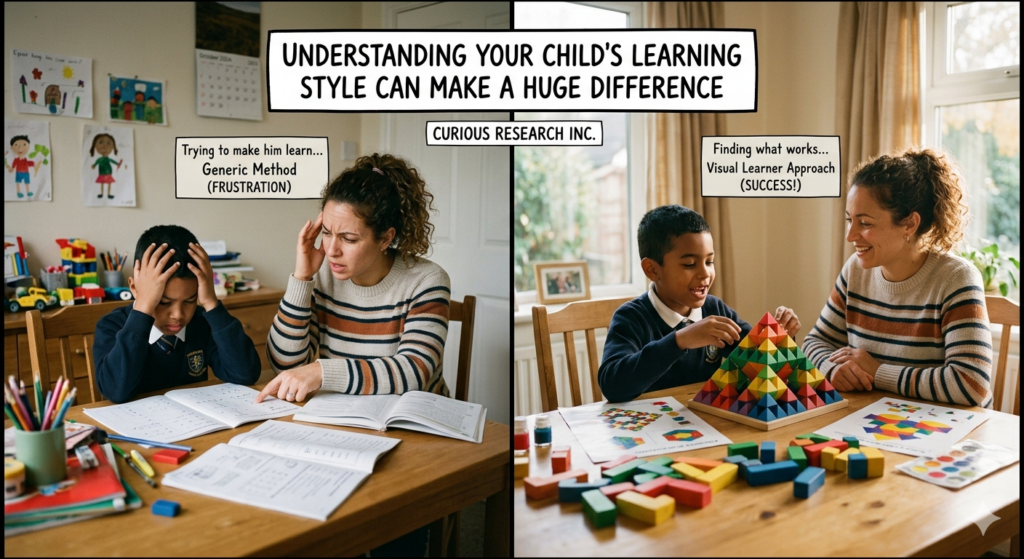
Many parents spend years trying different tuition classes, study schedules, and academic strategies.
But sometimes the real solution lies in understanding:
At SH Development Academy, we help parents and students gain these insights through personalized DMIT consultations and career guidance programs.
Guided by Santosh Hariharan — DMIT Consultant, Parent & Career Coach, and Success Mindset Coach — our consultations help identify:
✔ Learning style preferences
✔ Natural strengths and talents
✔ Personality traits
✔ Concentration patterns
✔ Career suitability
✔ Areas for improvement and growth
👉 Book Your DMIT Consultation Here:
DMIT Consultation Booking Form
📞 Call Us: +91 8421315400 | +91 7303290862
⭐ Read what parents and students say about our guidance:
Click Here to See 310+ Google Reviews
Remember, improving memory power is not just about studying harder.
It’s about understanding how your child learns best and helping them use their brain more effectively. 🧠✨
Success & Happiness are the two most important yet elusive things which every human being yearns to achieve in life. Real success and happiness can be savoured only when one enjoys good health and good family relations, along with a good professional career and sound financial stability.
Our Visitor


 Users Today : 8