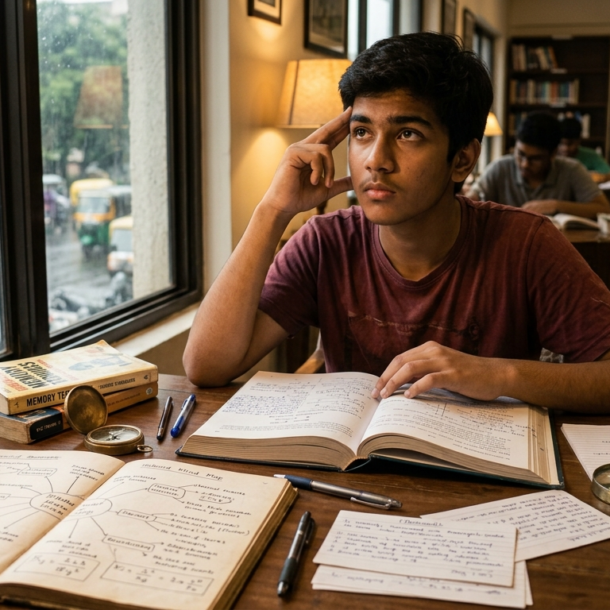

As parents, we all want our children to do well in life.
We want them to score good marks, get into good colleges, build successful careers, and most importantly, become confident and happy individuals.
But somewhere along the way, many children begin carrying a burden they are often unable to express—the burden of academic pressure.
As a DMIT Consultant, Parent & Career Coach, I regularly meet parents who say:
“My child has become quiet lately.”
“He studies all day but seems stressed.”
“She gets upset even after scoring 85%.”
“My son is losing confidence despite being intelligent.”
The reality is that academic pressure is affecting children at younger ages than ever before. The challenge is that children don’t always say, “I’m stressed.”
Instead, they show it through changes in behavior, emotions, confidence, and performance.
Understanding these warning signs early can make a huge difference in your child’s mental wellbeing and future success.
Academic pressure refers to the stress children experience due to expectations related to:
A certain amount of challenge can motivate children.
However, when expectations become overwhelming, children may begin experiencing anxiety, fear, frustration, and self-doubt.

Today’s students are growing up in a completely different environment compared to previous generations.
They face:
📚 Increased academic competition
📱 Constant social media comparison
🎯 Pressure to choose the “right” career early
🏆 Expectations to excel in multiple activities
🤖 Anxiety about future careers in an AI-driven world
Many children feel they must be perfect in everything.
Unfortunately, perfection is a burden no child should carry.
One of the biggest mistakes adults make is assuming every child should learn, study, and perform in the same manner.
But every child is unique.
Some children are:
When a child’s natural learning style is misunderstood, academic pressure often increases unnecessarily.
Let’s look at some common warning signs parents should never ignore.
Does your child become extremely worried before exams?
Do they panic when results are announced?
Do they fear disappointing parents?
A healthy desire to perform is normal.
Constant fear and anxiety are not.
When children begin attaching their self-worth to marks, emotional stress increases significantly.
A child who once participated actively may suddenly become hesitant.
You may notice:
Statements like:
“I’m not smart enough.”
“I can’t do this.”
“Others are better than me.”
can indicate deeper academic pressure.
This is one of the most misunderstood signs.
Many parents assume:
More study hours = Better results
Not always.
Sometimes a child studies for long hours because they are struggling to understand concepts or because their learning style is not being addressed effectively.
The issue may not be effort.
The issue may be approach.
Children often express emotional stress physically.
Watch for:
If these symptoms appear frequently around exams or school-related activities, academic pressure could be a contributing factor.
Children under stress may become:
Parents often interpret this as bad behavior.
In many cases, it is actually emotional overload.
Has your child stopped:
Excessive academic pressure often leaves children feeling mentally exhausted.
As a result, they withdraw from activities that once brought them joy.
Children under pressure often compare themselves to classmates, friends, or siblings.
You may hear:
“He’s smarter than me.”
“She always gets higher marks.”
“I’ll never be as good as them.”
Comparison can slowly damage a child’s confidence and self-esteem.
Many stressed students struggle with:
Sleep is critical for memory, concentration, and emotional health.
Poor sleep often creates a cycle of lower performance and increased stress.
One of the strongest indicators of academic pressure is an intense fear of failure.
Children may:
Healthy learning requires mistakes.
Fear of failure prevents growth.
Many parents say:
“My child has become lazy.”
In reality, the child may not be lazy at all.
Chronic stress often causes:
When pressure becomes too high, children sometimes shut down emotionally.
This is something I discuss frequently during career and DMIT consultations.
Many children who struggle academically are actually highly intelligent.
The problem is not intelligence.
The problem is often:
Marks alone do not define a child’s potential.
The first step is not more tuition.
The first step is understanding.
Ask yourself:
Children thrive when they feel understood.
One of the biggest mistakes parents make is focusing only on what needs improvement.
Imagine hearing every day:
Eventually, children begin to believe they are never good enough.
Instead, recognize and nurture strengths.
Every child has unique talents waiting to be discovered.
Over the years, I have observed something interesting.
When parents truly understand:
the pressure inside the home often decreases dramatically.
Children feel:
✔ More understood
✔ More accepted
✔ More confident
✔ More motivated
Many students are working hard without fully understanding themselves.
Self-awareness is one of the most powerful foundations for academic success.
When students know:
they can study smarter, not just harder.
Common signs include anxiety, low confidence, sleep problems, mood swings, headaches, excessive worry about marks, and loss of motivation.
Focus on understanding your child’s strengths, avoid comparison, encourage effort rather than perfection, and create open communication.
Yes. Excessive academic pressure can contribute to anxiety, low self-esteem, emotional stress, and burnout.
Learning style differences, lack of confidence, stress, and ineffective study methods often play a larger role than intelligence alone.
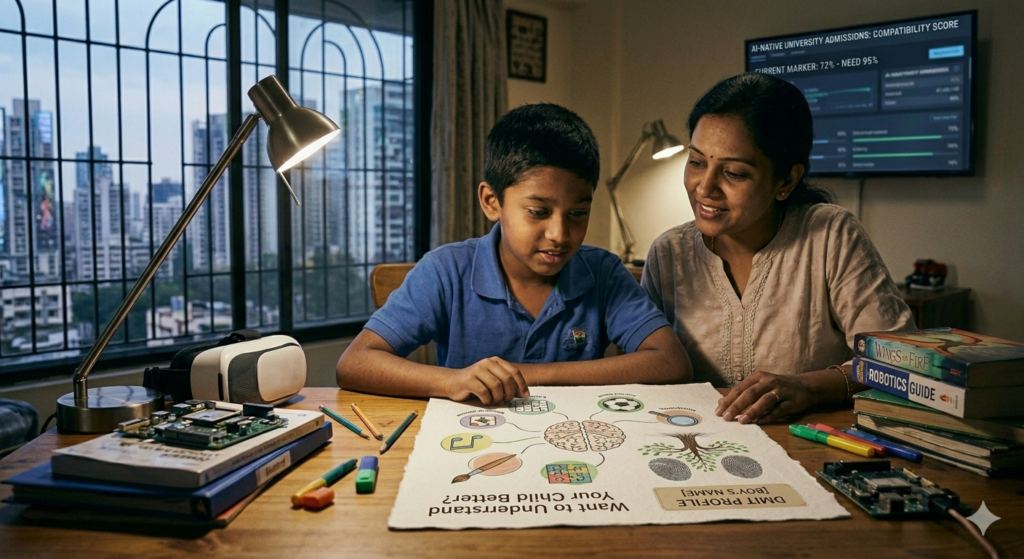
Many parents spend years trying to motivate, guide, and support their children—but often without fully understanding how their child naturally learns, thinks, and responds.
This is where a professionally interpreted DMIT assessment can provide valuable insights.
At SH Development Academy, we help parents discover:
✔ Their child’s natural strengths
✔ Learning style preferences
✔ Personality traits
✔ Career inclinations
✔ Areas where support is needed
Guided by Santosh Hariharan — DMIT Consultant, Parent & Career Coach, and Success Mindset Coach — our consultations are designed to help parents make informed decisions and support their child’s growth with greater clarity and confidence.
👉 Book Your DMIT Consultation Here
DMIT Consultation Booking Form
📞 Phone: +91 8421315400 | +91 7303290862
⭐ See what parents and students are saying:
Click Here to See 310+ Google Reviews
Remember: Sometimes the best thing we can do for a child is not push them harder—it is understand them better. ❤️
Success & Happiness are the two most important yet elusive things which every human being yearns to achieve in life. Real success and happiness can be savoured only when one enjoys good health and good family relations, along with a good professional career and sound financial stability.
Our Visitor


 Users Today : 8