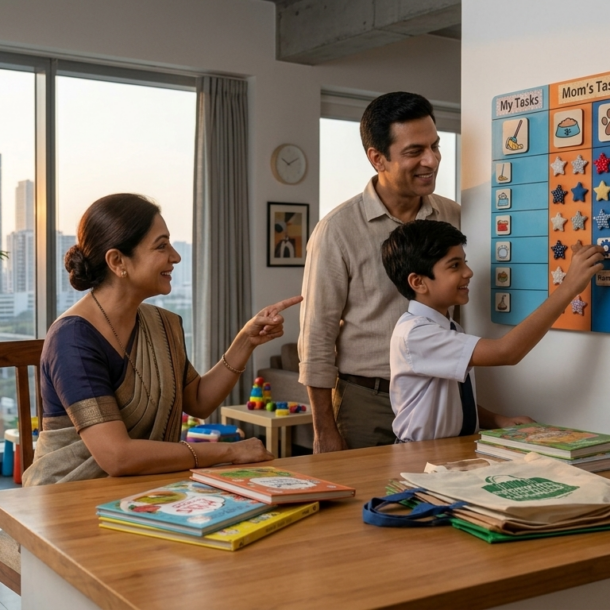

Children don’t always know how to explain what they’re feeling. Sometimes, anxiety looks like refusing to go to school. Sometimes, it looks like getting irritated over homework, becoming restless before an exam, or saying, “I can’t do it!” even before trying.
As parents, we often respond by saying, “Don’t worry,” “Calm down,” or “There’s nothing to be scared of.” We mean well, but when a child is overwhelmed, these words may not be enough.
What if you could teach your child a simple way to pause, slow down, and feel more settled—all through play? 🌱
That’s where breathwork games for kids can help.
For children aged 5–12, breathing exercises work best when they feel like games rather than another instruction to follow. A child may not be interested in sitting quietly and meditating, but they might happily pretend to blow bubbles, smell a flower, or move an imaginary boat across the water with their breath.
In this guide, we’ll explore three easy breathwork games you can practise at home, before homework, or as part of your child’s bedtime routine. You’ll also learn when to use them, how to introduce them without pressure, and when a child may need more support than breathing exercises alone.
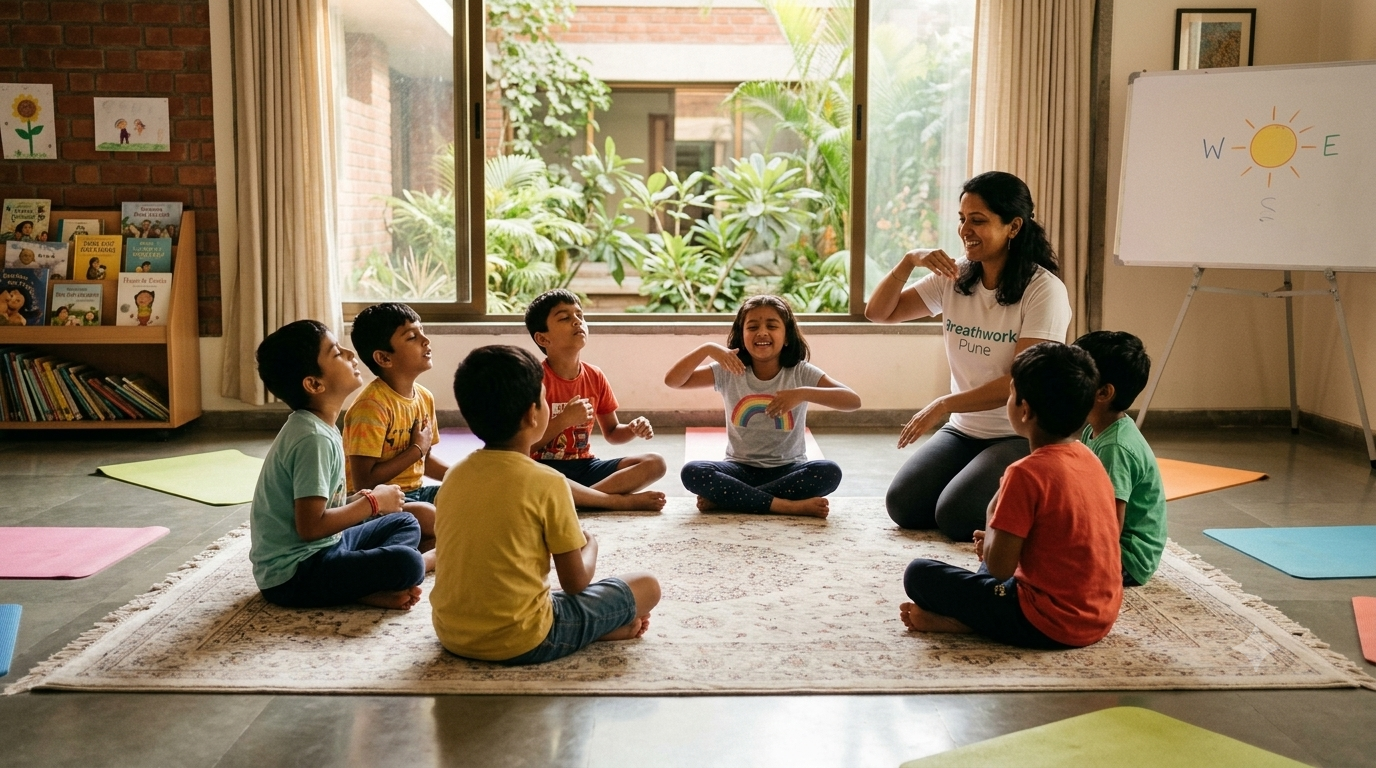
Breathwork for kids means using simple, intentional breathing exercises to help children become more aware of their breathing and practise settling themselves when they feel excited, worried, frustrated, or overwhelmed.
Children naturally change their breathing when they run, laugh, cry, or feel nervous. Gentle breathing activities teach them to notice their breath and slow it down comfortably when appropriate.
For example, imagine your 8-year-old is getting upset because a maths problem seems impossible. Instead of immediately correcting them or telling them to try harder, you could say:
“Let’s take a little break. Imagine you’re smelling your favourite flower. Now gently blow out as if you’re cooling hot chocolate.”
This gives your child a simple action to focus on while creating a small pause before returning to the problem.
Research on breathing exercises in children is encouraging. A 2025 clinical trial involving children aged 6–11 found that both bubble-breath play and diaphragmatic breathing were associated with reduced anxiety during dental treatment. However, results from a specific clinical setting don’t guarantee that every child will experience the same effect at home.
The aim isn’t to make children stop feeling anxious. It’s to help them develop a healthy way to respond to difficult feelings.
Between the ages of 5 and 12, children experience many changes. They start school, form friendships, encounter new expectations, and gradually learn to manage disappointment and frustration.
Some common situations that can trigger nervousness include:
Children don’t always have the vocabulary to explain these feelings. Their anxiety may show up as tears, restlessness, repeated questions, irritability, or avoidance.
This is where playful breathing exercises can become part of a parent’s everyday toolkit.
When we feel stressed, breathing can become quicker or shallower. Gentle, unforced, slower breathing may support the body’s relaxation response and help some children feel more settled.
A review published in 2025 examined diaphragmatic breathing interventions in children and teenagers aged 6–18 and found encouraging results for stress-related outcomes, while also highlighting the need for more research.
PMC
Keep one important point in mind: breathwork is a coping skill, not a guaranteed way to stop anxiety instantly. The goal is to help children practise, notice what feels comfortable, and gradually learn which strategies work for them.
You don’t need expensive equipment, an app, or a special meditation room. These three games can be introduced in just a few minutes.

Best for: Ages 5–8 | Homework frustration and nervousness
Children love bubbles because they turn breathing into something they can see. The aim is to blow gently rather than forcefully, helping the child pay attention to a slow, controlled exhale.
Try this game before homework, after a frustrating activity, or when your child feels nervous about a small challenge.
Parenting tip: Avoid turning it into a competition about who can make the biggest bubble. The point is gentle breathing, not perfect performance.
Bubble-breath play has also been studied in a small clinical trial involving children receiving dental treatment, with promising results for anxiety in that setting.

Best for: Ages 5–10 | Worry, frustration and emotional upsets
This simple imagination game gives children two easy actions to remember: gently smell a flower, then slowly cool a spoonful of hot soup.
It uses familiar experiences rather than abstract instructions such as “regulate your breathing.”
You can also adapt the imagery to your child’s interests. A football-loving child might imagine gently blowing a feather across the field, while a younger child might prefer smelling a mango and cooling hot chocolate.
Try it after an argument, before a school presentation, or when your child starts worrying about an upcoming test.
Parenting tip: If your child is already crying intensely, don’t insist that they follow your breathing instructions immediately. Offer comfort first, then invite them to try when they are ready.

Best for: Ages 6–12 | Bedtime worries and winding down
This game encourages children to notice their natural breathing while lying comfortably. A soft toy becomes a gentle visual guide.
The game helps children practise noticing bodily sensations and paying attention to the present moment. It can become a calming bedtime ritual rather than another task they must complete perfectly.
Use it before bedtime, after a busy day, or as part of a quiet evening routine.
Parenting tip: Don’t ask your child to hold their breath or compete to see who can breathe the slowest. If the toy feels uncomfortable or distracting, remove it and simply invite them to notice their breathing.
Here’s something many parents discover: children are more willing to try a calming activity when they see it as enjoyable, not as a correction for bad behaviour.
Instead of saying, “You’re getting angry again. Do your breathing exercise,” try making it a normal family activity.
Here is a simple routine you can follow:
Morning: 1 minute
Try smelling the flower and cooling the soup before school, especially if mornings tend to feel rushed.
Before homework: 2 minutes
Use bubble breathing or pretend to blow bubbles together before beginning a difficult task.
Before bedtime: 1–2 minutes
Try the sleeping teddy bear game to introduce a quiet moment before sleep.
These timings are suggested starting points, not medically prescribed durations. You can adjust them according to your child’s age, comfort, and interest.
The real secret is consistency without pressure. A short activity that your child enjoys is more likely to become a habit than a long routine that feels like homework.
Don’t worry if your child doesn’t cooperate immediately. Some children enjoy sitting quietly, while others prefer movement, drawing, or talking.
Try these approaches instead:
Remember, the objective is not to silence a child’s emotions. It is to help them feel safe enough to understand and express those emotions.
Breathing exercises should feel gentle and comfortable. They should never become a test of endurance.
Keep these precautions in mind:
Children’s Hospital of Philadelphia also notes that therapeutic breathwork should be taught appropriately and does not replace conventional medical diagnosis or treatment.
Children’s Hospital of Philadelphia
If your child frequently experiences intense anxiety, avoids school or ordinary activities, has persistent sleep difficulties, or struggles to manage everyday situations, consider speaking with a paediatrician or qualified child mental health professional.
Breathwork can be one useful coping strategy, but it is not a substitute for professional assessment or treatment when these are needed.
Breathwork may help some children settle before a task, which can make it easier to begin studying or return to work after becoming frustrated.
For example, you could introduce a brief breathing game before a 15-minute homework session. Afterward, help your child break the work into manageable steps and take appropriate breaks.
However, it is important to understand that breathwork does not automatically improve academic performance or resolve every concentration problem.
If your child regularly struggles to focus, consider the broader picture:
Sometimes the issue is emotional; sometimes it is related to study habits, the learning environment, or an underlying difficulty that needs professional attention.
The most helpful approach is to understand what your child is experiencing rather than assuming every problem has the same solution.
Bubble blowing, smelling a flower and cooling soup, and the sleeping teddy bear game are simple starting points. Choose an activity that suits your child’s age and preferences, and keep the breathing gentle.
Gentle breathing exercises may help some children feel calmer in stressful situations. Research is promising, but results vary, and breathing exercises should not be presented as a guaranteed or instant cure for anxiety.
Start with one or two minutes and extend the activity only if your child is comfortable. There is no need to force a particular duration or breathing pattern.
Simple, playful breathing activities can be introduced to many children around age five, with parental guidance and age-appropriate instructions. Younger children may also enjoy imitation games, but activities should always suit their developmental stage.
Yes. Parents can introduce simple, gentle activities at home. If anxiety is persistent or significantly affecting daily life, seek professional advice rather than relying on home exercises alone.
As parents, we naturally want to solve our children’s problems. When they struggle with homework, we look for better study methods. When they lose confidence, we encourage them. When they become anxious, we tell them not to worry.
But sometimes, the first step is to pause and understand what our child is experiencing.
A simple breathing game may give your child a useful moment to settle. Your patience, reassurance, and willingness to listen help create the environment in which that skill can grow.
Start small. Practise together. Celebrate effort rather than perfection.
And remember: the goal is not to raise a child who never feels anxious, but to help raise a child who gradually learns how to navigate difficult feelings with support and confidence.
Every child has a unique personality, interests, strengths, and ways of responding to the world. Understanding those individual differences can help parents make more thoughtful decisions about learning, confidence, and development.
At SH Development Academy, Santosh Hariharan — DMIT Consultant, Parent & Career Coach, and Success Mindset Coach for Students — helps parents explore their child’s development and make more informed choices about their growth.
If you’re interested in learning more about our DMIT assessment and how it fits into a broader child-guidance conversation, explore our website.
Learn about our approach to understanding children’s individual strengths and supporting parents with personalised guidance.Explore DMIT at SH Development Academy
Read feedback from parents
See what families have shared about their experience with our guidance.
Contact SH Development Academy
+91 8421315400
+91 7303290862
Please note: DMIT should be treated as a guidance tool, not a validated diagnostic test for anxiety, intelligence, or mental health conditions. It does not replace direct observation, age-appropriate assessment, or professional support.
Success & Happiness are the two most important yet elusive things which every human being yearns to achieve in life. Real success and happiness can be savoured only when one enjoys good health and good family relations, along with a good professional career and sound financial stability.
Our Visitor


 Users Today : 6