As parents, we spend countless hours searching for the “best school” for our children. We compare infrastructure, teachers, fees, facilities, transport, and even online reviews.
But here’s a question very few parents stop to ask:
👉 Is the education board offered by that school actually the right fit for my child?
This is where many parents unknowingly make one of the biggest educational decisions based on popularity rather than suitability.
A school may have an excellent reputation, but if its curriculum doesn’t match your child’s learning style, personality, interests, and future aspirations, your child may end up feeling stressed, underconfident, or disconnected from learning.
As a DMIT Consultant, Parent & Career Coach, I’ve interacted with hundreds of parents who say things like:
“We chose CBSE because everyone recommended it.”
“Our relatives suggested ICSE.”
“We selected the school because it was nearby.”
Very few parents say,
“We selected this board because it perfectly suits our child’s natural strengths.”
That’s exactly why board selection is one of the most important decisions you’ll make during your child’s educational journey.
Board selection simply means choosing the most suitable education board for your child based on their individual learning needs, personality, academic goals, and future career aspirations.
In India, parents have several educational boards to choose from, including:
Each board has its own teaching philosophy, curriculum structure, examination pattern, assessment methods, and learning approach.
There is no single “best” board for every child.
Instead, there is a board that is best suited for your child.
Understanding this difference can make a significant impact on your child’s confidence, academic performance, and overall development.

Education has changed dramatically over the last few years.
Today’s children are preparing for careers that may not even exist yet.
Artificial Intelligence, automation, entrepreneurship, digital skills, and global opportunities are reshaping the future of education.
Parents are no longer asking,
“Which board has tougher exams?”
Instead, they’re asking,
These are the questions that truly matter.
Choosing the right board is not just about passing examinations.
It’s about helping your child enjoy learning, build confidence, develop critical thinking, and prepare for a successful future.
One of the biggest myths in education is believing that every child learns in the same way.
The reality is very different.
Some children learn best by reading books.
Some understand concepts better through visuals.
Others learn through practical activities, experiments, discussions, or hands-on experiences.
Similarly,
Some children love structured routines.
Some prefer creative exploration.
Some enjoy project-based learning.
Some thrive under academic discipline.
This is why two children studying in the same classroom can have completely different learning experiences.
A board that helps one child flourish may become a source of frustration for another.
Understanding your child’s natural learning style before selecting a board can make a huge difference in their educational journey.
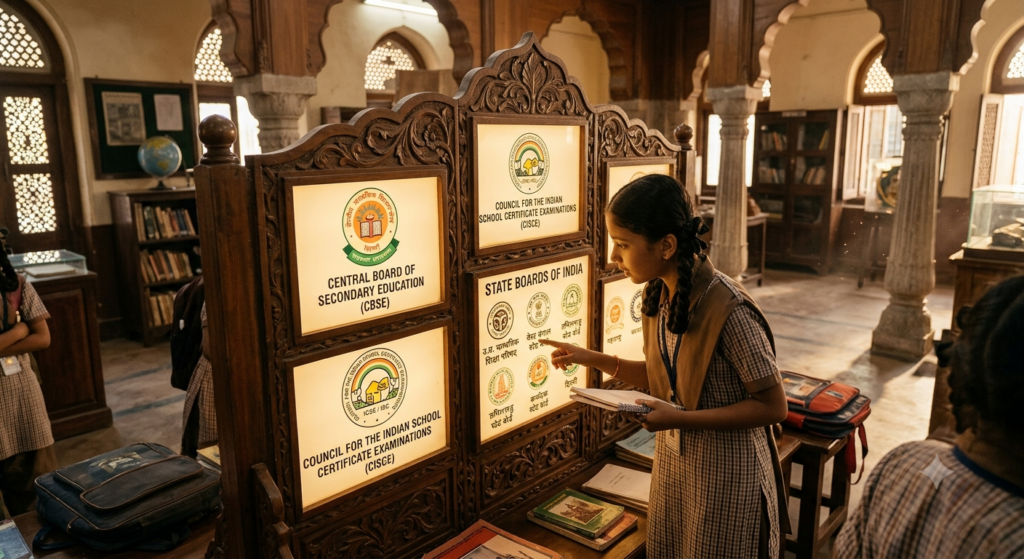
Let’s understand the most popular education boards available for Indian parents.
The CBSE board is one of India’s most widely recognized education systems.
It is followed by thousands of schools across the country and is particularly popular among families that frequently relocate due to transferable jobs.
Students preparing for:
✔ Easier transition between cities
✔ Well-structured curriculum
✔ Widely accepted across India
✔ Competitive exam alignment
CBSE focuses primarily on academics.
Children who enjoy highly creative, project-based, or exploratory learning may need additional opportunities outside the classroom to nurture those interests.
The ICSE board is known for its comprehensive curriculum and strong emphasis on language skills, analytical thinking, and overall personality development.
Students are encouraged to explore concepts in greater depth rather than simply memorizing information.
Students who enjoy:
✔ Excellent English proficiency
✔ Strong conceptual understanding
✔ Holistic education
✔ Encourages creativity
The curriculum is generally more detailed and can feel academically demanding for some students.
Every Indian state has its own education board designed according to regional educational priorities.
For many families, State Boards remain an excellent option.
Students planning to continue higher education within their home state.
✔ Affordable
✔ Familiar learning environment
✔ Regional language options
✔ Suitable for state-level entrance examinations
The curriculum and teaching standards can vary from one state to another.
Parents should evaluate the quality of the individual school rather than judging only the board.
The IB curriculum focuses on developing globally minded learners.
Instead of memorization, students are encouraged to ask questions, conduct research, solve problems, and think independently.
Students planning:
✔ Develops independent thinking
✔ Strong research skills
✔ Global recognition
✔ Focus on creativity and leadership
IB schools generally have higher fees, and the learning approach may differ significantly from traditional Indian education systems.
The Cambridge International Curriculum (IGCSE) offers flexibility and encourages conceptual understanding over rote learning.
Students often have greater subject choices and are encouraged to explore their interests deeply.
Students interested in:
✔ Flexible subject options
✔ Strong conceptual learning
✔ Global acceptance
✔ Encourages critical thinking
Parents should ensure that both the curriculum and the teaching methodology align with their child’s learning preferences and future educational plans.
This is probably the most common question parents ask.
The honest answer is:
There is no universally “best” education board.
The best board is the one that aligns with your child’s:
Two siblings in the same family may even thrive under different educational boards.
The goal should never be to follow trends.
The goal should be to choose what is right for your child.
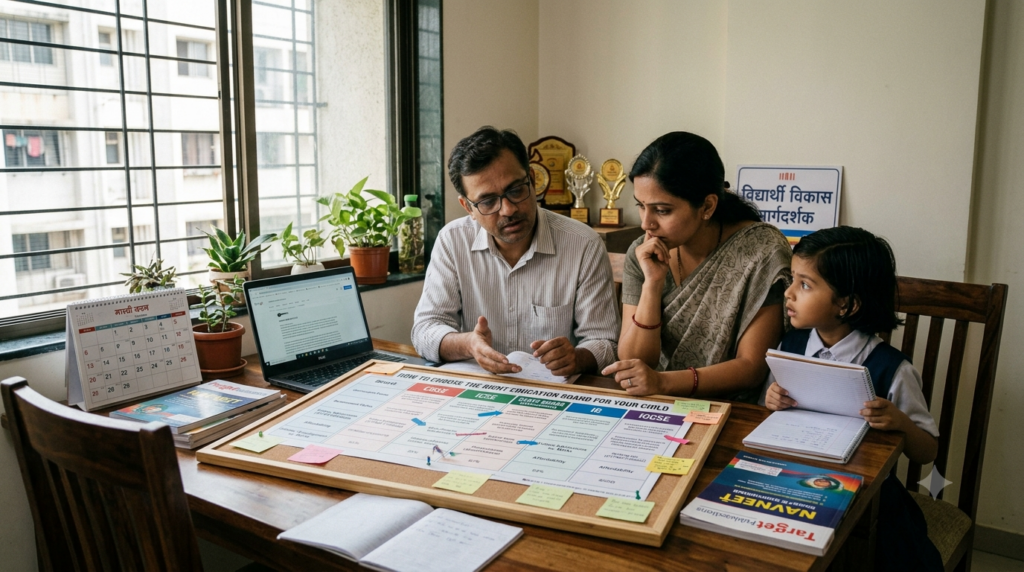
Choosing an education board isn’t about selecting the most popular option—it’s about selecting the one that allows your child to learn happily, grow confidently, and prepare for their future.
Let’s compare the major education boards from a parent’s perspective.
| Feature | CBSE | ICSE | State Board | IB | Cambridge |
|---|---|---|---|---|---|
| Curriculum | Structured | Detailed | State-specific | International | International |
| Learning Style | Concept + Exams | Concept + Language | Practical & Regional | Inquiry-based | Skill-based |
| Competitive Exam Preparation | Excellent | Good | Moderate | Limited | Limited |
| English Language Development | Good | Excellent | Varies | Excellent | Excellent |
| Creativity & Projects | Moderate | High | Moderate | Very High | High |
| International Recognition | Moderate | Moderate | Limited | Excellent | Excellent |
| Best For | JEE, NEET Aspirants | Holistic Learners | State Education | Global Education | International Studies |
Remember: This table is only a general comparison. The quality of teaching, school environment, and your child’s individual needs matter just as much as the board itself.
There is no perfect board…
There is only the right board for the right child.
Instead of asking:
❌ Which board is the toughest?
Ask:
✅ Which board helps my child learn best?
Here are a few important questions every parent should ask before making a decision.
Every child has a unique learning style.
Some children:
📖 Love reading.
Some:
🎥 Learn better through visuals.
Others:
🧪 Understand concepts through experiments and practical activities.
If a child’s learning style doesn’t match the teaching approach of the board, learning can become stressful instead of enjoyable.
Some children naturally enjoy:
The right educational environment should nurture these strengths—not suppress them.
Think about your child’s long-term goals.
For example:
CBSE may be a suitable option because many national entrance exams align closely with its curriculum.
IB or Cambridge could be worth considering.
A well-managed State Board school may also be an excellent choice.
Every board has a different pace.
Some curricula require:
Parents should honestly assess their child’s readiness rather than choosing based on peer pressure.
The board is only one part of your child’s education.
Also evaluate:
✔ Teachers
✔ School culture
✔ Student support
✔ Extracurricular activities
✔ Parent involvement
✔ Safety
✔ Emotional wellbeing
A supportive school often makes a bigger difference than the board itself.
After counselling hundreds of families, I’ve noticed some common patterns.
Avoid these mistakes if you want to make a more informed decision.
One of the biggest reasons parents choose a board is:
“Everyone else is choosing it.”
But remember…
Your child is not “everyone else’s child.”
Every child has different abilities, interests, and aspirations.
A famous school doesn’t automatically mean it’s the right fit.
Parents should look beyond rankings and ask:
This is surprisingly common.
Parents often think:
“My elder child studied in CBSE, so my younger one should too.”
But siblings can have completely different personalities and learning preferences.
What worked for one child may not work for another.
Sometimes parents focus only on marks.
But children also need opportunities to explore:
🎨 Art
🎵 Music
⚽ Sports
💻 Technology
🎭 Performing Arts
The right educational environment encourages both academics and personal growth.
No education board can guarantee:
Success depends on many factors:
The board is only one piece of the puzzle.
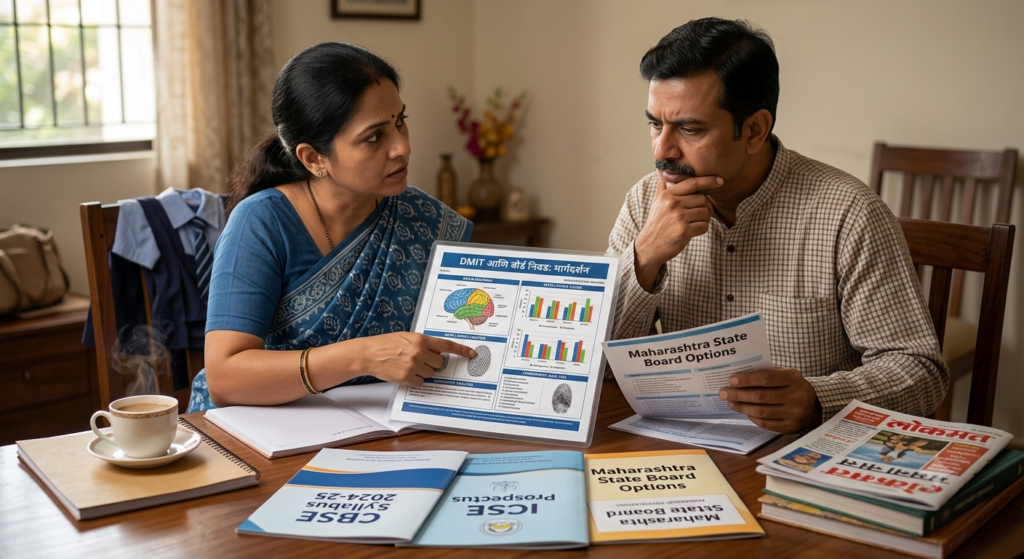
This is a question many parents ask during counselling sessions.
The answer is:
It can provide additional insights—but it should not be the only basis for making educational decisions.
A professionally interpreted DMIT assessment may help parents better understand aspects such as:
When combined with:
…these insights can support more informed decisions about schooling and future educational planning.
DMIT is not a tool for predicting your child’s future or declaring that one education board is universally better than another.
Instead, it can serve as one part of a broader conversation about how your child learns and develops best.
Many parents spend weeks comparing schools.
Very few spend time understanding their child.
Imagine buying the most expensive running shoes…
…but in the wrong size.
No matter how premium they are, they won’t be comfortable.
Education works the same way.
The “best” board is not the one with the biggest reputation.
It’s the one where your child feels confident, engaged, and motivated to learn.
As parents, our goal shouldn’t simply be to help children score marks.
Our goal should be to help them discover their strengths, enjoy learning, and become capable, confident individuals.
This is the most common question parents ask, but there isn’t a one-size-fits-all answer.
The best education board is the one that matches your child’s:
For example:
The decision should always be based on your child—not on trends or social pressure.
Neither board is universally better.
Both have their own strengths.
✔ Structured curriculum
✔ National-level recognition
✔ Excellent for competitive exams
✔ NCERT-based syllabus
✔ Strong English foundation
✔ Project-based learning
✔ Analytical thinking
✔ Balanced focus on academics and extracurricular development
Instead of asking,
“Which board is better?”
Ask,
“Which board is better for my child?”
That single shift in thinking can completely change your child’s educational journey.
Yes.
Many parents change boards due to:
However, frequent changes may affect:
Whenever possible, make an informed decision early to avoid unnecessary transitions.
For national competitive exams like:
Many parents prefer CBSE because the syllabus aligns closely with these examinations.
However…
Students from ICSE, State Boards, IB, and Cambridge also perform exceptionally well every year.
Ultimately, success depends more on:
✔ Consistent preparation
✔ Quality teaching
✔ Self-discipline
✔ Smart study habits
than the board itself.
No.
An education board provides a learning framework.
It does not determine:
A child’s future is shaped by many factors, including:
Choosing the right board is important—but it is only one part of your child’s overall development.
A professionally interpreted DMIT assessment can provide additional insights into a child’s:
These insights can be useful when combined with:
DMIT should be viewed as a guidance tool, not as a method to prescribe one specific education board or predict future success.
As parents, it’s natural to want the very best for your child.
But sometimes, in the race to find the “best school” or the “best board,” we forget the most important question:
“What is truly best for my child?”
Every child has a unique way of thinking, learning, communicating, and growing.
Some flourish in structured academic environments.
Some need creativity and exploration.
Some learn by reading.
Others learn by doing.
Choosing the right education board is not about following what friends, relatives, or society recommend.
It’s about understanding your child’s individuality and selecting an environment where they can grow with confidence, curiosity, and joy.
Because when children learn in an environment that matches their strengths, education becomes less stressful and far more meaningful.
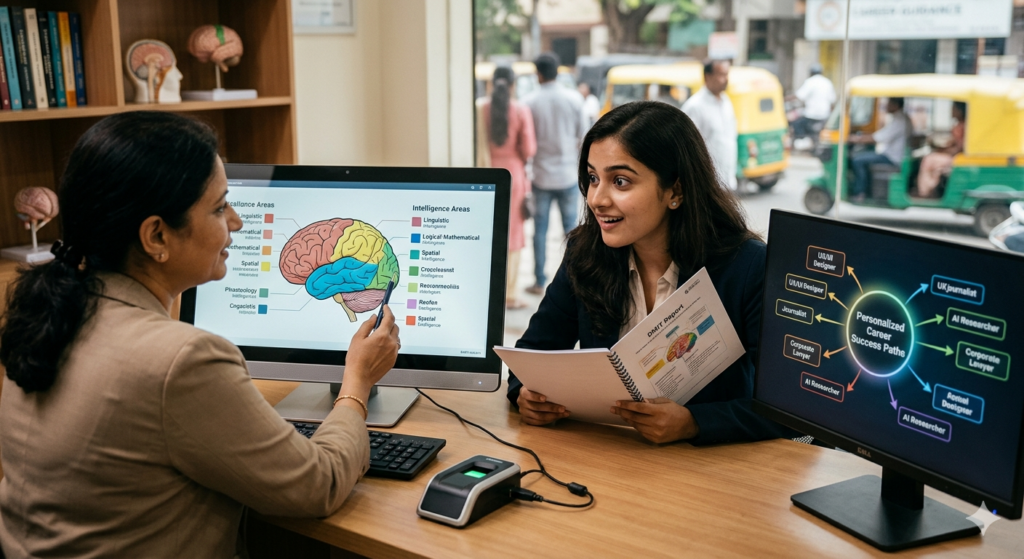
Choosing the right education board is one of the most important decisions you’ll make as a parent—but you don’t have to make it alone.
At SH Development Academy, we help parents make informed educational decisions through personalized DMIT Consultation & Career Guidance.
During the consultation, you’ll gain deeper insights into your child’s:
✅ Natural learning style
✅ Strengths and abilities
✅ Personality traits
✅ Interests and aptitude
✅ Areas where they may need additional support
✅ Educational and career planning guidance
Your consultation will be personally guided by Santosh Hariharan — DMIT Consultant, Parent & Career Coach, and Success Mindset Coach, who has helped 1,000+ parents and students make more confident educational and career decisions.
👉 Book Here:
https://docs.google.com/forms/d/e/1FAIpQLSd6-u-BEr3ESzoHq2CXjkYZIr41O1eqh3ip97Lj3JbZ-6xSPA/viewform
👉 Click here to see 310+ Google Reviews:
https://share.google/ac9hkh20zcXadkJs9
Phone:
+91 8421315400
+91 7303290862
The right education board won’t guarantee success.
But choosing a board that aligns with your child’s unique strengths can create a happier learning experience, build lasting confidence, and lay a stronger foundation for the future.
Take the time to understand your child before making one of the most important educational decisions of their life.
Because the best board isn’t the most popular one—it’s the one where your child can truly learn, grow, and thrive. 🌱
Success & Happiness are the two most important yet elusive things which every human being yearns to achieve in life. Real success and happiness can be savoured only when one enjoys good health and good family relations, along with a good professional career and sound financial stability.
Our Visitor


 Users Today : 6