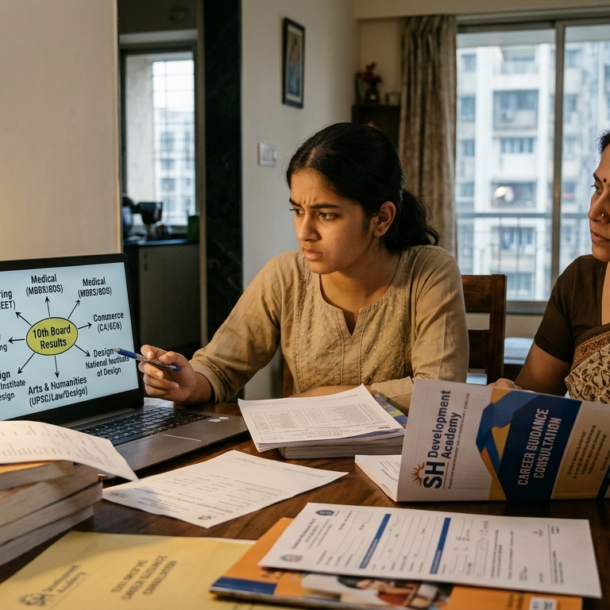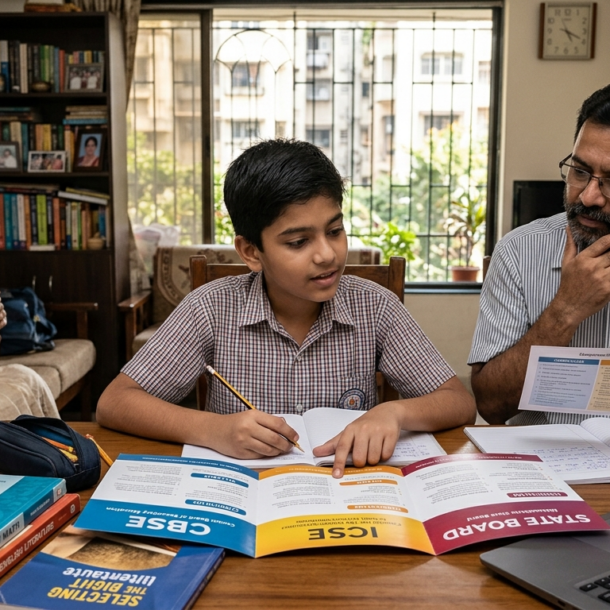
Choosing a stream after Class 10 is one of the biggest decisions in a student’s life. It influences higher education, career opportunities, and sometimes even confidence. Yet, every year, thousands of students choose a stream based on marks, peer pressure, or common myths rather than understanding their true strengths.
As a DMIT Consultant, Parent & Career Coach, I have interacted with hundreds of parents and students over the years. One thing I’ve consistently observed is this:
Most students don’t choose the wrong stream because they lack ability—they choose it because they lack clarity.
If you’re wondering “How should you choose between Arts/Humanities vs Commerce?”, this guide will help you make an informed decision based on interests, aptitude, personality, and future career goals—not just popular opinion.
Class 10 is often the first major turning point in a student’s academic journey. Once results are announced, the focus quickly shifts to selecting a stream. Many families treat this as a race:
“My cousin chose Commerce, so you should too.”
“Arts has fewer career options.”
“Commerce is only for students who want to become Chartered Accountants.”
These statements are common—but they’re also oversimplified.
The reality in 2026 is very different.
Today’s careers are evolving rapidly. Fields like digital marketing, content creation, psychology, design, financial technology (FinTech), business analytics, law, UX research, behavioural science, entrepreneurship, and public policy have opened exciting opportunities for students from both Arts and Commerce backgrounds.
The question is no longer:
“Which stream has more scope?”
The better question is:
“Which stream aligns with my child’s natural strengths, interests, and career aspirations?”
When students choose a stream that suits their abilities, they generally:
On the other hand, choosing the wrong stream can lead to frustration, low performance, and the need to switch paths after a few years.
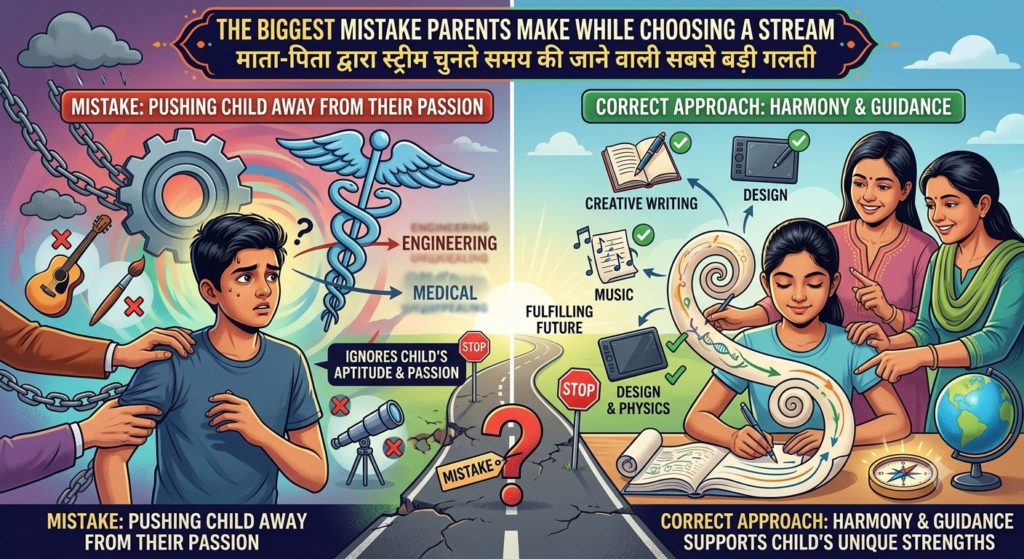
Many parents genuinely want the best for their children. However, in the process, they sometimes make decisions based on outdated beliefs.
Some common mistakes include:
Scoring high marks in mathematics doesn’t automatically mean Commerce is the right choice.
Similarly, enjoying history or literature doesn’t necessarily mean Arts is the only option.
Marks indicate performance in school—they don’t always reveal natural aptitude or long-term career fit.
Many students hear statements like:
While family guidance is valuable, every child has a unique personality, learning style, and career potential.
One child may thrive in finance, while another may excel in psychology or journalism.
One of the most harmful habits in parenting is comparison.
Every child develops at a different pace and has different interests.
Choosing a stream because a friend or cousin selected it can lead to unnecessary pressure and disappointment.

For many years, Arts was unfairly labelled as the “last option.” Thankfully, that perception is changing.
Today, Arts and Humanities are among the fastest-growing fields because they develop skills that artificial intelligence cannot easily replace—creativity, empathy, communication, critical thinking, and human understanding.
Arts or Humanities focuses on understanding people, society, culture, communication, behaviour, history, economics, politics, languages, and creativity.
Students typically study subjects such as:
Different education boards may offer slightly different subject combinations.
Arts is an excellent choice for students who naturally enjoy:
These students often enjoy discussions more than calculations and may have strong observation and analytical skills.
That doesn’t mean they dislike numbers—it simply means they are naturally more inclined toward human behaviour, ideas, communication, and creativity.
One of the biggest myths is that Arts has limited career options.
In reality, students can build successful careers in areas such as:
Many aspirants preparing for UPSC, MPSC, and other civil service examinations come from Humanities backgrounds.
Popular roles include:
With increasing awareness about mental health and student wellbeing, psychology has become one of India’s fastest-growing career options.
Students can become:
Arts students frequently pursue integrated law programmes after Class 12.
Law offers careers in:
If a student enjoys creativity and communication, opportunities include:
Arts students also excel in:
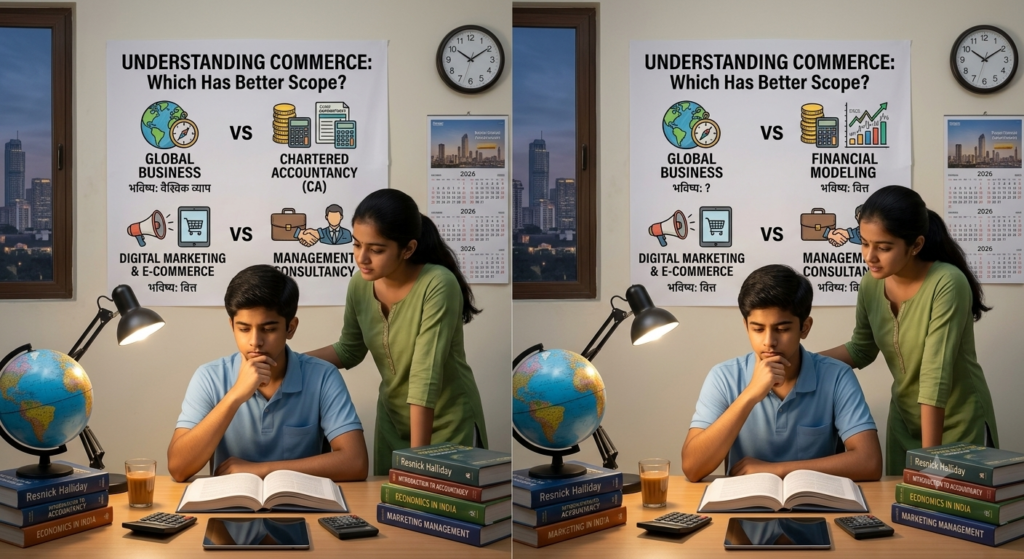
Commerce remains one of the most popular streams in India—and for good reason.
It combines business knowledge, financial understanding, economics, accounting, entrepreneurship, and management skills.
Students interested in understanding how businesses work often enjoy Commerce.
Commerce is the study of trade, business, finance, accounting, taxation, economics, banking, and entrepreneurship.
Typical Commerce subjects include:
Commerce may be a good fit for students who enjoy:
Many Commerce students also have leadership qualities and enjoy planning, budgeting, and understanding markets.
Commerce offers a wide variety of career paths.
Some popular options include:
With India’s growing startup ecosystem and digital economy in 2026, Commerce graduates also have increasing opportunities in fintech, e-commerce, business consulting, and entrepreneurship.
One of the biggest misconceptions among parents is asking:
“Which stream is better?”
The honest answer is:
Neither.
Arts is not inferior to Commerce.
Commerce is not superior to Arts.
The right stream depends entirely on the student’s:
As a Parent & Career Coach, I’ve seen Arts students become successful entrepreneurs and Commerce students build rewarding careers in finance and business. Success doesn’t come from the stream—it comes from choosing a path that matches who you truly are.
Now comes the question that almost every parent and student asks after Class 10:
“Which stream has better career opportunities—Arts or Commerce?”
The truth is, this is the wrong question.
A better question would be:
“Which stream matches my child’s interests, personality, aptitude, and future aspirations?”
Let’s compare both streams across different parameters to help you make an informed decision.
| Factor | Arts/Humanities | Commerce |
|---|---|---|
| Focus | Human behavior, society, communication, creativity | Business, finance, economics, management |
| Best For | Creative thinkers, communicators, analytical minds | Logical thinkers, business-oriented students, problem solvers |
| Core Subjects | Psychology, History, Sociology, Political Science, Geography | Accountancy, Business Studies, Economics, Mathematics |
| Career Direction | Law, Psychology, Civil Services, Media, Design | CA, CS, Banking, Finance, Business, Entrepreneurship |
| Skills Developed | Creativity, communication, empathy, research | Financial literacy, analytical thinking, decision-making |
| Learning Style | Conceptual and discussion-based | Practical, numerical and analytical |
Neither stream is “better.” They simply prepare students for different kinds of careers.
The biggest misconception about Arts is that it offers fewer career opportunities.
That may have been a common belief years ago, but today’s job market tells a very different story.
With the rise of Artificial Intelligence (AI), automation, and digital transformation, companies are increasingly looking for professionals who possess uniquely human skills—critical thinking, creativity, communication, emotional intelligence, leadership, and problem-solving.
These are precisely the strengths that Arts and Humanities students often develop.
Students from Arts can pursue careers in:
Many of these industries are expected to grow significantly in the coming years.
Commerce continues to be one of India’s most popular streams because business and finance remain at the heart of every economy.
Today’s Commerce students are no longer limited to accounting.
They now have opportunities in:
Commerce students can become:
Commerce also provides a strong foundation for students who dream of starting their own business.
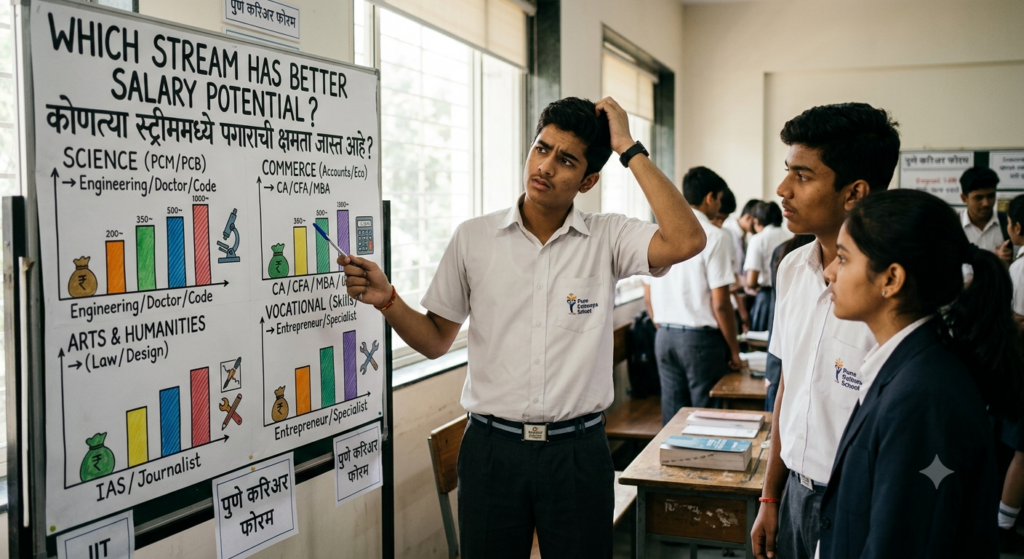
This is probably the most searched question by parents.
The honest answer is:
Salary depends more on skills than on the stream you choose.
Let’s look at a few examples.
A successful:
In today’s economy, employers value:
Much more than the stream itself.
Both streams offer hundreds of career opportunities.
The difference lies in the nature of work.
The goal isn’t to choose the stream with “more” opportunities.
It’s to choose the stream with the right opportunities for your child.
Parents often hear advice from relatives, neighbours, or even well-meaning friends.
Unfortunately, much of that advice is based on outdated myths.
Let’s clear a few of them.
Absolutely false.
Arts requires strong communication, analytical thinking, creativity, research, and critical reasoning.
Many toppers deliberately choose Arts because it aligns with their interests and career goals.
Not necessarily.
Many schools offer Commerce without Mathematics.
Students interested in business, accounting, marketing, or entrepreneurship can still pursue excellent careers depending on their chosen courses.
No stream can guarantee income.
Success depends on:
This myth couldn’t be further from reality.
Today’s world needs:
Many of these professions are among the fastest-growing careers globally.
Instead of asking,
“Which stream is best?”
Ask yourself:
✔ What subjects do I genuinely enjoy?
✔ What type of work excites me?
✔ Do I enjoy solving numerical problems or understanding people?
✔ Am I creative?
✔ Do I enjoy business ideas?
✔ Do I enjoy communication and public speaking?
✔ Can I imagine myself doing this work for the next 15–20 years?
These questions often reveal more than marks alone.

As parents, your role is not to choose your child’s future.
Your role is to help them discover it.
Here are a few suggestions:
Understand your child’s interests before suggesting a stream.
Every child has different abilities.
Comparison creates pressure—not clarity.
A career isn’t just about income.
It’s about satisfaction, growth, confidence, and purpose.
Allow your child to explore career options through workshops, internships, career counselling, and aptitude assessments.
The more informed the decision, the lower the chances of regret later.
One student may thrive as a Chartered Accountant.
Another may become an exceptional psychologist.
A third may become a successful entrepreneur, lawyer, or designer.
The stream doesn’t determine success.
The alignment between your child’s natural abilities and chosen career path does.
That’s why choosing the right stream should never be based on trends, family pressure, or popular opinion.
It should be based on understanding who your child truly is.

As a DMIT Consultant, Parent & Career Coach, this is probably the most common question I hear from parents every year after the Class 10 board exams:
“Sir, my child has scored well… but we’re confused. Should we choose Arts or Commerce?”
My answer is always the same:
Don’t choose a stream first. Understand the child first.
Unfortunately, many students choose a stream based on:
But here’s the reality…
Two students may score exactly 90% in their board exams, yet they may be completely different individuals.
One may enjoy solving business problems, analysing numbers, and planning finances.
The other may love psychology, writing, debating, understanding people, or creative thinking.
On paper, their marks look similar.
But their natural abilities, personality, interests, and future career satisfaction can be completely different.
That’s why choosing a stream based only on marks is never enough.
Every child is born with a unique combination of strengths.
Some naturally think logically.
Some communicate exceptionally well.
Some are creative problem-solvers.
Some are empathetic listeners.
Some become excellent leaders.
Others excel behind the scenes as researchers, planners, or analysts.
When parents understand these natural tendencies early, choosing the right stream becomes much easier.
Instead of guessing…
You start making informed decisions.
A professionally interpreted DMIT (Dermatoglyphics Multiple Intelligence Test) is not about predicting your child’s future.
Instead, it serves as a guidance tool that helps parents better understand their child’s natural learning preferences and strengths.
A detailed DMIT consultation may provide insights into areas such as:
These insights can become valuable discussion points while planning your child’s education and career path.
However, it’s important to remember that DMIT should be used as one part of the overall decision-making process, along with your child’s interests, academic performance, experiences, and professional career counselling.
While DMIT focuses on understanding innate characteristics, a Psychometric Aptitude Assessment evaluates factors such as:
When interpreted by an experienced career counsellor, these assessments can help students explore career options that align with both their strengths and aspirations.
The goal isn’t to tell a student:
“You must become this.”
Instead, it’s to help them understand:
“These are careers where your strengths are likely to flourish.”
That shift in perspective makes all the difference.
A parent once told me,
“Sir, my son loves business ideas but also enjoys public speaking. We are confused between Commerce and Arts.”
Instead of giving an immediate answer, we explored:
Only then did the right direction become clear.
That’s the difference between choosing a stream and planning a career.
Choosing Arts or Commerce doesn’t just affect the next two years of school.
It influences:
That’s why it’s worth investing time in making the decision carefully.
A few hours of expert guidance today can prevent years of confusion later.
Neither stream is universally better.
The best stream is the one that aligns with the student’s interests, aptitude, personality, and long-term career aspirations.
Both streams offer excellent opportunities.
Commerce opens pathways into business, finance, accounting, entrepreneurship, and management.
Arts provides opportunities in psychology, law, civil services, media, design, education, public policy, and many other growing fields.
Absolutely.
Income depends on skills, expertise, experience, and career growth—not simply the stream chosen after Class 10.
Many successful lawyers, psychologists, entrepreneurs, content strategists, and consultants come from Arts backgrounds.
Yes.
Commerce students can enter fields such as marketing, HR, business analytics, entrepreneurship, digital business, consulting, operations, and management.
Start by understanding:
Professional career guidance and aptitude assessments can provide additional clarity.
Choosing between Arts/Humanities and Commerce is not about selecting the stream with the highest salary or the greatest popularity.
It’s about selecting the stream where your child can learn with curiosity, grow with confidence, and build a meaningful career.
As parents, it’s natural to want the very best for your child.
But sometimes, the best decision isn’t the most popular one.
It’s the one that is right for your child.
Remember:
A child’s future should be built on their strengths—not on society’s expectations.
When students choose a path that matches their natural abilities, they don’t just perform better academically—they enjoy learning, become more confident, and are more likely to build fulfilling careers.
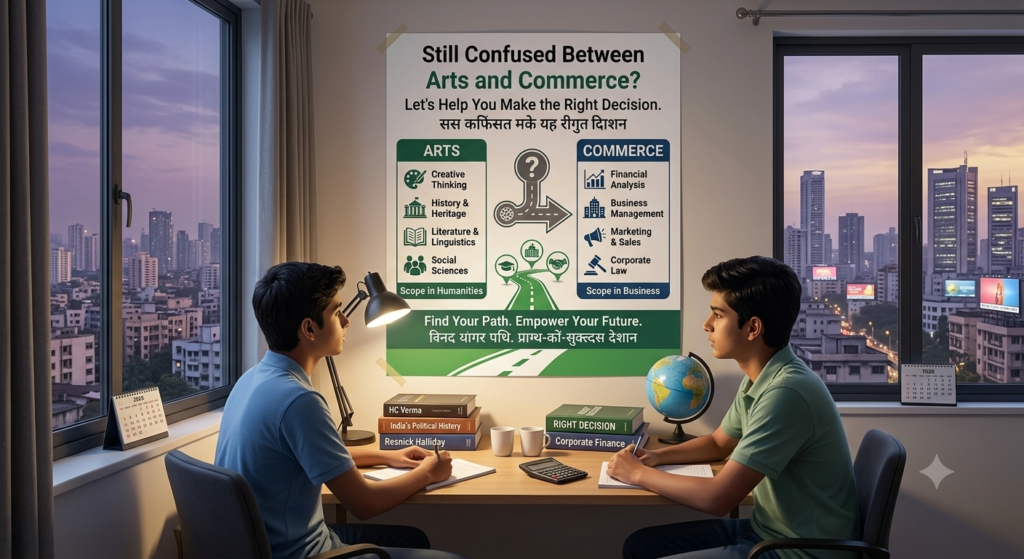
If your child is in Class 9, 10, 11, or 12 and you’re unsure which stream or career path is the best fit, don’t leave such an important decision to guesswork.
At SH Development Academy, we help students and parents make informed career decisions through our DMIT Consultation and Online Psychometric Aptitude Assessment, followed by a personalized Career Guidance Consultation.
Your consultation is personally guided by Santosh Hariharan — DMIT Consultant, Parent & Career Coach, and Success Mindset Coach for Students, who has helped 1,000+ students and parents gain clarity about education and career planning.
✅ Your child’s learning style
✅ Natural strengths and abilities
✅ Career interests and aptitude
✅ Personality and behavioural preferences
✅ Suitable stream and career options
✅ A practical roadmap for future academic and career planning
⭐ Trusted by 400+ Parents & Students
👉 Click here to see our 400+ Google Reviews:
https://share.google/ac9hkh20zcXadkJs9
📅 Book Your DMIT & Career Guidance Consultation Today:
https://docs.google.com/forms/d/e/1FAIpQLSd6-u-BEr3ESzoHq2CXjkYZIr41O1eqh3ip97Lj3JbZ-6xSPA/viewform
📞 Call / WhatsApp:
+91 8421315400
+91 7303290862
Because choosing the right stream isn’t just about the next two years—it’s about building a future your child will enjoy for decades to come.
Success & Happiness are the two most important yet elusive things which every human being yearns to achieve in life. Real success and happiness can be savoured only when one enjoys good health and good family relations, along with a good professional career and sound financial stability.
Our Visitor


 Users Today : 0