
Parenting has changed dramatically in the last few years.
There was a time when parents simply followed what their parents had taught them.
Today, you can open Instagram and find 50 different opinions about how to raise a child before breakfast.
One expert says, “Never say no to your child.”
Another says, “Your child needs more discipline.”
Someone else tells you to optimize every hour of your child’s day.
And now, with AI, you can even ask a chatbot what to say when your child refuses to study.
The problem?
Parenting is not a formula.
What works beautifully for one child may completely fail with another.
As a parent and career coach, I have seen this repeatedly: parents are often not short of love. They are short of clarity about their individual child.
That is why, in 2026, I believe we need to move away from parenting trends that create more pressure, guilt and confusion—and return to something much simpler:
Understand your child. Set healthy boundaries. Stay connected. Guide according to the child’s individuality.
Here are 5 parenting trends to leave behind in 2026—and 3 that are worth keeping.

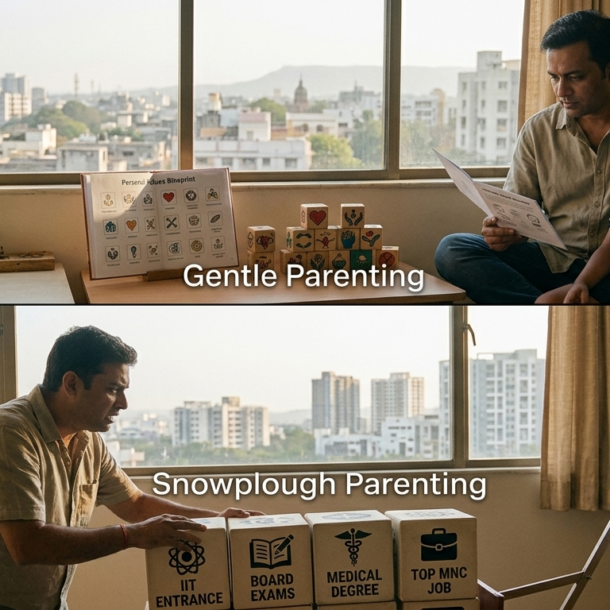
Gentle parenting became popular for a good reason.
It encouraged parents to understand emotions instead of simply shouting:
“Stop crying!”
It reminded us that children are human beings with feelings—not machines that must obey every instruction immediately.
That part is valuable.
The problem starts when gentle parenting is misunderstood as boundary-free parenting.
A child is upset because you said no to another hour of screen time.
You validate the emotion.
Good.
But if validation becomes:
“Okay, take the phone. I don’t want you to feel bad.”
every single time, you haven’t taught emotional regulation.
You’ve taught the child that strong emotions can change the boundary.
Try this combination:
Warmth + Boundaries + Consistency
You can say:
“I understand that you’re upset because you want more time on the phone. It’s okay to feel disappointed. But screen time is finished for today.”
You don’t have to shout.
You don’t have to threaten.
And you don’t have to surrender.
Being a gentle parent does not mean being a permissive parent.
In 2026, the better approach is increasingly about combining emotional connection with clear expectations and age-appropriate consequences.
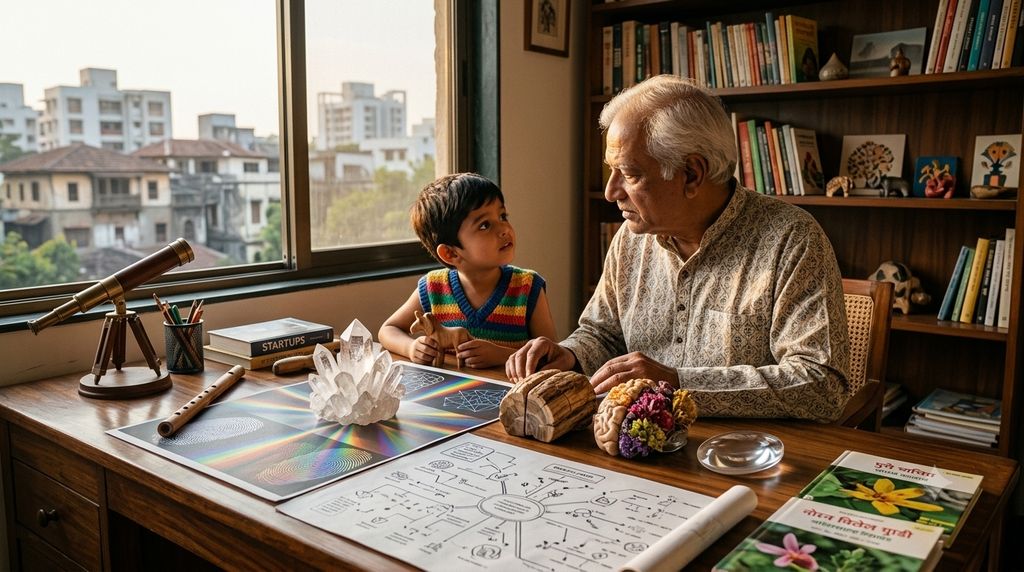
AI is incredibly useful.
It can help parents understand concepts, organize ideas, prepare questions for a teacher or doctor, create study plans and find educational resources.
But there is a major difference between using AI as a tool and outsourcing your judgment as a parent to AI.
This distinction is becoming particularly important in 2026.
The American Academy of Pediatrics has highlighted both the potential benefits of generative AI for children and the risks—including misinformation, privacy concerns and children developing inappropriate perceptions of AI as a friend or caregiver.
So if your child is struggling with something significant—whether behavioural, emotional, developmental, academic or health-related—don’t make a chatbot your final authority.
Use technology to prepare better questions.
Then speak to the right human professional.
A child is not a prompt.
A parenting decision should consider context that an AI tool may never fully understand:
Technology can assist parenting. It shouldn’t replace parenting.

This is one of the trends I would most strongly encourage parents to rethink.
Your child’s Monday:
School.
Tuesday:
School + tuition.
Wednesday:
School + coding.
Thursday:
School + music.
Friday:
School + sports.
Saturday:
Olympiad preparation + another class.
Sunday:
Test preparation.
And somewhere between all of this, the child is expected to:
“Relax and enjoy childhood.”
How?
Many parents are trying to optimize every possible advantage for their children.
Better marks.
Better English.
Better sports.
Better coding.
Better communication.
Better extracurriculars.
Better college profile.
But there is a point where development becomes over-scheduling.
Children also need:
🌱 Unstructured play
🌱 Family time
🌱 Rest
🌱 Boredom
🌱 Imagination
🌱 Time to explore their own interests
Boredom is not always a problem that needs to be solved.
Sometimes, boredom is where creativity begins.
And not every hobby needs to become a certificate.
Not every sport needs to become a career.
Not every interest needs to become an achievement.
Let your child experience something simply because they enjoy it.
Your child scored well.
Post it.
Your child won a competition.
Post it.
Your child said something funny.
Post it.
Your child is crying.
Maybe post that too.
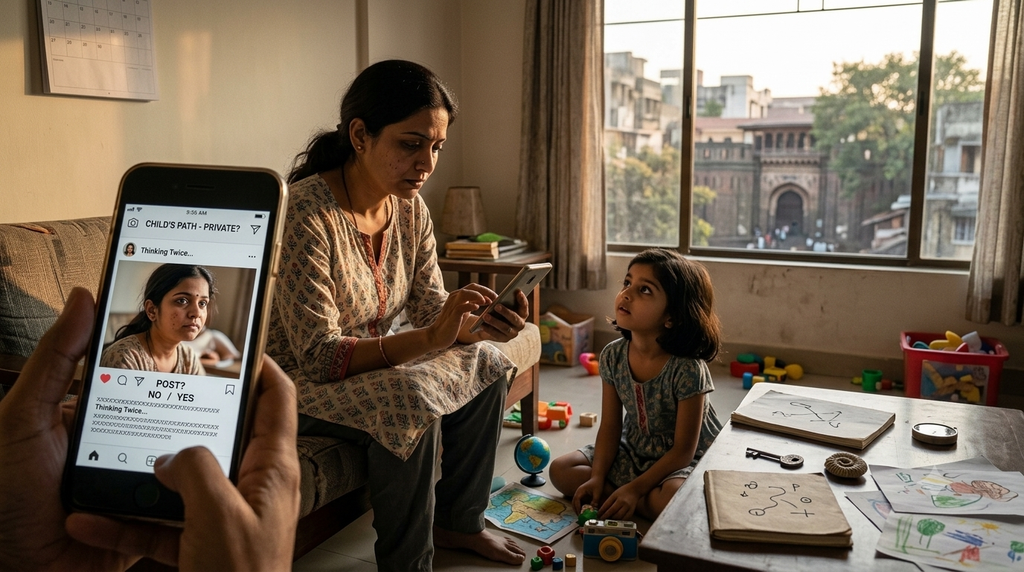
This culture of “sharenting”—sharing children’s lives online—deserves much more thought than it often receives.
UNICEF warns that sharing children’s information, photographs and personal moments online can create privacy, safety and digital-footprint concerns. It also recommends involving children in age-appropriate decisions about what gets shared.
Ask yourself one simple question before posting:
“If my child sees this photograph or story at 18, will they be comfortable that I shared it?”
If you’re unsure, don’t post it.
Your child’s childhood does not need an audience.
Some memories are meant to remain family memories—not Instagram content.
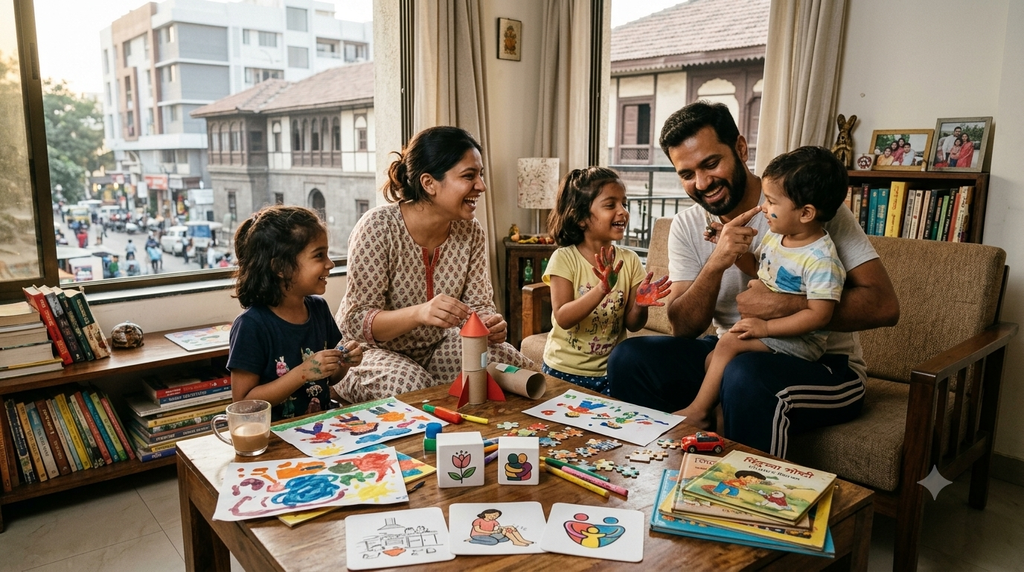
There is another subtle parenting trend that many people don’t talk about enough.
The pressure to look like a perfect parent.
Perfect children’s room.
Perfect lunchbox.
Perfect birthday.
Perfect vacation.
Perfect family photograph.
Perfect child.
Perfect parenting advice.
But real parenting is messy.
Children have bad days.
Parents lose patience.
Dinner gets delayed.
Homework becomes an argument.
The house becomes chaotic.
And that’s normal.
Your child doesn’t need a perfect parent.
They need a parent who can say:
“I got that wrong. I’m sorry. Let’s try again.”
That teaches something far more valuable than perfection:
accountability.
Don’t raise your child to believe that life has to look perfect.
Teach them how to handle life when it doesn’t.
Not every modern parenting trend needs to disappear.
Some changes are genuinely positive.
Here are 3 parenting principles worth keeping.
Talk to your child.
Listen.
Ask questions.
Understand their feelings.
Create a home where they can tell you:
“I’m scared.”
“I don’t understand this subject.”
“My friends are doing something I don’t want to do.”
“I’m confused about my future.”
But emotional connection doesn’t mean eliminating boundaries.
Your child can disagree with you.
Your child can be angry with you.
And you can still say:
“I love you, but this boundary is important.”
That’s parenting.
Technology isn’t going away.
And telling children:
“Don’t use your phone.”
is rarely a complete solution.
Parents need to teach children how to use technology responsibly.
Talk about:
UNICEF notes that features such as infinite scrolling, autoplay, notifications and engagement-driven algorithms can make it harder for children and adults to disengage from social platforms.
So don’t make the phone the enemy.
Teach your child how to manage the phone.
That is a skill they will need for life.
This, in my opinion, is perhaps the most important parenting principle of all.
Stop asking:
“What works for children?”
Start asking:
“What works for MY child?”
Because your child isn’t a generic child.
Maybe your daughter needs more verbal encouragement.
Maybe your son needs hands-on learning.
Maybe one child responds well to competition while another shuts down completely when compared with others.
Maybe one child loves social interaction while another needs quiet time to recharge.
Maybe one child needs a push.
Another needs reassurance.
Another needs independence.
Same parents. Same home. Different children. Different needs.
That’s why understanding the individual child matters so much.
This is where I would encourage parents to pause.
You can read 100 parenting books.
Follow 50 parenting accounts.
Watch hundreds of reels.
Download parenting apps.
Ask AI questions.
But if you don’t understand your own child’s individuality, you can still end up parenting through trial and error.
Ask yourself:
These questions are much more useful than simply following the latest parenting trend.
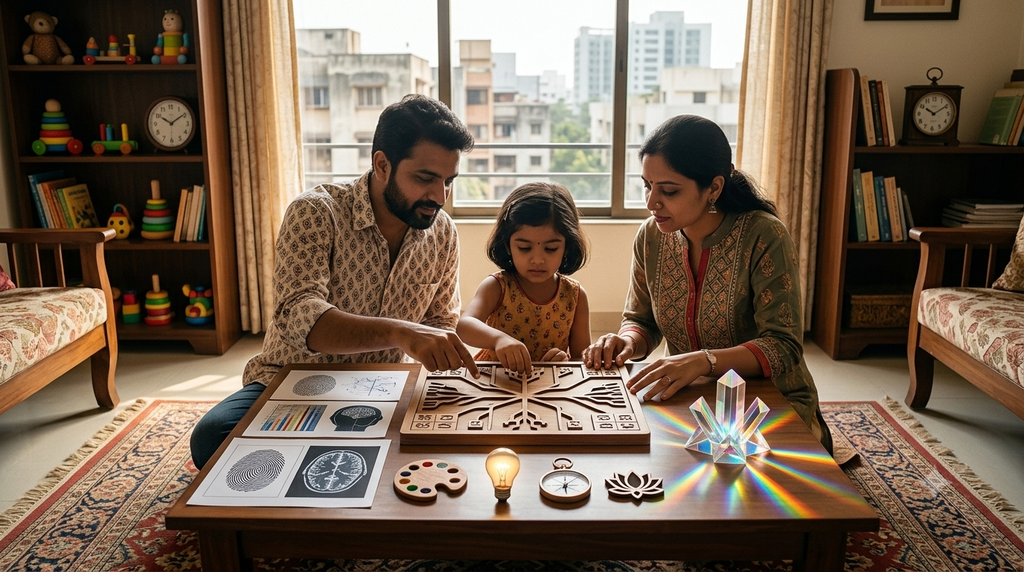
This is where a DMIT assessment can become useful as a parenting guidance tool.
DMIT—Dermatoglyphics Multiple Intelligence Test—is designed to provide insights into areas such as learning preferences, multiple-intelligence profiles and behavioural characteristics, depending on the assessment methodology and report used.
But I always tell parents:
Don’t treat any assessment as a crystal ball.
A DMIT report should not be used to put your child into a permanent box.
It should be used as a conversation starter and guidance framework.
For example, instead of saying:
“My child is lazy.”
A parent can start asking:
“Is my child’s learning environment actually suitable for the way they learn?”
Instead of:
“My child has no interest in anything.”
Ask:
“Have we given our child enough opportunities to discover what genuinely interests them?”
Instead of:
“Why doesn’t my child behave like other children?”
Ask:
“What makes my child different—and how can I support that difference?”
That’s a much healthier parenting mindset.
This distinction is extremely important.
Don’t use a report to say:
❌ “My child is not good at this.”
❌ “My child can never become that.”
❌ “This is the only career for my child.”
Instead, use it to explore:
✅ Strengths
✅ Learning preferences
✅ Behavioural tendencies
✅ Areas that may need support
✅ Possible interests
✅ Better ways to communicate
✅ Better ways to encourage learning
The purpose should be guidance—not limitation.
Because children grow.
Their interests change.
Their environment changes.
Their confidence changes.
Their experiences change.
A good parent leaves room for that growth.
Perhaps the biggest shift we need is this:
Instead of asking,
“How do I make my child successful?”
ask:
“How do I understand my child well enough to help them become the best version of themselves?”
There is a difference.
The first question can create pressure.
The second creates curiosity.
And curiosity changes parenting.
Parenting in 2026 doesn’t need to become more complicated.
You don’t need to follow every viral parenting technique.
You don’t need to create a perfectly optimized child.
You don’t need to become an expert in everything.
Start with three things:
Understand your child.
Set healthy boundaries.
Stay connected.
And when you need additional clarity, use the right tools and the right professionals rather than relying on guesswork.
Because ultimately, your child doesn’t need a trending parenting method.
They need a parent who understands them.
Every child is different.
And sometimes the biggest parenting breakthrough happens when parents stop asking:
“How do I change my child?”
…and start asking:
“How do I understand my child better?” ❤️
At SH Development Academy, we use DMIT as one of the tools for helping parents gain a deeper understanding of their child’s individual strengths, learning preferences and potential areas of development.
The assessment is followed by guidance so that parents can think about how to communicate, support, encourage and guide their child more effectively—rather than simply receiving a report and putting it away.
The consultation is guided by Santosh Hariharan — DMIT Consultant, Parent & Career Coach and Success Mindset Coach for Students, with extensive experience working with parents and students.
👉 Book a DMIT Consultation with SH Development Academy
📞 Call / WhatsApp:
+91 8421315400 | +91 7303290862
⭐ 400+ parents have trusted our guidance.
The goal isn’t to find a label for your child.
The goal is to understand them better—and parent them better.
Success & Happiness are the two most important yet elusive things which every human being yearns to achieve in life. Real success and happiness can be savoured only when one enjoys good health and good family relations, along with a good professional career and sound financial stability.
Our Visitor


 Users Today : 14