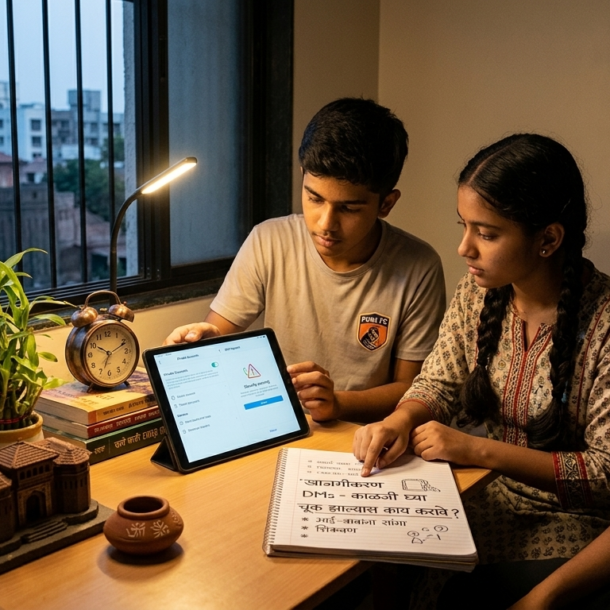

Every parent wants the same thing.
“I want my child to be happy, confident and successful.”
But the way we try to achieve that can be very different.
Some parents say:
“I don’t want to shout at my child. I want to understand what they are feeling.”
Others say:
“My child shouldn’t have to struggle like I did. I’ll make sure everything is taken care of.”
Both parents are coming from a place of love.
But there is an important difference between supporting a child and removing every difficulty from their path.
That brings us to an increasingly discussed parenting question in 2026:
For Indian parents, this question is particularly relevant.
We live in a culture where education, marks, entrance exams, career choices and social expectations can put enormous pressure on both children and parents. Sometimes, in our attempt to protect our children from failure, we unknowingly start doing everything for them.
And sometimes, in our attempt to be “gentle parents,” we become afraid of saying no.
So what is the balanced approach?
Let’s understand it practically.
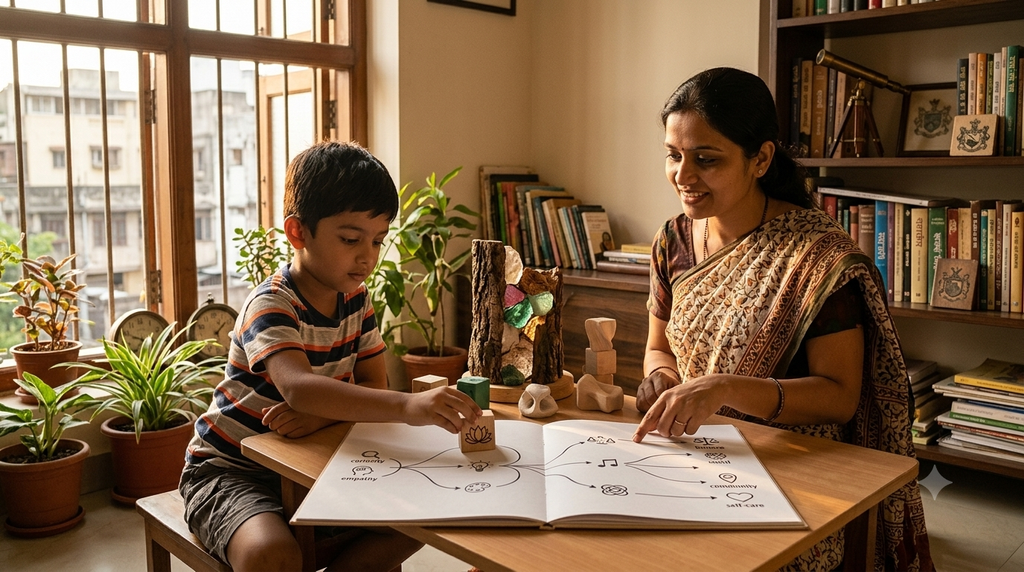
Gentle parenting is an approach based on empathy, respect, connection and age-appropriate boundaries.
The idea is not to control a child through fear, shouting or punishment.
Instead, the parent tries to understand:
“What is my child feeling, and how can I teach them to handle it?”
But there is one important misunderstanding about gentle parenting.
It does not mean:
❌ Let the child do whatever they want
❌ Never say no
❌ Avoid consequences
❌ Allow disrespect
❌ Give in whenever the child cries
Good gentle parenting still has boundaries.
For example, instead of:
“Stop using the phone! How many times do I have to tell you?”
a parent might say:
“I know you’re enjoying the game, but screen time is over now. You can be upset, but the rule is still the rule.”
The child’s emotion is accepted.
The inappropriate behaviour is not.
That distinction is extremely important.
Current guidance from the American Psychological Association and UNICEF similarly emphasizes warmth and responsiveness alongside firm, predictable boundaries rather than choosing between affection and discipline.
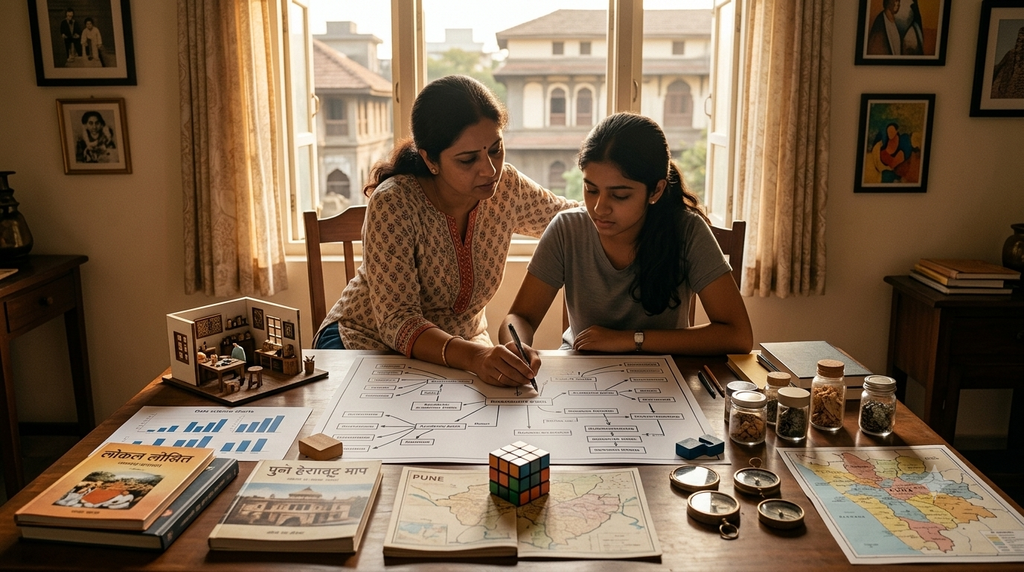
Snowplough parenting is quite different.
The term is used for parents who try to remove obstacles from their child’s path before the child has to face them.
Think of a snowplough clearing a road.
The parent sees a possible problem and thinks:
“My child shouldn’t have to go through this.”
So they step in.
A child gets a poor grade → parent immediately contacts the teacher.
A child has an argument with a friend → parent calls the other child’s parents.
A child forgets an assignment → parent completes or manages it.
A child doesn’t like an activity → parent immediately removes the challenge.
A child is struggling with a decision → parent makes the decision.
The intention may be love.
But the unintended message can become:
“You cannot handle difficult situations without me.”
That is where overprotection can become a problem.
Clinical guidance on snowplough parenting notes that repeatedly removing challenges can interfere with children’s opportunities to develop problem-solving, independence and coping skills.
The simplest way to understand the difference is this:
“I will stand beside you while you learn to handle this.”
“I will remove this problem so you don’t have to handle it.”
That’s a small difference in words.
But it can create a very different experience for a growing child.
| Gentle Parenting | Snowplough Parenting |
|---|---|
| Understands emotions | Tries to prevent difficult emotions |
| Sets boundaries | May remove obstacles |
| Allows age-appropriate mistakes | Tries to prevent mistakes |
| Teaches problem-solving | Solves problems for the child |
| Supports independence | Can create dependence |
| Guides the child | Takes over for the child |
| Says “I’m here to help” | Says “I’ll handle it” |
The goal isn’t to make childhood difficult.
The goal is to make sure that our protection doesn’t prevent our child from developing the ability to protect and guide themselves.
If we are looking at the child’s long-term development, a balanced, supportive approach is generally more helpful than constantly removing challenges.
But I would make one important clarification as a parent and child-development coach:
Don’t turn this into another parenting competition.
You don’t have to decide:
“From tomorrow, I will become a perfect gentle parent.”
And you don’t need to feel guilty if you’ve helped your child too much in the past.
Parenting is not about getting every decision right.
It’s about becoming more aware of what your child needs at each stage of development.
The American Psychological Association describes authoritative parenting as combining warmth and responsiveness with firm limits, and its parenting resources associate this balance with outcomes such as self-reliance, self-control and curiosity.
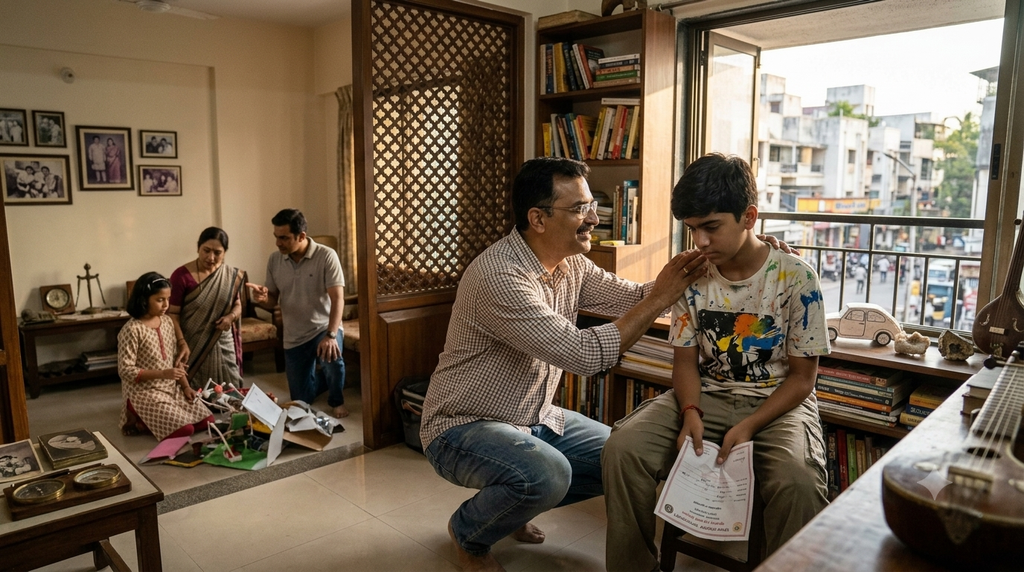
This is where the two approaches become particularly important.
Imagine your child gets 55% in a mathematics test.
A snowplough response might be:
“I’ll speak to the teacher. Maybe the paper was too difficult. We’ll arrange another tuition class.”
A harsh response might be:
“What is wrong with you? You should have scored 80%!”
Neither is particularly helpful.
A balanced response could be:
“I know you’re disappointed. Let’s understand what went wrong. Which questions were difficult? What can you do differently next time?”
Notice what happened.
The parent didn’t ignore the problem.
The parent didn’t solve it either.
The parent helped the child learn how to solve it.
That’s the difference between rescuing and supporting.
This is something many Indian parents find difficult to accept.
We naturally want to give our children what we didn’t have.
Perhaps you struggled financially.
Perhaps you didn’t have access to good coaching.
Perhaps your parents couldn’t guide you about careers.
So now you think:
“My child shouldn’t face any of that.”
That’s understandable.
But there is a subtle difference between:
Giving your child opportunities
and
removing every challenge.
Give them opportunities.
Give them education.
Give them emotional support.
Give them guidance.
But also give them opportunities to:
These experiences help children develop competence and resilience.
Let’s make this practical.
Instead of:
“Sit down and study! You never listen!”
Try:
“I can see you’re not in the mood right now. But studying is still part of today’s routine. Let’s decide whether you want to start with Maths or Science.”
You’re giving a choice within a boundary.
Don’t immediately jump to:
“I’ll call the teacher.”
First ask:
“What do you think happened?”
Let the child analyse the situation.
Then ask:
“What can we change before the next test?”
You are teaching accountability without humiliation.
Don’t immediately pick up the phone.
First ask:
“What happened?”
Then:
“What do you think you could have done differently?”
If necessary, guide them.
But allow them to develop their own conflict-resolution skills.
This is especially important in Indian families.
Your first reaction may be:
“There is no future in that career.”
Instead, ask:
“Tell me what attracts you to this field.”
Then explore:
You don’t have to blindly approve.
But you also don’t have to immediately reject.
Understand first. Guide second.
This is one of the most important points parents should remember.
Children need love.
But they also need structure.
They need:
❤️ Emotional safety
📏 Clear boundaries
🎯 Expectations
🧠 Opportunities to think
💪 Responsibility
🌱 Independence
UNICEF’s 2026 guidance similarly emphasizes that positive or gentle parenting involves listening to children’s feelings while setting clear limits and calmly enforcing them.
So the goal isn’t:
“My child should never feel uncomfortable.”
The goal is:
“My child should know how to deal with discomfort safely and constructively.”
In my experience of working with parents, many parenting problems don’t come from a lack of love.
They come from too much fear.
Fear that:
And that fear can slowly turn into over-parenting.
Sometimes we need to ask ourselves:
That’s a powerful parenting question.
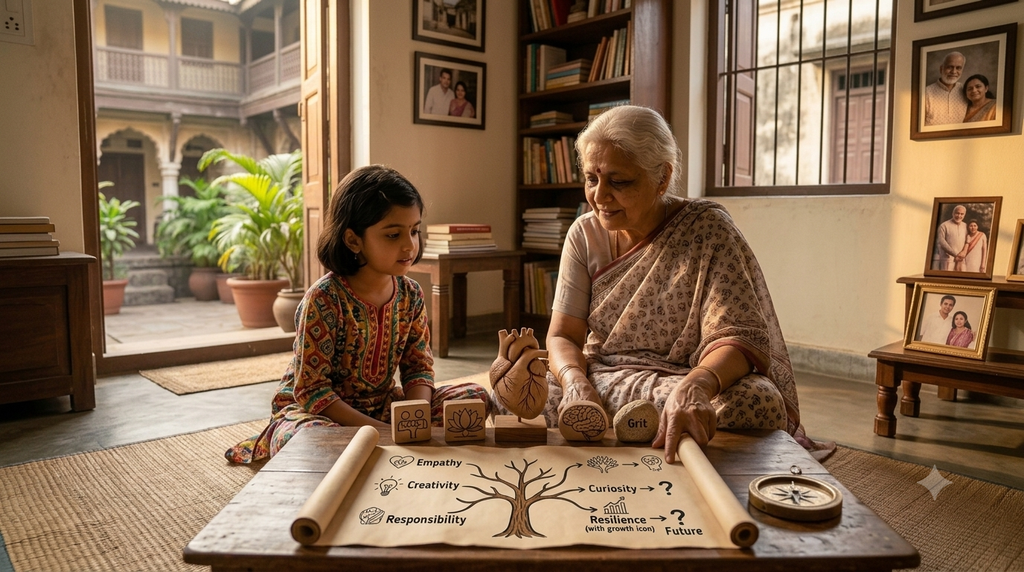
You don’t need to become strict to build a resilient child.
Try these five habits.
Don’t immediately provide the answer.
Ask:
“What do you think we can do?”
If a child forgets something because they didn’t prepare, let them experience the natural consequence when it is safe to do so.
Instead of only saying:
“You’re so intelligent.”
Try:
“I liked how you kept trying even when the question was difficult.”
This reinforces persistence.
Don’t say:
“Don’t cry.”
Say:
“I can see you’re upset. Let’s calm down first, and then we’ll solve this.”
A five-year-old and a fifteen-year-old cannot have the same level of responsibility.
As children grow, parents should gradually move from:
Doing → Helping → Guiding → Stepping Back
That’s how independence develops.
Absolutely — and this is where individualized child understanding becomes important.
One of the biggest parenting mistakes is assuming:
“What worked for my first child will work for my second child.”
Not necessarily.
Two children raised in the same house can have very different:
One child may respond well to verbal explanations.
Another may need demonstrations.
One may enjoy competition.
Another may shut down under pressure.
One may need more independence.
Another may need more reassurance.
Good parenting is not only about knowing parenting techniques. It’s about knowing the child you’re parenting.

This is one area where I believe parents should look beyond the idea of DMIT being “just a test.”
A professionally interpreted DMIT report can be used as one input for understanding a child’s learning preferences, strengths, behavioural tendencies and areas that may need support.
It can help parents ask better questions:
How does my child learn best?
What kind of environment brings out their strengths?
Why might they respond differently from another child?
Which activities could give them opportunities to explore their strengths?
How should I communicate with them?
However, I always advise parents not to treat a DMIT report as a fixed label or a guaranteed prediction of the child’s future.
A child is not a report.
A report is simply one tool that can support observation, conversation, counselling and better parenting decisions.
Imagine you know that your child responds better to visual learning.
Instead of repeatedly saying:
“Read this chapter again!”
you might introduce:
📊 Mind maps
🖼️ Diagrams
🎥 Visual explanations
📝 Colour-coded notes
Or imagine you understand that your child needs more time to process information.
Instead of:
“Why don’t you answer immediately?”
you give them a little more thinking time.
That’s the real purpose of understanding a child.
Not to label them.
Not to put them in a box.
But to change our approach so that the child gets a better opportunity to grow.
So, gentle parenting vs snowplough parenting — which should Indian parents choose?
My answer is:
Your child needs:
❤️ Love without fear
📏 Boundaries without humiliation
🧠 Guidance without micromanagement
🎯 Expectations without constant comparison
💪 Support without overprotection
🌱 Freedom with responsibility
In simple words:
Don’t clear every obstacle from your child’s road. Teach them how to walk the road.
And when the road becomes genuinely difficult, be there.
Not as their replacement.
As their guide.
The next time your child comes to you with a problem, don’t immediately ask:
“How can I fix this?”
Instead ask:
You may be surprised by how much your child can handle when given the opportunity.
And you may also discover that sometimes they don’t need a solution from you.
They simply need to know:
“I’m here.”
There is no perfect parenting style.
And there is certainly no perfect parent.
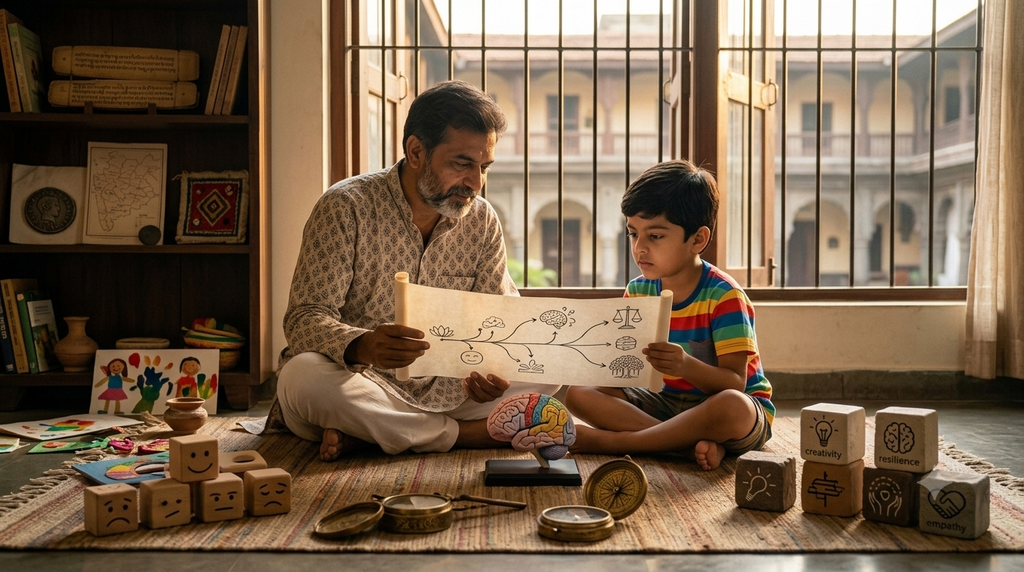
What matters is whether we are helping our children gradually become:
Gentle parenting can give children emotional safety.
Boundaries can give them structure.
Age-appropriate challenges can give them resilience.
And thoughtful guidance can help them understand their strengths.
The sweet spot is not “protect them from everything.”
It is:
If you’re a parent who sometimes wonders:
“Am I parenting my child in the right way?”
“Why does my child behave differently from other children?”
“How should I support my child’s natural strengths?”
“Am I pushing too much—or protecting too much?”
You don’t have to figure everything out through trial and error.
At SH Development Academy, we help parents understand their children through DMIT-based assessment and personalized parent & career counselling.
As a DMIT Consultant, Parent & Career Coach and Student Success Mindset Coach, Santosh Hariharan brings together years of experience working with parents and students to help families make more informed decisions about learning, development and future direction.
A DMIT consultation isn’t about putting your child into a box.
It’s about asking better questions, understanding their individual strengths and helping you become a more informed parent.
📞 For DMIT Consultation:
+91 8421315400 | +91 7303290862
👉 Book a DMIT Consultation:
Book Your DMIT Consultation
⭐ 400+ parents have trusted our guidance.
Read our Google Reviews
Success & Happiness are the two most important yet elusive things which every human being yearns to achieve in life. Real success and happiness can be savoured only when one enjoys good health and good family relations, along with a good professional career and sound financial stability.
Our Visitor


 Users Today : 6