

Your teenager has suddenly become quieter.
They spend more time on their phone. 📱
They smile at messages you cannot see.
Maybe there is someone they like.
And suddenly, as a parent, you are wondering:
“Should I ask?”
“What if they are in a relationship?”
“Will talking about relationships encourage them?”
“How do I explain boundaries without making my child uncomfortable?”
If you are an Indian parent dealing with these questions, you are not alone.
Teenagers are growing up in a very different environment today. Social media, messaging apps, online friendships, entertainment and changing social norms have made relationships a normal part of teenage life.
At the same time, Indian families often find these conversations uncomfortable.
So parents either avoid the topic completely—or start the conversation only after something has gone wrong.
There is a better way.
Talk early. Listen calmly. Guide without shaming.

For many Indian parents, the word “relationship” immediately creates fear.
You may be thinking about:
These concerns are understandable.
But there is an important distinction:
Talking to your teenager about relationships is not the same as encouraging them to have one.
The purpose of the conversation is to make sure that if your child ever faces a difficult situation, you are the person they feel safe approaching—not the last person they want to tell.
UNICEF India recommends that parents create regular opportunities for teenagers to talk about everyday life, feelings, friendships, school and worries, while listening without immediately judging or trying to solve everything.

Many parents think there needs to be one big conversation:
“Today I am going to sit my son/daughter down and explain everything about relationships.”
That can feel like an interrogation to a teenager.
Instead, think about many small conversations.
A discussion about a movie.
A conversation about a friend’s situation.
Something you saw on social media.
A celebrity relationship.
A news story.
These everyday moments can become natural opportunities to discuss:
❤️ Respect
🧠 Emotions
🔐 Privacy
🚦 Boundaries
🤝 Consent
🎯 Priorities
This approach makes difficult topics much easier.
Don’t start with:
❌ “Are you having an affair?”
❌ “Who are you talking to on your phone?”
❌ “I know you are hiding something from me.”
❌ “At your age, you should only be studying.”
Instead, try:
“I know relationships and friendships can become more complicated during teenage years. If you ever like someone or feel confused about a friendship, you can talk to me. I may not agree with everything, but I will listen first.”
That one sentence can completely change the atmosphere.
You are not giving permission.
You are opening the door for communication.
This is the section I would bookmark if I were a parent.
Don’t immediately panic.
Instead of:
❌ “You are too young for all this!”
Try:
“Thank you for telling me. I know liking someone can feel exciting and confusing at the same time. Tell me what you like about this person.”
Then listen.
You don’t have to approve.
First, understand.
Instead of arguing:
“I understand that it may feel like everyone around you is doing it. But you don’t have to make a decision simply because your friends are making one. What matters is whether you are comfortable, safe and able to handle the situation responsibly.”
This teaches your child independent decision-making rather than simply obedience.
This one can hurt.
Your natural reaction may be:
“After everything I do for you, how can you say that?”
Pause.
Try:
“Maybe I don’t fully understand what you’re feeling right now. Help me understand. I’m listening.”
Sometimes your teenager doesn’t need a solution.
They need to feel heard.
UNICEF similarly advises parents to listen with care, avoid rushing to judge or solve everything, and create regular opportunities for communication.
This is where many parents react emotionally.
You may feel angry, disappointed or worried.
But your first reaction can determine whether your child ever tells you the truth again.
Instead of:
❌ Shouting
❌ Threatening
❌ Insulting the person
❌ Taking away the phone immediately
❌ Saying “I don’t trust you anymore”
Try:
“I need some time to process this, but I am glad you told me. Let’s talk about what this relationship means to you and how you are handling it.”
Then discuss:
The goal is not to win an argument.
The goal is to keep the communication channel open.
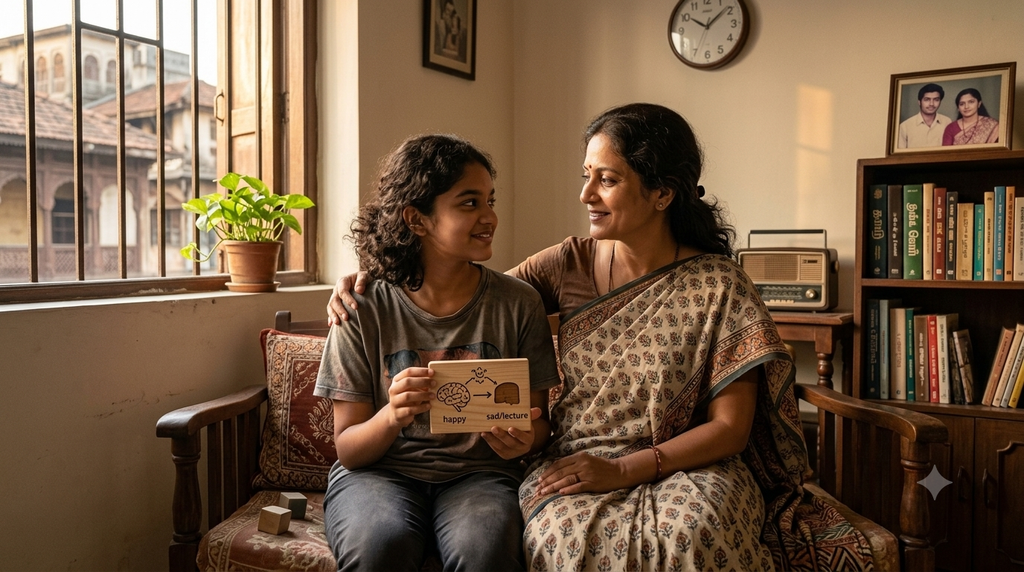
Teenagers need to understand that liking someone doesn’t remove the need for boundaries.
You can say:
“You have the right to decide what you are comfortable with, and the other person has the same right. If either person feels uncomfortable, pressured or afraid to say no, that’s a problem.”
Talk about:
Your body, privacy and personal space belong to you.
Don’t share private photographs, passwords or sensitive information simply because someone asks.
A healthy relationship should not require constant checking, controlling or proving your love.
No relationship should involve threats, humiliation, intimidation or pressure.
Today’s relationships don’t always begin at school.
They can begin through:
So don’t make the conversation only about “meeting someone.”
Talk about digital safety too.
You can tell your teenager:
“If someone online asks you to hide conversations from us, send private pictures, meet secretly, or threatens you when you say no, please come to me. You will not be punished for asking for help.”
That final sentence is powerful.
“You will not be punished for asking for help.”
It tells your child that coming to you is safer than hiding.
This is where Indian parents often become anxious.
You may think:
“Relationship mein pad gaya toh 10th/12th ke marks ka kya hoga?”
Academic priorities are important.
But constantly saying “relationship = distraction” may cause your teenager to hide the relationship rather than manage it responsibly.
Instead, ask:
“How are you balancing your friendship/relationship with your studies, sleep, health and responsibilities?”
Now you’re teaching balance and accountability.
That is a much more valuable life skill than simply saying “No.”
This is another moment when parents can either strengthen or damage the relationship.
Avoid:
❌ “I told you this would happen.”
❌ “You wasted so much time.”
❌ “Forget it. Focus on studies.”
Instead:
“I know this hurts right now. You don’t have to pretend you’re okay. I’m here if you want to talk.”
Give them space.
Keep routines going.
And watch for significant changes in sleep, eating, school attendance, social withdrawal or functioning.
If distress persists or becomes severe, professional support can be appropriate. UNICEF India advises parents to seek help early when distress lasts, interferes with daily life, or is accompanied by serious warning signs.
Avoid words like:
“Characterless.”
“Disgraceful.”
“You have spoiled our name.”
Shame rarely creates better decision-making.
“Look at Sharma ji’s daughter…”
Comparison usually closes communication rather than improving it.
There is a difference between being involved and investigating your child.
Ask questions—but leave room for your teenager to speak.
Your child is more than their academic performance.
If every conversation eventually becomes:
“How much did you score?”
they may stop sharing the rest of their life with you.
Don’t force a two-hour conversation.
Try something smaller.
Go for a walk.
Have chai together.
Drive somewhere.
Cook together.
Watch something together.
Then casually say:
“Whenever you feel like talking about anything—friends, studies, relationships, whatever—you can come to me.”
And leave it there.
Sometimes the best parenting conversation is the one you don’t force.
UNICEF recommends creating everyday opportunities for connection rather than relying only on formal conversations.
When your teenager shares something difficult, try this sequence:
Don’t interrupt immediately.
Ask:
“What happened?”
“How are you feeling?”
“What do you think about it?”
Only after understanding the situation, share your perspective.
This doesn’t mean parents should become passive.
Parents still need to establish appropriate rules, safety boundaries and responsibilities.
The difference is how those boundaries are communicated.
Evidence-based parenting guidance emphasizes strengthening parent-child relationships and reducing harsh parenting approaches.
Good parenting doesn’t mean saying yes to everything.
It also doesn’t mean controlling everything.
It means gradually moving from:
“I will decide everything for you.”
towards:
“I will help you learn how to make responsible decisions.”
Adolescence is a period of rapid cognitive and psychosocial development, and young people increasingly develop their identity and independence. WHO highlights the importance of safe, supportive environments and parental support during this stage.
Interestingly, the Indian Academy of Pediatrics’ 2026 action plan includes adolescent topics specifically addressing parenting in the teen years and adolescent relationships—showing how important these issues have become in current Indian child-health practice.
You may have come across the 7-7-7 rule online.
Different parenting sources use the term differently, so it should not be treated as a universal evidence-based parenting standard.
The bigger principle is much more useful:
Create regular, intentional time for connection with your child.
A weekly outing, a daily conversation, a shared meal, or simply 15 minutes of undistracted attention can matter more than following a rigid formula.
Discipline should teach responsibility—not communicate:
“There is something wrong with you.”
Instead of attacking the child:
❌ “You are irresponsible.”
Address the behaviour:
“You broke the agreed rule. Let’s talk about what happened and what needs to change.”
Also notice effort and progress.
UNICEF recommends realistic expectations, positive language and attention to children’s strengths and progress as part of supportive parenting.
Be careful with the word “manipulative.”
Teenagers can sometimes:
These behaviours don’t automatically mean the child is manipulative.
Instead of labeling the child, ask:
What need is behind this behaviour?
Is it:
Understanding the behaviour helps parents respond more effectively.
First, don’t make gratitude the only measure of good behaviour.
Teach it through modelling.
Instead of repeatedly saying:
“You don’t appreciate anything I do!”
Try:
“In our family, we acknowledge the effort people make for us. Let’s think about how we can show appreciation.”
And remember: teenagers can be emotionally intense and inconsistent.
Correct disrespect when necessary—but don’t turn every difficult moment into a character judgment.
This is probably the most important message I would leave with every parent.
Your teenager will eventually make decisions without you standing beside them.
The real question is:
When they have a difficult decision to make, will they think of you as someone they can approach?
Because you won’t always be able to control:
But you can influence the kind of relationship they have with you.
And that relationship can become their safety net.
Your child doesn’t need a perfect parent.
They need a parent who is willing to understand before judging, listen before lecturing, and guide before controlling.
And sometimes, becoming a better parent begins with understanding the child in front of you—not the child you imagined you would have.
That is also why understanding your child’s personality, strengths, learning preferences and behavioural tendencies can be valuable as part of a broader parenting and career-guidance process.
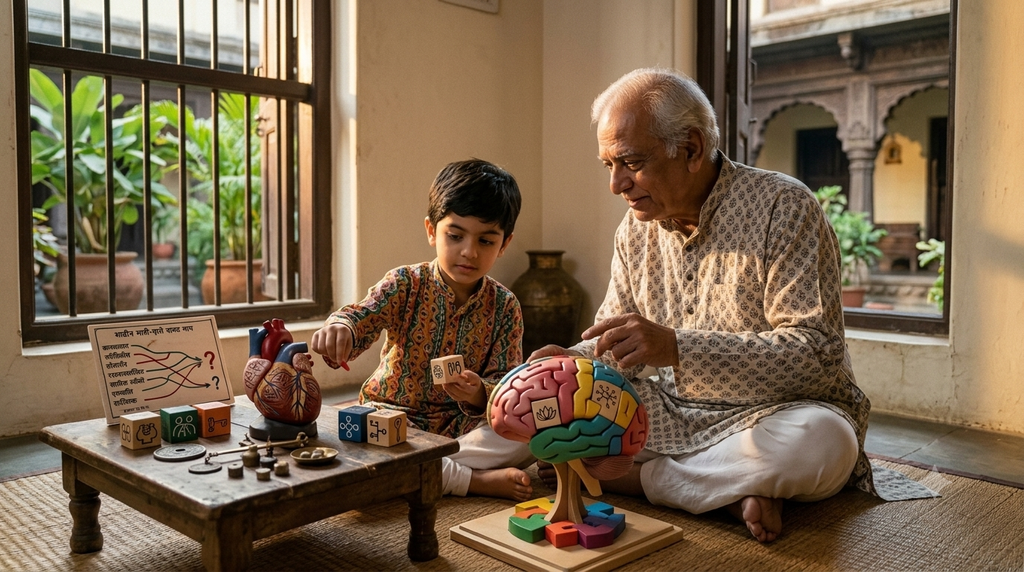
At SH Development Academy, Santosh Hariharan works with parents and students as a DMIT Consultant, Parent & Career Coach and Success Mindset Coach for Students.
A DMIT consultation can help parents explore their child’s strengths, learning preferences, personality-related tendencies and areas that may need support.
It should not be treated as a magic answer or a substitute for professional mental-health care. Instead, think of it as one additional tool that can help you ask better questions and understand your child more thoughtfully.
📱 +91 8421315400 | +91 7303290862
⭐ 400+ Google Reviews
Because parenting doesn’t come with an instruction manual.
But better understanding can make you a better guide for your child.
Success & Happiness are the two most important yet elusive things which every human being yearns to achieve in life. Real success and happiness can be savoured only when one enjoys good health and good family relations, along with a good professional career and sound financial stability.
Our Visitor


 Users Today : 17