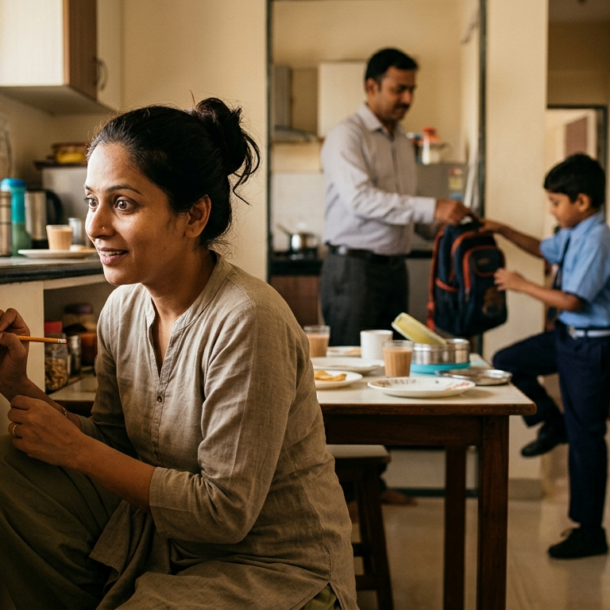

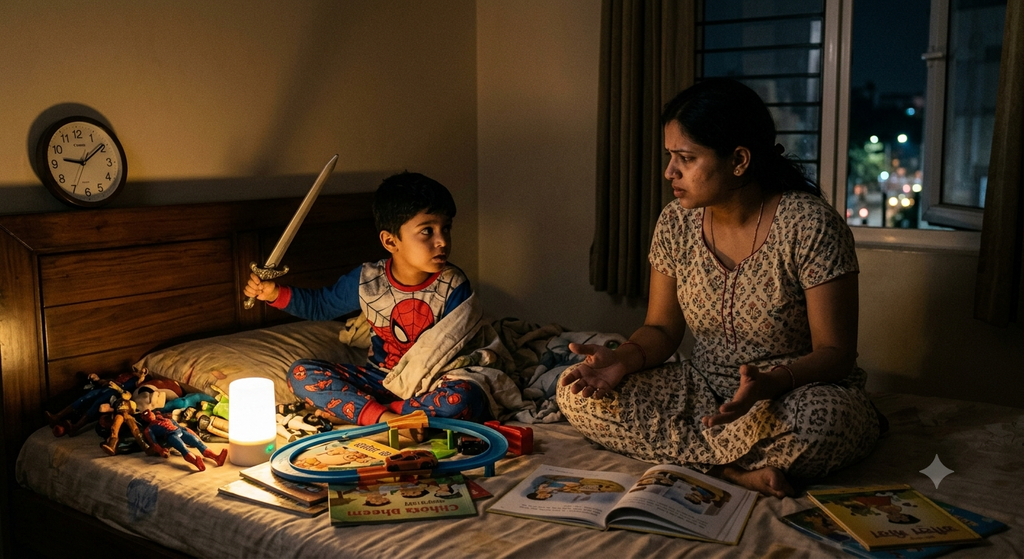
If bedtime at your home looks like this…
🧸 “I don’t want to sleep!”
💧 “I want water!”
📱 “One more video!”
📖 “Tell me another story!”
…and somehow a 20-minute bedtime routine turns into a 90-minute negotiation, you are definitely not alone.
For many parents, bedtime becomes the most exhausting part of the day. But here’s something important to understand:
Your toddler may not be trying to make bedtime difficult. They may simply be struggling with the transition from an active day to sleep.
A predictable bedtime routine for toddlers can make that transition much easier. The American Academy of Pediatrics recommends simple, consistent rituals such as Brush, Book, Bed, while pediatric guidance also emphasizes keeping bedtime predictable and avoiding stimulating activities close to sleep.
So instead of fighting bedtime every night, let’s make it predictable.
Toddlers are discovering independence.
They want to decide:
And when you suddenly say, “It’s bedtime!”, their brain may hear:
“Fun is over. I have no control anymore.”
That’s why resistance, crying, stalling and tantrums can happen.
The solution isn’t necessarily to become stricter.
The solution is to create a predictable sequence that your child learns to recognize.
When toddlers know what comes next, transitions generally become easier.
You don’t need a complicated routine.
Try this simple structure:
Give your toddler a clear signal:
“Bedtime is starting.”
Take them to the bathroom, change into night clothes and brush their teeth.
Don’t turn this into another negotiation.
Keep your voice calm and your movements slow.
Now comes the most important part: connection before separation.
You can:
❤️ Give a gentle hug
📖 Read a short book
🎵 Sing a quiet song
💬 Talk briefly about their day
Avoid exciting games, rough play or screens.
The goal isn’t entertainment.
The goal is winding down.
The AAP specifically recommends quiet bedtime activities such as reading, bathing or soft music and advises against active play immediately before sleep.
Toddlers love choices.
But don’t give unlimited choices.
Instead of:
❌ “What do you want to do before sleeping?”
Try:
“Which book do you want—this one or this one?”
Then:
“Do you want one hug or two?”
Small choices give your toddler a sense of control while keeping the bedtime boundary with you.
Now keep the final steps exactly the same every night.
For example:
🧸 Teddy in bed
🤗 Hug
💋 Goodnight kiss
🌙 Lights dim
😴 Sleep
You can use the same sentence every night:
“It’s bedtime now. You’re safe. I love you. Goodnight.”
Eventually, that sentence itself can become a sleep cue.
Here’s where many parents struggle.
They follow the routine for two nights…
Then on Friday:
“Okay, today you can sleep late.”
Then Sunday:
“Just one more cartoon.”
Then Monday:
“Why isn’t my child sleeping on time?”
Toddlers learn through repetition.
A predictable bedtime routine helps them know what to expect, and consistency helps establish healthy sleep patterns.
Don’t aim for a perfect bedtime. Aim for a predictable bedtime.
This is where parents often get pulled into negotiations.
Try the “last call” technique.
Before getting into bed, say:
“Last water. Last toilet. Last hug. Then bedtime.”
Meet genuine needs before lights-out.
After that, calmly repeat:
“It’s bedtime now.”
You don’t need a long explanation every time.
Ideally, keep screens away from the wind-down period.
A child watching an exciting cartoon or scrolling through stimulating content right before bed may find it harder to transition into a calm state.
Instead, replace screen time with:
📖 Books
🧩 Quiet play
🎵 Soft music
🤗 Conversation
🛁 Bath time
The objective is simple:
Move from stimulation → connection → calm → sleep.
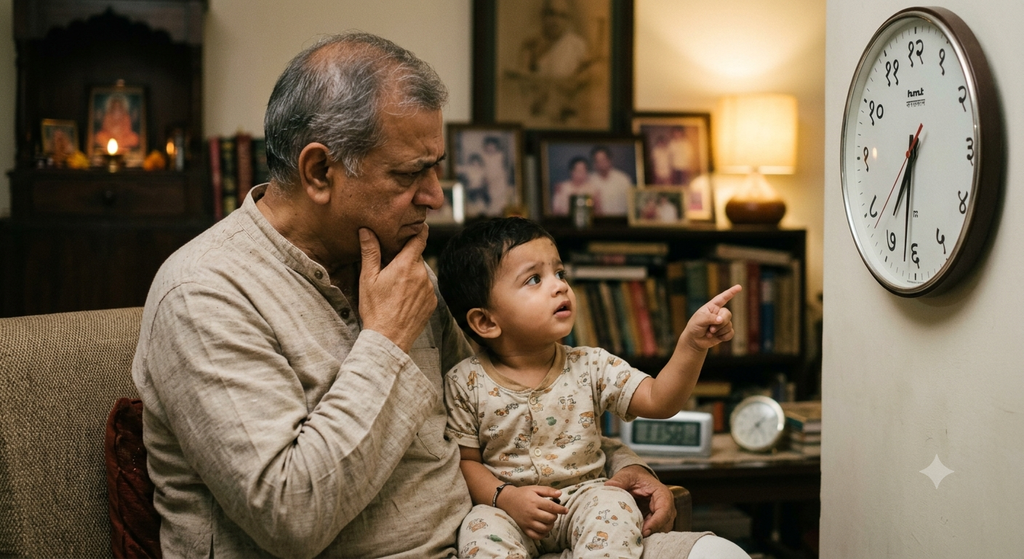
There isn’t one magical bedtime that works for every toddler.
What matters is whether your child’s overall sleep is appropriate for their age and whether the schedule is reasonably consistent.
The American Academy of Sleep Medicine recommends:
1–2 years: 11–14 hours of sleep per 24 hours, including naps.
3–5 years: 10–13 hours per 24 hours, including naps.
So rather than asking:
“What exact time should my child sleep?”
ask:
“Is my child getting enough total sleep, and is our daily schedule consistent?”
Don’t expect the tantrums to disappear overnight.
Your toddler may test the new boundary.
Stay calm.
Don’t turn bedtime into a debate.
Try:
“I know you don’t want to sleep. It’s okay to feel upset. But it’s still bedtime.”
You are acknowledging the emotion without changing the boundary.
That’s an important parenting skill:
Comfort the feeling. Keep the boundary.
Save this:
☐ Same approximate bedtime
☐ Quiet wind-down
☐ No exciting play
☐ Brush teeth
☐ One short book
☐ One or two simple choices
☐ Same goodnight ritual
☐ Calm, consistent response
☐ Enough total sleep for age
You don’t need 15 different parenting techniques.
You need one routine that your child can learn.
Sometimes parents compare their child with another child:
“Her child sleeps at 8 PM.”
“My friend’s toddler sleeps independently.”
“Why doesn’t my child behave like that?”
Try not to make comparisons.
Children differ in temperament, sensitivity, routines and developmental needs.
Your job isn’t to create the “perfect sleeper.”
Your job is to create a safe, predictable and supportive environment for your child to develop healthy sleep habits.
And if your child has persistent sleep difficulties, loud snoring, breathing problems during sleep, frequent night waking or significant daytime sleepiness, it’s worth discussing it with your pediatrician rather than treating every bedtime problem as a behavioral issue.
At SH Development Academy, we believe good parenting isn’t about having a perfect child.
It’s about understanding the child you actually have.
Every child has a different temperament, personality, learning preference and way of responding to situations.
That’s why our DMIT Consultation focuses on helping parents understand their child’s individual strengths and characteristics so they can communicate, guide and support them more effectively.
If you’re looking for more than generic parenting advice and want a deeper understanding of your child’s individual profile, you can speak with Santosh Hariharan — DMIT Consultant, Parent & Career Coach, and Student Success Coach.
You can also speak with our team:
📞 +91 8421315400
📞 +91 7303290862
⭐ 400+ parents have trusted our guidance.
Click here to see our Google Reviews
Because sometimes, parenting doesn’t need more advice.
It needs better understanding. ❤️
Success & Happiness are the two most important yet elusive things which every human being yearns to achieve in life. Real success and happiness can be savoured only when one enjoys good health and good family relations, along with a good professional career and sound financial stability.
Our Visitor


 Users Today : 2