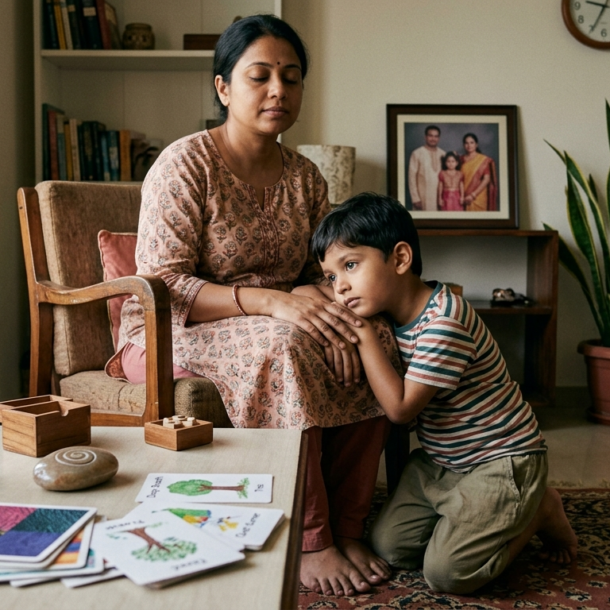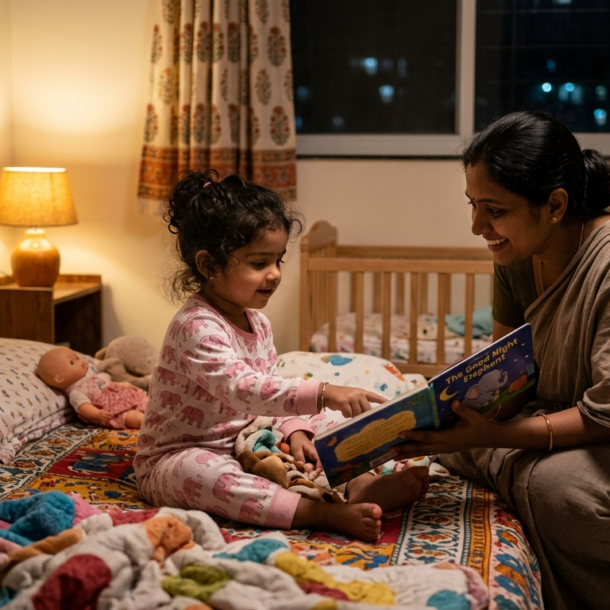

If your mornings usually sound like this—
“Wake up!”
“Brush your teeth!”
“Get ready!”
“Where are your socks?”
“Eat your breakfast!”
“Your school bus is coming!” 😅
—you are definitely not alone.
For many Indian parents, the morning is less of a routine and more of a daily race against the clock.
School timings, packed tiffin boxes, uniforms, homework, breakfast, traffic and the famous “5 more minutes, please!” can turn the first hour of the day into the most stressful part of family life.
But what if you didn’t need a longer morning routine?
What if you simply needed a better-designed one?
This is something I often tell parents during counselling:
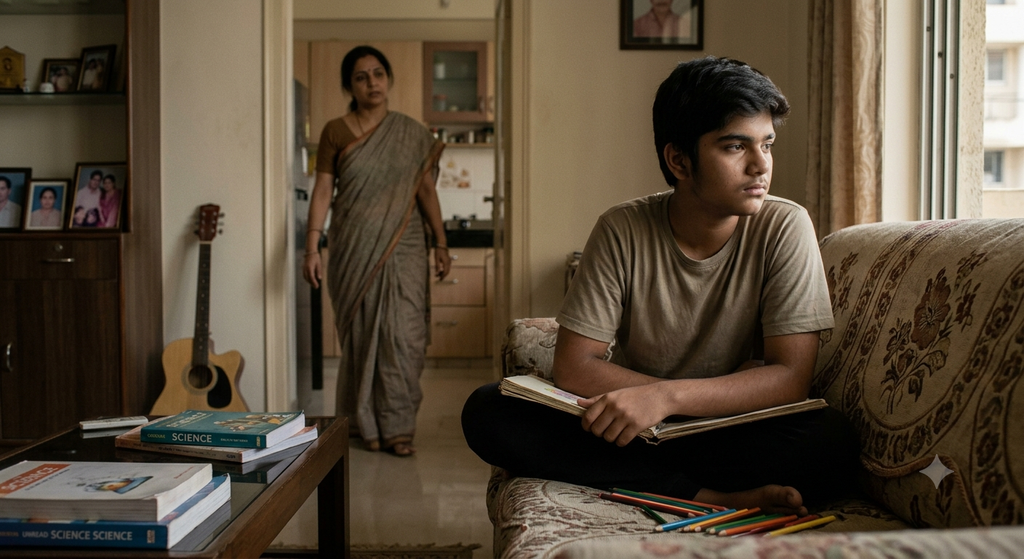
A child who struggles with mornings isn’t necessarily lazy or irresponsible.
Children often need structure, repetition and clear expectations before a routine becomes automatic.
If every morning you give your child ten different instructions, they have to keep deciding:
What should I do next?
That creates unnecessary friction.
The solution?
Stop managing every minute. Start creating a predictable routine.
Here is a simple technique you can start using from tomorrow.
Take 5 minutes in the evening and prepare your child’s morning.
That’s it.
Before bedtime, ask your child to complete these five things:
1️⃣ Clothes ready
School uniform, socks and shoes prepared.
2️⃣ School bag ready
Books, homework and required items inside.
3️⃣ Water bottle & tiffin plan
Keep whatever can be prepared in advance ready.
4️⃣ Morning checklist visible
A simple checklist such as:
Wake → Brush → Bath → Dress → Breakfast → Bag → Leave
5️⃣ One clear morning goal
For example:
“Tomorrow, let’s try to be ready before 7:30.”
Now you’re not starting the morning by giving instructions.
You’re simply following a plan your child already knows.
Think about your child’s brain.
If every morning you say:
“Brush!”
“Come here!”
“Get dressed!”
“Eat!”
“Where is your bag?”
your child gradually learns to wait for your next instruction.
A routine changes that.
Instead of:
Parent → Instruction → Child → Instruction → Child
you want:
Routine → Child takes action
That’s a small change, but over time it can build independence, responsibility and self-management.
You don’t need a complicated 20-step chart.
Try this:
Give your child a consistent wake-up time as much as practical.
Brush, wash, bathe and get dressed.
Bag, shoes, water bottle and other school essentials.
Keep breakfast simple and predictable on school mornings.
One quick checklist:
Bag ✔️ Bottle ✔️ Tiffin ✔️ Shoes ✔️ Homework ✔️
Then leave.
The goal isn’t a “perfect” morning.
The goal is a predictable morning.
This is where many parents make a mistake.
They create a beautiful routine chart on Sunday…
…and expect the child to follow everything perfectly from Monday.
It rarely works that way.
Start with one habit.
For example:
“From tomorrow, you will keep your school bag ready before sleeping.”
Once that becomes automatic, introduce the next habit.
Small routines become big habits.
For younger children, don’t rely heavily on written instructions.
Use simple visual cues:
🪥 Brush
👕 Dress
🍽️ Eat
🎒 Bag
👟 Shoes
You can even let your child tick each task.
The objective isn’t discipline through pressure.
It’s helping the child gradually understand:
“I know what I need to do next.”
Teenagers need a slightly different approach.
Don’t treat them like small children.
Instead of repeatedly saying:
“Get up! Get up! Get up!”
set the expectation the previous evening.
Discuss:
Then let them own the routine.
The more responsibility you transfer appropriately, the more opportunity your teenager gets to develop self-discipline.
Sometimes parents say:
“It is faster if I do it myself.”
And they’re right.
It is faster.
But if you repeatedly pack the bag, arrange the uniform, find the shoes and remind your child about everything, your morning may become easier today—but your child gets fewer opportunities to learn independence.
Parenting isn’t only about getting the child out of the house on time.
It’s also about preparing them to eventually manage life without you standing beside them.
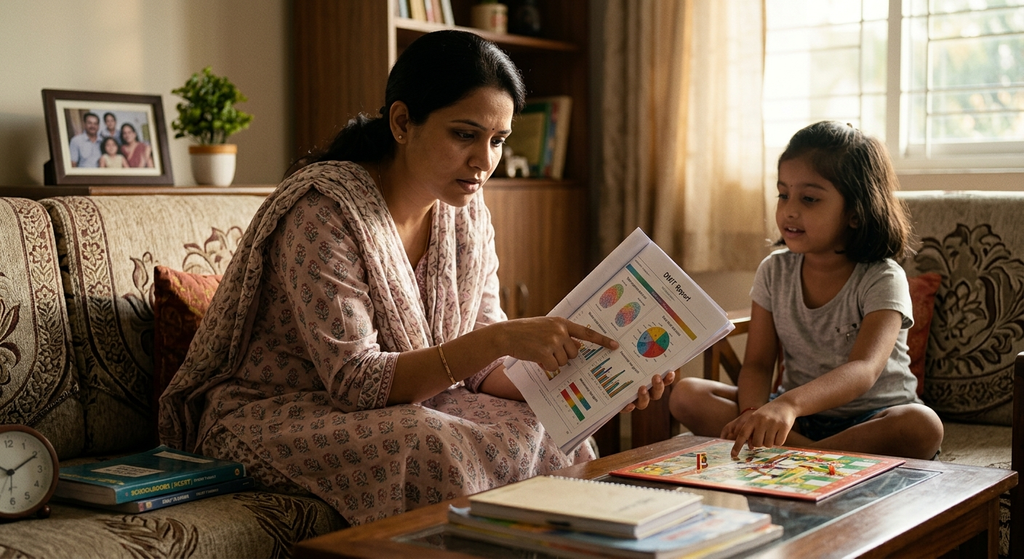
This is where understanding the individual child becomes important.
Two children can have completely different temperaments, learning preferences and responses to instructions.
One child may respond well to a checklist.
Another may need verbal reminders.
Another may become more cooperative when given responsibility.
A DMIT consultation can be used as one input for understanding a child’s strengths, preferences and behavioural tendencies and discussing how parents can support them.
It should not be treated as a magic solution or a substitute for professional psychological assessment where that is needed.
The principle is simple:
Don’t just ask, “How do I make my child follow a routine?”
Ask:
“What kind of approach is likely to work better for my child?”
Don’t wait for Monday.
Tonight, spend just 5 minutes with your child.
Together:
✔️ Prepare the school uniform
✔️ Pack the school bag
✔️ Keep shoes ready
✔️ Decide the morning checklist
✔️ Agree on one responsibility for your child
Then tomorrow morning, try giving fewer instructions.
Watch what happens.
You may discover that your child didn’t need more shouting.
They needed more structure and ownership. ❤️
Every child has a different way of learning, responding, communicating and developing.
As a DMIT Consultant, Parent & Career Coach, I work with parents to understand these differences and turn that understanding into practical guidance for everyday parenting, learning and future decisions.
If you’re looking for more than generic parenting advice, a DMIT Consultation can help you explore your child’s individual strengths and behavioural tendencies and understand how you can support them better.
👉 Book your DMIT Consultation:
Book Your Consultation
⭐ 400+ parents have trusted us.
See 400+ Google Reviews
📞 +91 8421315400 | +91 7303290862
Because better parenting doesn’t always mean doing more. Sometimes, it means understanding your child better.
Success & Happiness are the two most important yet elusive things which every human being yearns to achieve in life. Real success and happiness can be savoured only when one enjoys good health and good family relations, along with a good professional career and sound financial stability.
Our Visitor


 Users Today : 19