Parenting is one of the most rewarding journeys in life—but it is also one of the most challenging.
Every parent wants their child to succeed in school, develop confidence, discover their talents, and build a bright future. Yet many parents find themselves asking:
“Why does my child struggle to remember what they study?”
“Why does my child lose focus so quickly?”
“Why does my child perform differently from other children despite putting in effort?”
As a DMIT Consultant, Parent & Career Coach, I have worked with hundreds of parents who initially believed their child was lazy, distracted, or not serious enough about studies.
In reality, the issue was often much simpler.
The child was being taught in a way that did not match their natural learning style.
Understanding your child’s learning style can completely change the way they learn, communicate, and grow. This is why Parenting With the Right Learning Style has become one of the most important topics for parents in 2026.
Let’s explore why.
Imagine asking a fish to climb a tree and then judging its intelligence based on how well it performs.
Sounds unfair, right?
Yet this happens every day in education.
Many children are expected to learn in the same way, at the same speed, and through the same teaching methods.
The truth is:
Every child processes information differently.
Some children learn best by seeing.
Some learn by listening.
Others learn by doing.
When parents understand their child’s natural learning style, they can support learning in a way that feels easier, more enjoyable, and more effective.
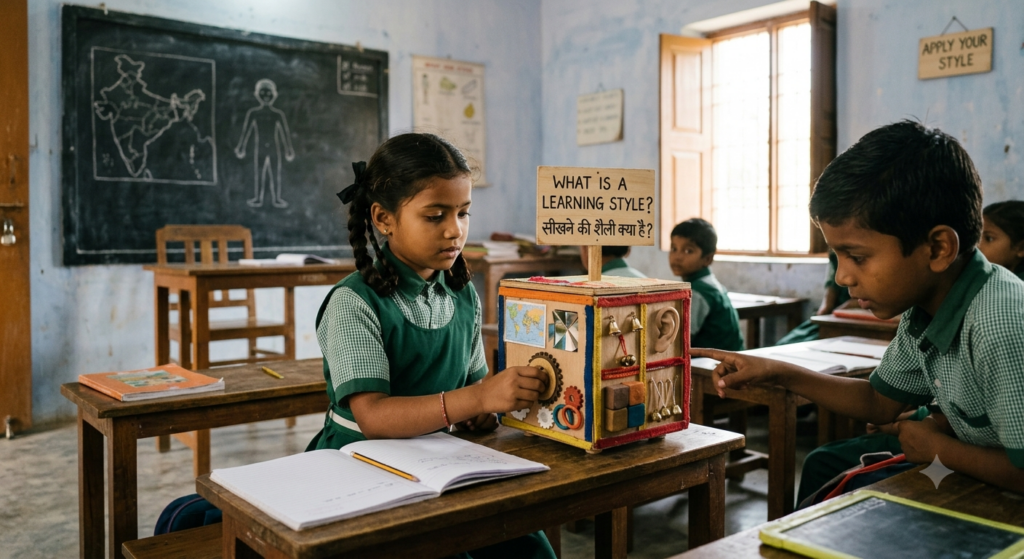
A learning style refers to the preferred way a person absorbs, understands, and retains information.
While children can learn through multiple methods, most tend to have one dominant learning preference.
The three major learning styles are:
Visual learners understand information through:
These children often remember what they see better than what they hear.
They enjoy:
Auditory learners understand information through:
These children often learn better when concepts are explained verbally.
They enjoy:
Kinesthetic learners prefer learning through:
These children often struggle when forced to sit still for long periods.
They learn best when actively involved.
They enjoy:
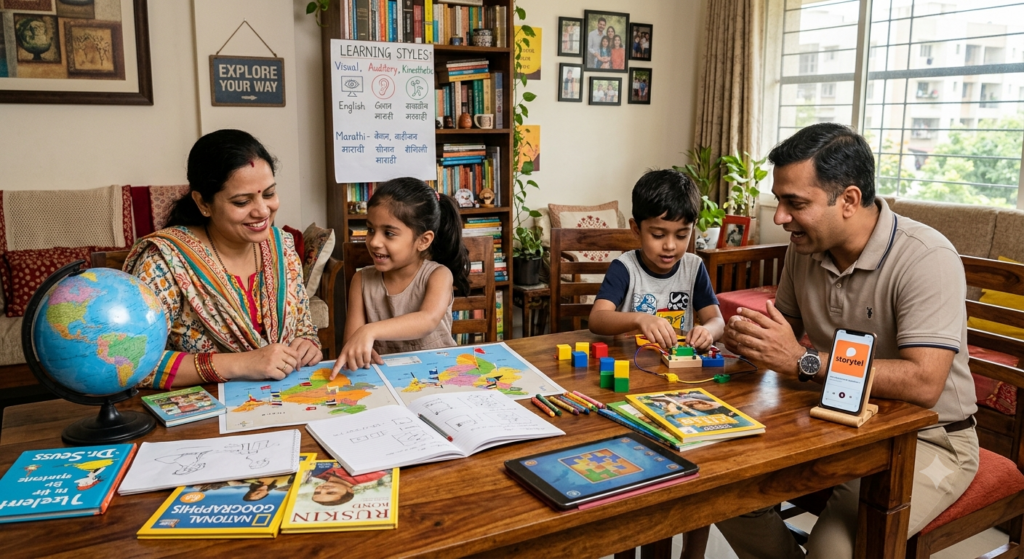
One of the biggest mistakes parents make is assuming that the learning method that worked for them will also work for their child.
But children are unique.
A child who learns visually may struggle when information is only spoken.
A kinesthetic learner may become restless in traditional classroom settings.
An auditory learner may benefit more from discussion than from reading textbooks.
When parents align their parenting approach with their child’s learning style, remarkable changes often occur.
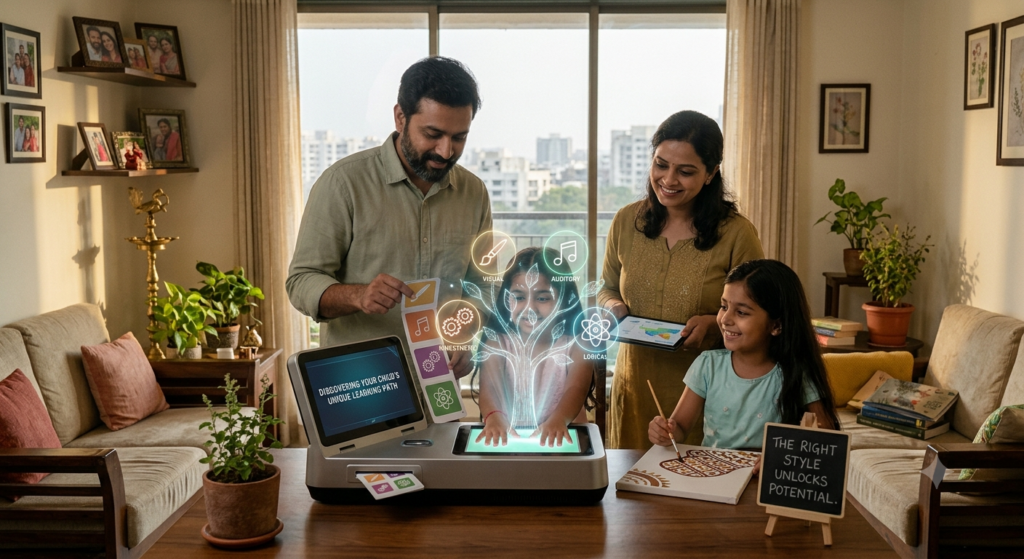
Children absorb information more efficiently when it is presented in a way that matches their natural learning preference.
Learning becomes easier.
Understanding improves.
Retention improves.
Confidence grows.
Many parents complain:
“My child cannot concentrate.”
However, sometimes the problem is not concentration.
The problem is that the child is trying to learn through the wrong method.
When learning becomes engaging and natural, concentration often improves automatically.
Children who repeatedly struggle in school may start believing they are not intelligent.
This can damage self-esteem.
When parents understand how their child learns best, they can help create more successful learning experiences.
Success builds confidence.
Confidence builds motivation.
Motivation leads to growth.
How many times have parents said:
These conversations often create frustration.
When parents understand their child’s learning style, communication becomes more supportive and less stressful.
Children thrive when they feel understood.
A child who feels constantly judged may become anxious or withdrawn.
A child who feels accepted and supported is more likely to develop resilience and emotional strength.
Your child may be a visual learner if they:
Your child may be an auditory learner if they:
Your child may be a kinesthetic learner if they:
Schools are designed to educate large groups of students.
However, every child learns differently.
This means some children naturally fit the system while others struggle—even though they may be equally talented.
Many successful entrepreneurs, artists, athletes, and innovators were not always top academic performers.
What made the difference?
They eventually discovered how they learn best.
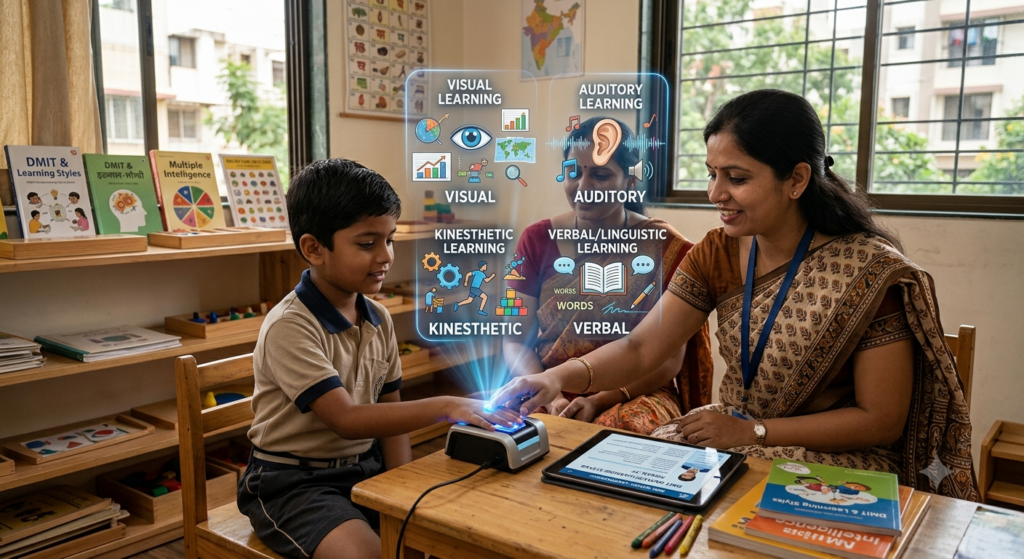
One of the most valuable insights parents gain through a DMIT assessment is understanding their child’s preferred learning style.
A detailed DMIT report can provide information about:
This helps parents move from guesswork to informed parenting.
Instead of constantly asking:
“What is wrong with my child?”
Parents begin asking:
“How can I support my child better?”
That shift alone can transform a family.
At this stage:
Avoid excessive academic pressure.
This is a crucial learning phase.
Parents should:
Teenagers face:
Understanding their learning style can improve:
Every child has a unique learning journey.
Comparison often damages confidence.
Not every child learns effectively through textbooks alone.
Parents often focus heavily on weaknesses.
Growth accelerates when strengths are nurtured.
Academic scores are only one measure of performance.
Children possess many forms of intelligence.
Parenting is changing.
Modern parents are becoming more aware that success is not about forcing children into predefined molds.
It is about understanding who they truly are.
In 2026, the most successful parents are not those who push the hardest.
They are the ones who understand their child the best.
The goal is no longer simply better marks.
The goal is helping children become confident, capable, self-aware individuals.
As parents, we invest in:
But perhaps the most valuable investment is understanding how our child learns.
When you understand your child’s learning style:
✔ Learning becomes easier
✔ Communication improves
✔ Confidence grows
✔ Stress reduces
✔ Potential unfolds naturally
This is the foundation of effective parenting.
At SH Development Academy, we help parents understand their child’s natural learning style, strengths, personality traits, and potential through detailed DMIT assessments and counselling.
The consultation is personally guided by Santosh Hariharan — DMIT Consultant, Parent & Career Coach, and Success Mindset Coach for Students.
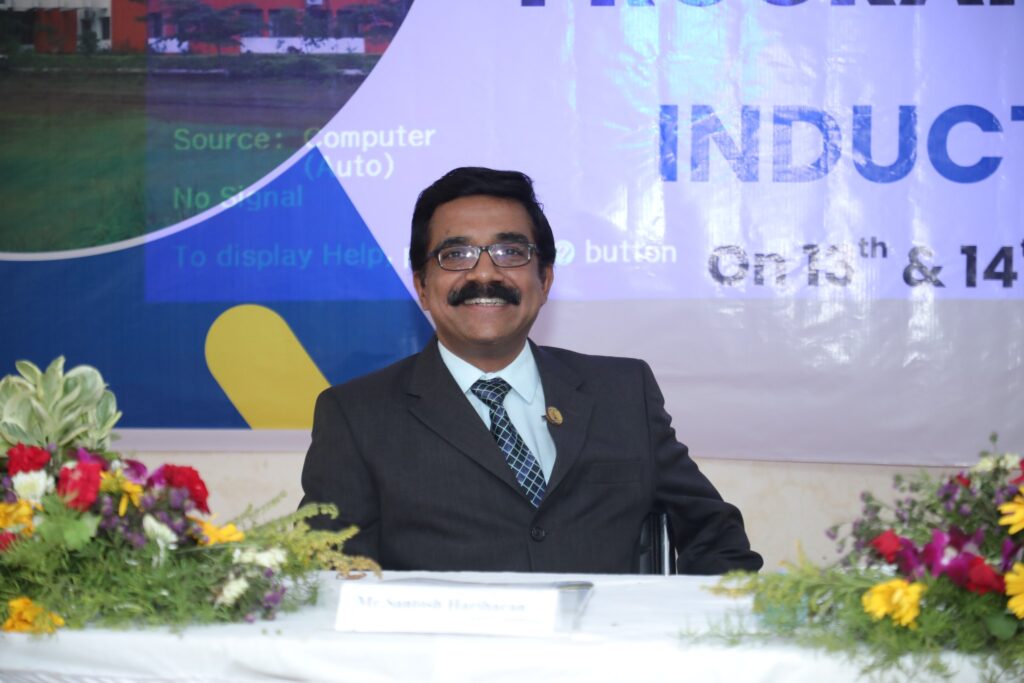
Whether your child is struggling with studies, confidence, focus, or career direction, understanding how they naturally learn can be a powerful first step.
👉 DMIT Consultation Booking:
Book Your DMIT Consultation Here
👉 Read 310+ Google Reviews:
See Our Google Reviews
📞 Phone: +91 8421315400
📞 Phone: +91 7303290862
Because every child is unique—and great parenting begins with understanding how your child learns best. 🌱
Success & Happiness are the two most important yet elusive things which every human being yearns to achieve in life. Real success and happiness can be savoured only when one enjoys good health and good family relations, along with a good professional career and sound financial stability.
Our Visitor


 Users Today : 2