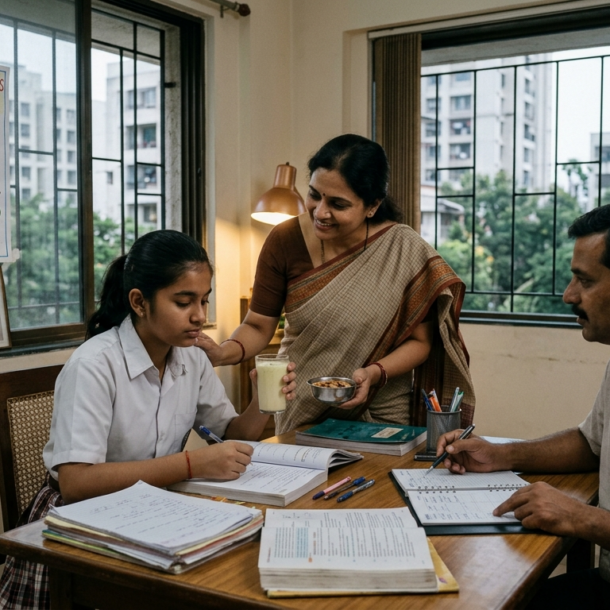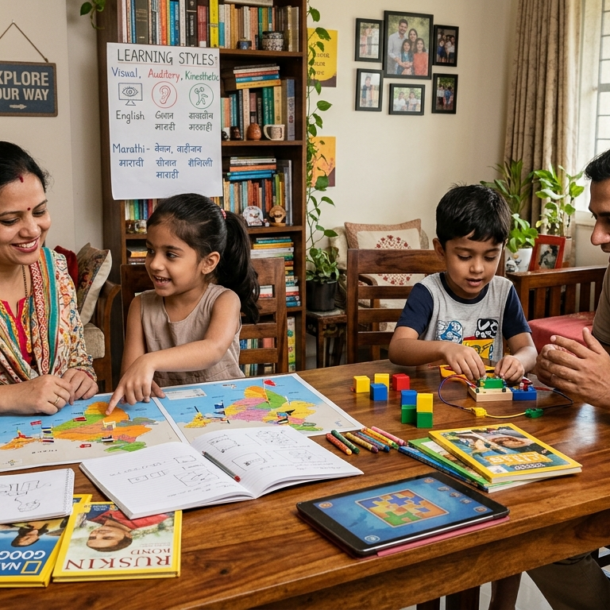

Just a few years ago, online learning was seen as a temporary alternative to classroom education. Fast forward to 2026, and virtual learning has become an essential part of every student’s educational journey.
Whether it’s:
…children today are spending more time learning through digital platforms than ever before.
While technology has opened up incredible opportunities, it has also introduced new challenges for both students and parents.
Many parents ask questions like:
If you’ve asked yourself any of these questions, you’re certainly not alone.
The truth is that successful virtual learning isn’t just about having a laptop and a good internet connection. It requires the right environment, study habits, emotional support, and learning strategies.
As a DMIT Consultant, Parent & Career Coach, I have worked with hundreds of parents who initially believed their child had concentration issues. However, after understanding the child’s natural learning style and personality, they realized the problem wasn’t the child—it was the learning approach.
In this guide, I’ll share practical, easy-to-follow tips that can help your child adapt to virtual learning more effectively while making the experience less stressful for the entire family.
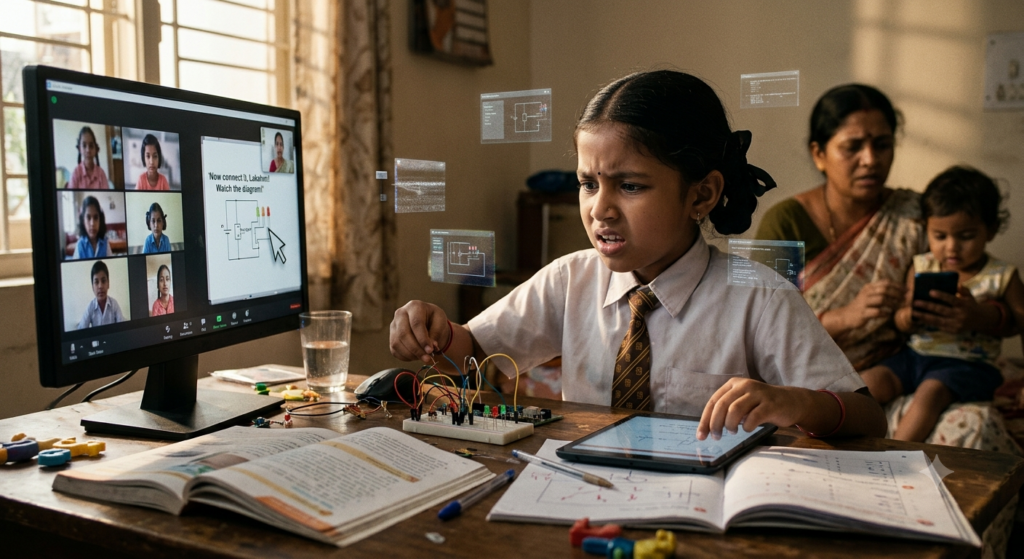
Before discussing solutions, it’s important to understand why many children struggle with online education.
Virtual learning demands something that children naturally find difficult:
Self-discipline.
In a physical classroom, teachers naturally help students stay focused.
At home, however, children have to manage distractions on their own.
Some common challenges include:
Every child responds differently.
Some adapt quickly.
Others need more guidance.
This is completely normal.
Instead of forcing children to fit into one learning style, parents should understand how their child learns best and then build an environment that supports that style.
When children attend physical school, teachers manage much of the learning process.
Virtual learning shifts a significant part of that responsibility to parents.
This doesn’t mean parents must become teachers.
Instead, they become:
✅ Learning facilitators
✅ Motivators
✅ Routine builders
✅ Emotional supporters
Children perform much better online when parents focus on creating consistency rather than constant supervision.
Remember:
Your goal isn’t to sit beside your child throughout every class.
Your goal is to help them develop the habits that eventually allow them to become independent learners.
One of the biggest mistakes many families make is allowing children to attend online classes from:
A dedicated study area sends a psychological signal to the brain:
“This is my learning space.”
Your child’s study corner doesn’t need to be expensive.
It simply needs to be:
Keep only essential study materials nearby.
Avoid placing gaming devices, toys, or televisions within the child’s immediate view.
A clean learning environment often improves focus naturally.
Children thrive on routines.
One of the biggest reasons virtual learning becomes ineffective is the absence of a predictable schedule.
Create fixed timings for:
When routines become consistent, children waste less mental energy deciding what to do next.
Instead, studying becomes a habit.
Ironically, the same device used for learning also provides unlimited distractions.
During study hours:
Parents can also establish simple family rules such as:
“No gaming until today’s study goals are completed.”
This approach encourages responsibility rather than punishment.
One lesson I’ve learned after years of guiding parents is this:
Not every child learns in the same way.
Some children learn best by:
They understand concepts through:
These children prefer:
These learners understand concepts better when they:
Many parents unknowingly use teaching methods that don’t match their child’s natural learning preferences.
When learning becomes aligned with the child’s style, studying often feels easier and more enjoyable.
Many students simply sit in front of the screen and assume learning is happening.
Unfortunately, passive watching rarely leads to deep understanding.
Instead, encourage your child to:
The more actively children engage with the lesson, the better they retain information.
Parents often expect children to remain focused for two or three hours continuously.
That’s unrealistic for most students.
Instead, begin with smaller study blocks.
For example:
25–30 minutes of focused learning
⬇️
5-minute break
⬇️
Repeat
Short, focused sessions often produce better results than forcing long hours of distracted studying.
This is perhaps one of the biggest parenting mistakes.
Virtual learning should develop:
If parents focus only on marks, children begin learning out of fear instead of interest.
Celebrate:
These qualities create long-term success.
Children today face enormous pressure.
If every conversation revolves around:
“Did you study?”
“Why aren’t your marks improving?”
“Why are you wasting time?”
…children slowly stop communicating.
Instead, ask:
“What did you enjoy learning today?”
“Which subject felt difficult?”
“How can I help you?”
Small changes in conversation build trust—and trust creates motivation.
One of the biggest concerns parents have today is:
“My child is always in front of a screen. How do I know whether they’re studying or just spending time online?”
It’s a valid concern. But instead of trying to eliminate screen time completely, focus on creating healthy digital habits.
Remember, in 2026, screens are no longer just for entertainment—they’re also an essential part of education.
The goal isn’t to reduce learning time on screens but to balance it with offline activities.
Here are a few simple practices that work:
✅ Follow the 20-20-20 Rule: Every 20 minutes, ask your child to look at something 20 feet away for 20 seconds to reduce eye strain.
✅ Encourage stretching or a short walk between classes.
✅ Avoid recreational screen time immediately after online classes. Instead, let your child unwind with a physical activity, music, drawing, or conversation.
A healthy balance helps children stay fresh, focused, and mentally active.
Many parents become “human alarm clocks.”
“Start studying.”
“Finish your homework.”
“Attend your class.”
“Revise.”
Eventually, children become dependent on reminders.
Instead, help them take ownership of their schedule.
A simple daily planner can include:
🕒 Online Classes
📚 Homework
📖 Revision
⚽ Outdoor Play
🎨 Hobby Time
😴 Sleep
When children begin planning their own day, they gradually become independent learners—a skill that will benefit them far beyond school.
Not every online class will be exciting.
Not every test will be perfect.
And not every day will go according to plan.
That’s okay.
Parents often unintentionally create pressure by expecting continuous high performance.
Instead of asking,
“Why did you lose five marks?”
Try asking,
“What did you learn from this test?”
Children who aren’t afraid of making mistakes become more confident learners.
Growth happens when mistakes become lessons—not labels.
Virtual learning gives children access to knowledge from around the world.
Help them explore learning beyond school textbooks.
Encourage them to:
Children who learn because they’re curious often outperform those who study only for exams.
Academic success and emotional health go hand in hand.
Many children silently experience:
As parents, your emotional support matters more than you may realize.
Simple habits like eating one meal together, talking about the day, or appreciating your child’s effort can significantly boost their confidence.
Sometimes, children don’t need solutions—they simply need someone who listens.
Virtual learning works best when parents and teachers are partners.
Stay connected with your child’s teachers.
Discuss:
Regular communication helps everyone work toward the same goal—your child’s overall development.
Even with the best intentions, parents sometimes make mistakes that reduce a child’s motivation.
Here are some of the most common ones:
Every child learns differently.
Comparisons often lower confidence rather than improve performance.
Quality of learning is more important than quantity.
Focused study sessions are usually more effective than endless hours at the desk.
Instead of giving answers immediately, encourage your child to think independently.
Learning happens through problem-solving.
Children need movement.
Daily exercise improves concentration, memory, and emotional well-being.
Even 30–45 minutes of physical activity can make a noticeable difference.
Statements like:
…may create short-term pressure but often damage long-term confidence.
Positive encouragement is far more effective.
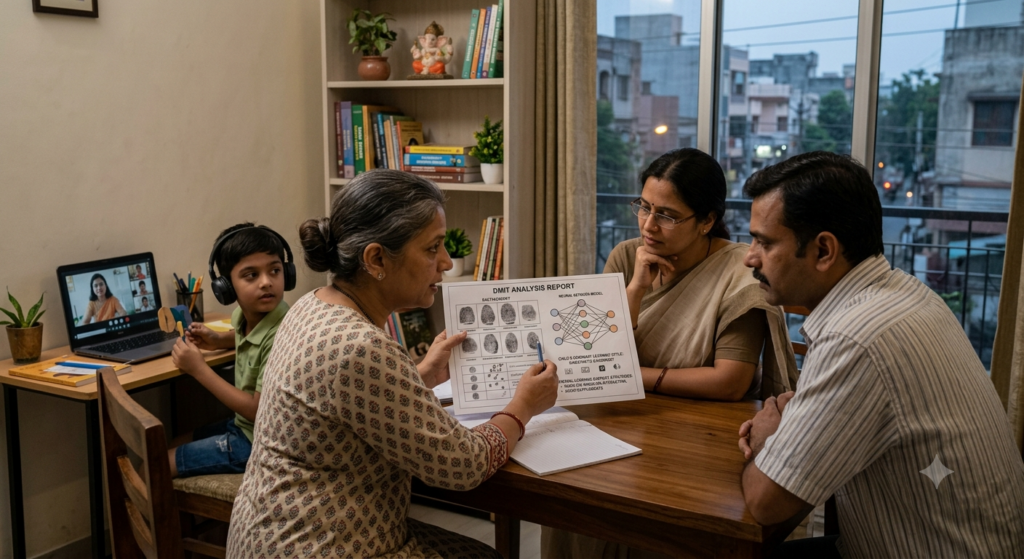
One of the biggest realizations many parents have after a DMIT consultation is this:
The problem often isn’t the child—it is the mismatch between how the child naturally learns and how they are being taught.
Every child has a unique combination of:
A professionally interpreted DMIT report can help parents understand:
✔ The child’s preferred learning style
✔ Natural attention patterns
✔ Communication preferences
✔ Strengths and hidden talents
✔ Suitable study methods
✔ Ways to motivate the child effectively
When parents understand these aspects, virtual learning becomes less stressful and much more productive.
Rather than forcing one method on every child, they can guide their child in a way that aligns with their natural abilities.
Create a structured routine, provide a distraction-free study space, encourage active learning, monitor screen time, and offer emotional support rather than constant pressure.
Common reasons include digital distractions, lack of interaction, screen fatigue, unsuitable learning methods, and inconsistent routines.
The exact duration depends on age and educational needs. The key is balancing educational screen time with regular breaks, physical activity, and offline learning experiences.
Yes—when supported by good teaching, active participation, a structured routine, and parental involvement, virtual learning can be highly effective.
DMIT helps parents understand their child’s natural learning style, strengths, personality traits, and preferred study methods. These insights can help parents support more effective and personalized learning at home.
Virtual learning isn’t just a temporary trend—it has become an integral part of modern education.
Technology will continue to evolve, but one thing will always remain constant:
Children learn best when they feel understood, supported, and encouraged.
As parents, you don’t have to know every subject your child studies.
You simply need to create an environment where curiosity grows, confidence develops, and learning becomes enjoyable.
Sometimes, the biggest difference isn’t a better school or another tuition class.
It’s understanding how your child naturally learns and guiding them accordingly.
That understanding can transform not only your child’s academic performance but also your relationship as a parent.
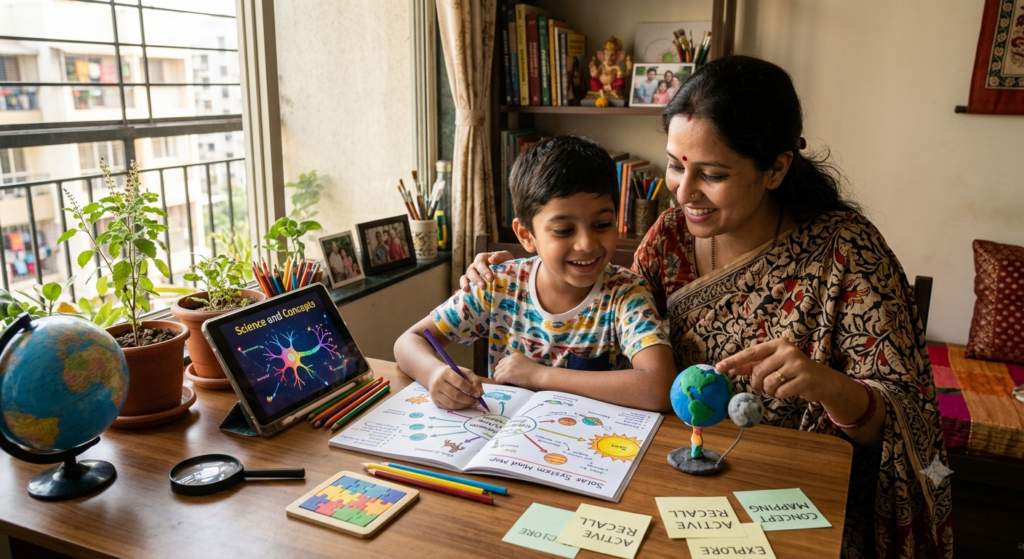
Every child has a unique way of thinking, learning, and growing. When parents understand these natural strengths, supporting online learning becomes much easier and more effective.
At SH Development Academy, we help parents move beyond guesswork through a detailed DMIT Consultation guided by Santosh Hariharan—DMIT Consultant, Parent & Career Coach, and Success Mindset Coach for Students.
Our consultation helps you understand your child’s:
✅ Learning style
✅ Natural strengths and hidden talents
✅ Personality traits
✅ Study preferences
✅ Career inclinations
✅ Practical parenting strategies
Instead of trying different methods through trial and error, you can confidently guide your child based on a deeper understanding of their unique potential.
👉 DMIT Consultation Booking: Book Your Consultation Here
⭐ See why 310+ parents have trusted our guidance:
Read Our Google Reviews
📞 Call Us: +91 8421315400 | +91 7303290862
The best investment you can make is not just in your child’s education—but in understanding how they learn best.
Success & Happiness are the two most important yet elusive things which every human being yearns to achieve in life. Real success and happiness can be savoured only when one enjoys good health and good family relations, along with a good professional career and sound financial stability.
Our Visitor


 Users Today : 4