
As a parent, have you ever wondered:
“Why does my child study for hours but still struggle to remember concepts?”
Or perhaps you’ve noticed that one child learns quickly through videos, while another understands better through hands-on activities.
The truth is, not all children learn the same way.
One of the biggest mistakes parents and schools make is assuming that every child should learn through the same teaching method. But children are unique. They process information differently, absorb knowledge differently, and express their intelligence differently.
As a DMIT Consultant, Parent & Career Coach, I have worked with hundreds of parents who initially believed their child was weak in studies. In many cases, the real issue was not intelligence—it was a mismatch between the child’s learning style and the way they were being taught.
Understanding the different learning styles in children can transform not only academic performance but also confidence, motivation, and overall development.
Let’s explore how.
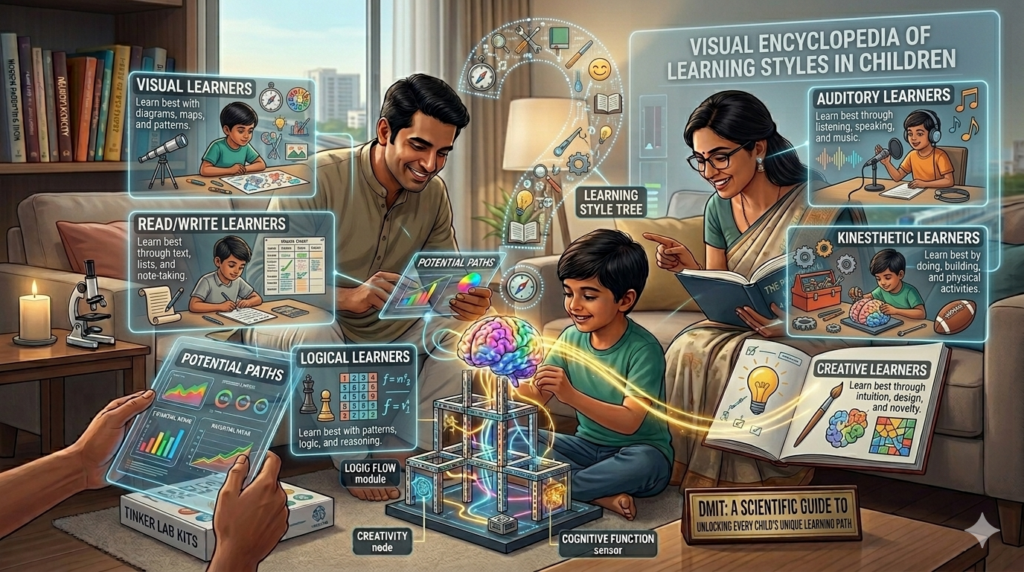
A learning style refers to the way a child naturally prefers to receive, process, and remember information.
Think of learning styles as the brain’s preferred method of understanding the world.
Some children learn best by seeing.
Some learn by listening.
Others learn by doing.
When parents understand their child’s natural learning style, studying becomes easier, less stressful, and often more enjoyable.
Imagine asking a fish to climb a tree.
No matter how hard the fish tries, it will struggle.
Many children face a similar situation in education.
A child who learns best through movement may be expected to sit still for hours.
A visual learner may struggle when lessons are explained only verbally.
An auditory learner may find textbooks boring but excel when concepts are discussed.
When we align teaching methods with a child’s learning style, we often see:
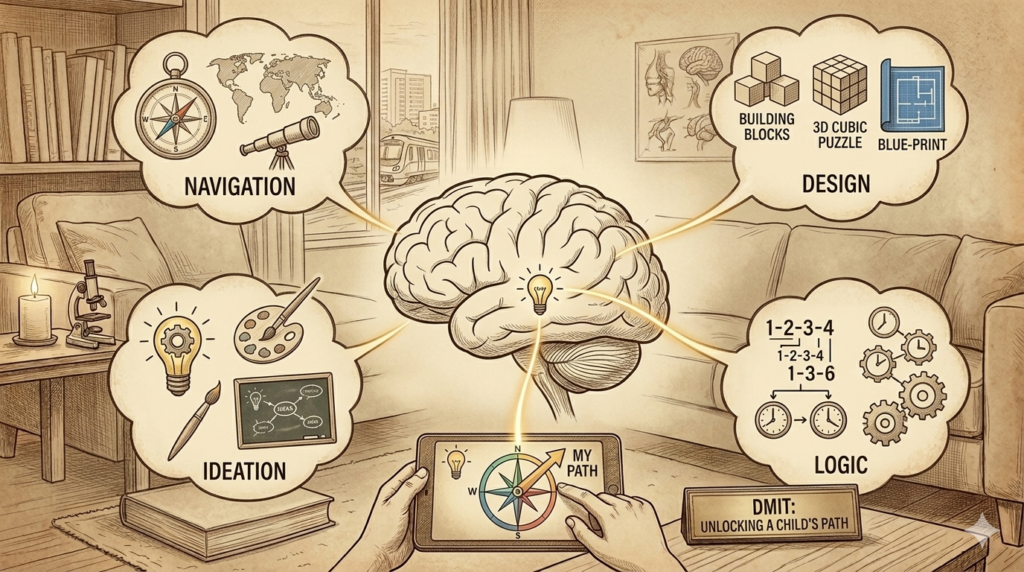
Visual learners understand information best when they can see it.
They learn through:
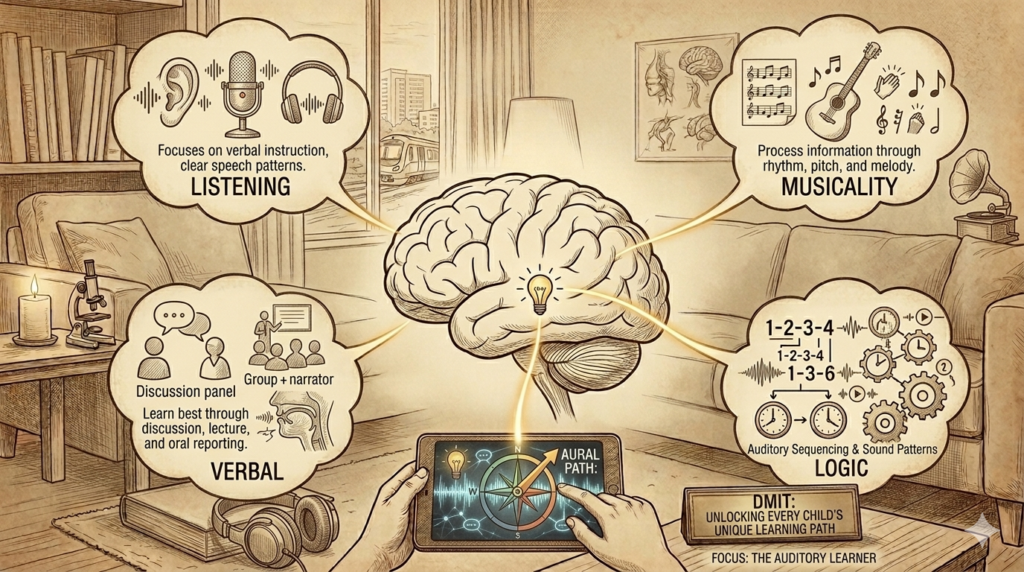
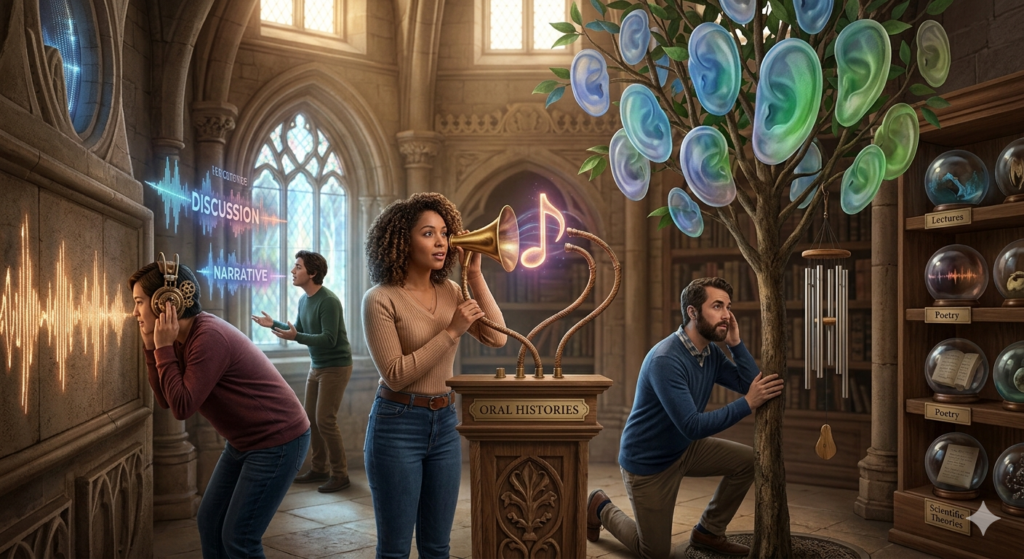
Auditory learners absorb information best through listening.
They learn effectively through:
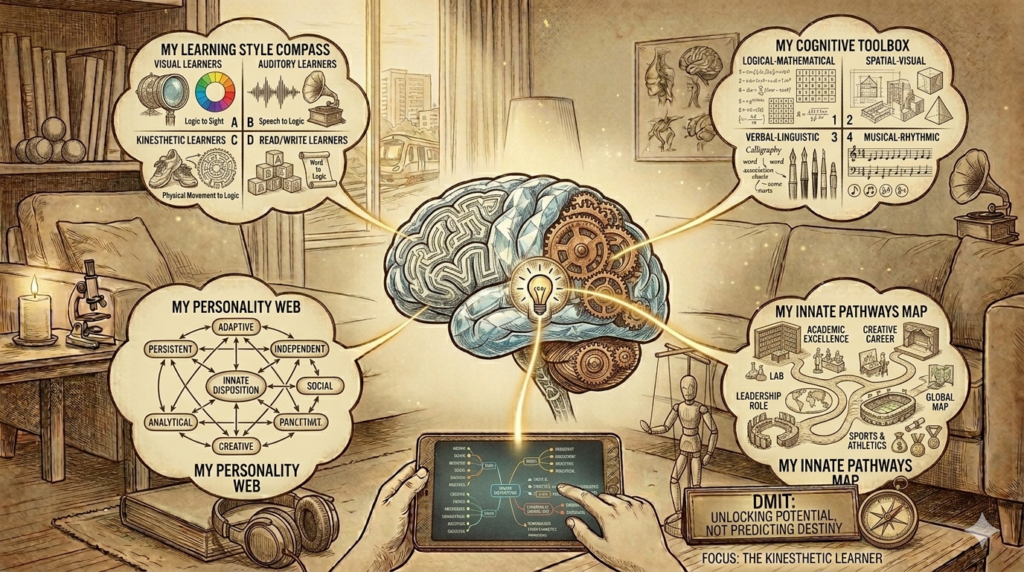
Kinesthetic learners learn by doing.
These children need movement, activity, and hands-on experiences.
They learn through:
Absolutely.
Most children use a combination of learning styles.
For example:
A child may primarily be a visual learner but also benefit from auditory explanations.
Another child may learn through movement while also enjoying visual aids.
The goal is not to put children into rigid categories but to identify what works best for them.
This is one of the most common concerns I hear from parents.
They say:
“My child is intelligent, but the marks don’t reflect it.”
In many cases, the problem isn’t intelligence.
The problem is that the child’s learning style is not being supported.
For example:
A highly creative visual learner may struggle with traditional memorization methods.
A kinesthetic learner may become restless during long classroom sessions.
An auditory learner may find silent reading less effective than discussion.
When learning methods don’t match learning preferences, frustration begins.
Over time, confidence drops and children start believing they are not capable.
Understanding learning styles can help improve:
Children pay attention longer when learning feels natural.
Information is remembered more effectively when taught using preferred learning methods.
Children perform better when they experience success.
Learning becomes enjoyable rather than stressful.
Learning preferences often connect with future interests and strengths.
For example:
Of course, learning style alone does not determine career choice, but it can provide valuable clues.
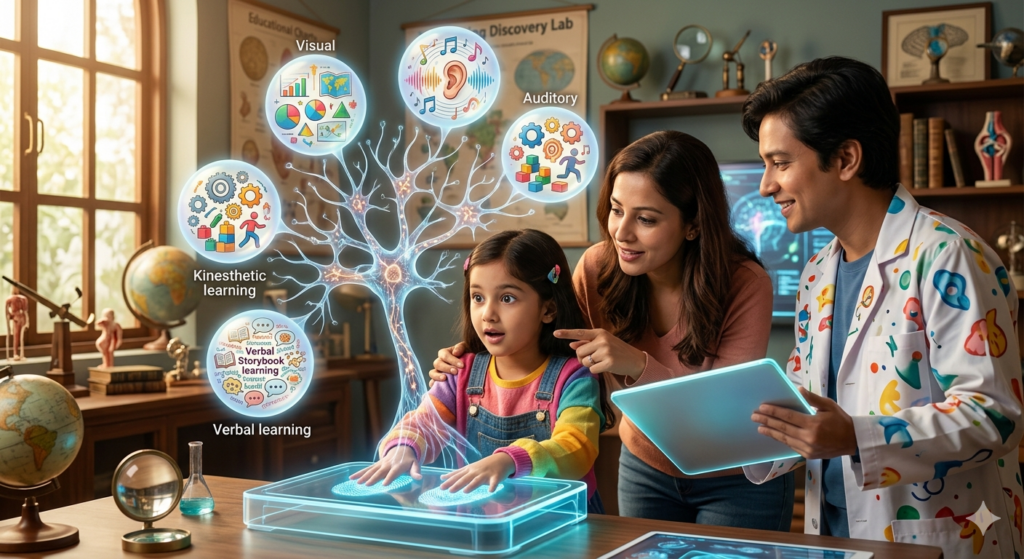
One of the most valuable insights parents gain from a DMIT assessment is understanding how their child naturally learns.
A professionally interpreted DMIT report can provide insights into:
When parents understand these factors, they can make better decisions about:
Many parents tell us that after understanding their child’s learning style, they stopped forcing methods that weren’t working and started supporting what came naturally to the child.
The result?
Less conflict, more confidence, and better progress.
Every child learns differently.
Comparing siblings often creates unnecessary pressure.
What works for one child may not work for another.
Marks measure performance, not complete potential.
Children flourish when strengths are nurtured, not ignored.
The three primary learning styles are visual, auditory, and kinesthetic learning styles.
Children may develop additional learning preferences over time, but many natural tendencies remain consistent.
A mismatch between learning style and study method can often affect performance.
Observation, educational assessments, and DMIT-based analysis can provide valuable insights.
Yes. When learning methods align with natural preferences, children often learn faster and retain information better.
One of the most important lessons parents can learn is this:
Children are not designed to learn in exactly the same way.
Some learn through seeing.
Some learn through listening.
Some learn through doing.
When parents understand these differences, they stop focusing only on marks and start focusing on how their child learns best.
And that shift can make a tremendous difference in a child’s confidence, academic growth, and future success.
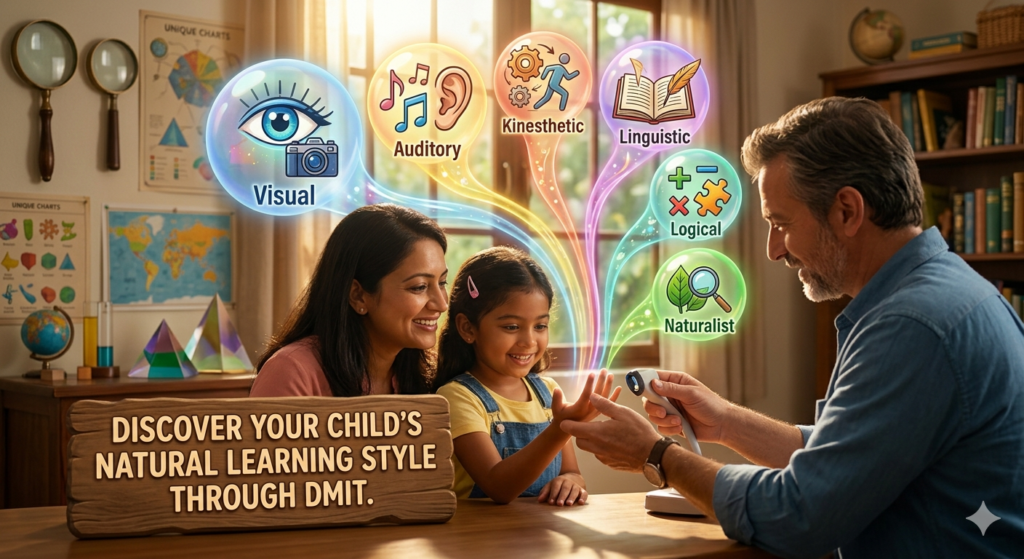
If you’ve ever wondered:
✔ Why does my child learn differently from others?
✔ Why does my child struggle despite putting in effort?
✔ What are my child’s natural strengths?
✔ Which learning method works best for my child?
A professional DMIT consultation can provide valuable clarity.
At SH Development Academy, Santosh Hariharan—DMIT Consultant, Parent & Career Coach, and Success Mindset Coach—helps parents understand their child’s unique learning style, strengths, personality, and future potential.
👉 Book Your DMIT Consultation Today
DMIT Consultation Registration:
Book Your DMIT Consultation Here
📞 Phone: +91 8421315400 | +91 7303290862
⭐ Read what parents and students say about us:
Click Here to See 310+ Google Reviews
Because when you understand how your child learns, you can help them achieve far more than simply studying harder.
Success & Happiness are the two most important yet elusive things which every human being yearns to achieve in life. Real success and happiness can be savoured only when one enjoys good health and good family relations, along with a good professional career and sound financial stability.
Our Visitor


 Users Today : 8