

Have you ever had one of those days when even a small mistake by your child feels like too much to handle?
Your child forgets to finish homework. You lose patience. A simple reminder turns into an argument. Later, when the house is quiet, you wonder, “Why did I react like that? I know my child needs patience, so why couldn’t I stay calm?”
If this sounds familiar, take a moment before blaming yourself.
Perhaps you’re not a bad parent. Perhaps you’re a tired parent who has been giving too much without taking enough time to recharge.
Parenting is rewarding, but it can also be physically demanding, emotionally draining, and mentally exhausting. Between office deadlines, school schedules, household responsibilities, tuition classes, and family commitments, parents often put their own needs at the bottom of the list.
And that’s where an important question comes in: Who takes care of the person who takes care of everyone else?
This is the idea behind an energy audit for parents.
Just as you review your finances to understand where your money goes, an energy audit helps you understand where your physical and emotional energy goes—and what helps you replenish it.
In this guide, we’ll explore four essential areas of parental wellbeing: Sleep, Food, Movement, and Connection. You’ll learn how to recognise the signs of low energy, make realistic changes to your daily routine, and use a simple seven-day audit to become more aware of your own needs.
Because being a better parent doesn’t mean doing more every day. Sometimes, it starts with learning how to look after yourself, too.

An energy audit for parents is a simple self-reflection exercise that helps you understand how your everyday habits affect your physical energy, emotional wellbeing, and ability to manage parenting responsibilities.
Think about how you manage your household budget. You check where the money goes, identify unnecessary expenses, and decide where to make changes.
But how often do you check where your energy goes?
You might be spending hours in meetings, managing school schedules, preparing meals, handling household responsibilities, and worrying about your child’s future. By the time you finally sit down with your child, your mind may still be occupied with everything else.
An energy audit helps you pause and ask four questions:
These four areas form a practical framework for checking in with yourself. They aren’t a medical diagnostic tool, but they can help you recognise habits that may be contributing to fatigue, irritability, or stress.
This matters because research published in 2025, analysing 86 studies involving 22,108 parents, found a meaningful association between greater parental stress and lower wellbeing.
Let’s look at each of the four fuels and how you can strengthen them without adding another complicated task to your already busy life.

Have you noticed how differently you respond to your child after a good night’s sleep compared with a night of interrupted rest?
On a well-rested morning, you might calmly explain why homework needs to be completed. After several nights of poor sleep, the same situation might trigger frustration, raised voices, or an argument.
Sleep doesn’t magically solve parenting challenges. However, insufficient sleep can make concentration, emotional regulation, and stress management more difficult.
Look for patterns such as:
For many Indian parents, the reasons are familiar: late-night office calls, preparing for the next school day, helping children with assignments, caring for younger children, or scrolling through a phone after everyone else has gone to bed.
Sometimes, the only quiet time a parent gets is after midnight. Unfortunately, that can create a cycle of staying up late, waking up tired, and repeating the process the next day.
1. Protect your sleep window. Try to maintain reasonably consistent bedtimes and wake-up times.
2. Create a wind-down routine. Spend the last 20–30 minutes before bed doing something calming instead of working or scrolling.
3. Share household responsibilities. If you have a partner or family support, discuss how to distribute evening duties more fairly.
4. Review your caffeine habits. If tea or coffee late in the day affects your sleep, consider having it earlier.
5. Stop treating exhaustion as a badge of honour. Being constantly tired doesn’t make you a better parent. Rest is a basic need, not a reward you must earn.
Most adults need around seven to nine hours of sleep, although individual needs vary. If sleep difficulties persist or you experience excessive daytime sleepiness, consider speaking with a qualified healthcare professional.
Your parenting reflection: Am I losing patience because of my child’s behaviour, or am I already exhausted before the situation begins?
Sometimes, simply asking this question creates an opportunity to respond differently.

Picture a typical weekday.
You prepare breakfast for your child, pack the tiffin box, get everyone ready, manage office work, attend meetings, and handle household responsibilities.
Lunch? Perhaps a quick snack between calls.
Water? You remember it only when you feel thirsty.
By evening, you’re hungry and tired, but you still need to help your child finish homework.
Now imagine being expected to remain calm, attentive, and emotionally available throughout all of this.
Your body needs nourishment, and your own needs deserve the same attention you give your child’s.
Food isn’t a magical solution to parenting stress, but regular, balanced meals can support your general health and daily functioning.
The aim isn’t to follow a strict diet or feel guilty about eating your favourite foods. It’s to build a routine that supports your energy rather than leaving you running on empty.
Keep meals simple. Dal, roti, sabzi, curd, rice, eggs, fruit, nuts, and other suitable foods can be part of a balanced routine, depending on your dietary needs and preferences.
Plan one step ahead. Keep a few easy meal options available for particularly busy days.
Make water accessible. Keep a bottle at your desk or wherever you spend most of your day.
Take a proper meal break when possible. Even a short break away from emails and household demands can help you pay attention to your body’s needs.
Be realistic. Some days will be messy. Consistency over time matters more than eating perfectly every day.
Imagine your child makes a mistake in a school assignment just as you realise you haven’t eaten since morning.
Before reacting, pause and check your own state. Are you hungry? Thirsty? Physically uncomfortable?
If possible, take a short break, drink some water, and eat something appropriate before continuing the discussion.
This doesn’t mean blaming your reactions on food. It means recognising when a basic physical need might be adding to an already stressful situation.
Your parenting reflection: Am I taking care of my own basic needs with the same attention I give to my child’s meals and routine?

Many parents believe they don’t have time for exercise.
Between work, commuting, cooking, school pickups, tuition classes, and family responsibilities, finding an uninterrupted hour for the gym can seem impossible.
But here’s the important distinction: movement doesn’t have to mean a formal workout.
Walking, stretching, dancing with your child, cycling, playing outdoors, or taking the stairs can all help you build more movement into your day.
Physical activity supports overall health and can be a useful part of managing everyday stress. You don’t have to become a fitness enthusiast to benefit from moving more regularly.
Ask yourself:
If several answers are yes, start small.
1. Take a 10-minute walk. Try walking after lunch or dinner, depending on your schedule.
2. Stretch between tasks. A few minutes of gentle stretching can break up long periods of sitting.
3. Make movement a family activity. Play badminton, walk in your neighbourhood, dance to music, or visit a park with your child.
4. Use short breaks intentionally. Stand up and move around between meetings instead of immediately switching to another screen.
5. Choose consistency over intensity. A realistic routine you can maintain is more useful than an ambitious plan you abandon after three days.
For general health, adults are commonly advised to aim for at least 150 minutes of moderate-intensity aerobic activity each week, alongside muscle-strengthening activities on two or more days, adjusted for individual health and ability.
You can work towards this gradually rather than attempting everything at once.
Imagine your child has spent the entire day indoors studying. Instead of asking another round of questions about marks, invite them for a short walk.
You may discover that conversations happen more naturally when you’re walking side by side rather than sitting across a table discussing performance.
Sometimes, a change of activity creates the space needed for a better conversation.
Your parenting reflection: When was the last time I moved my body for my own wellbeing rather than simply because another task required it?

This is perhaps the most overlooked part of an energy audit for parents.
You can eat balanced meals, exercise regularly, and get adequate sleep, yet still feel emotionally drained if you have no one to talk to, no time to relax, and no space to be yourself outside your parenting responsibilities.
Parents are often expected to be the strong ones.
You are supposed to understand your child, support your partner, meet work expectations, manage the home, and remain calm when everything becomes difficult.
But who supports you?
Connection means having relationships in which you can feel heard, understood, supported, and valued—not just needed.
It includes your relationship with your child, your partner, friends, extended family, and even yourself.
You may find yourself:
These experiences aren’t proof that you’re failing as a parent. They may be signals that your emotional needs deserve attention, too.
Research published in 2026 examining parental stress found that relationship quality, effective co-parenting, and support from friends and family were relevant factors associated with parental stress.
1. Spend 10 minutes of undistracted time with your child.
Put your phone aside. Let your child choose the conversation or activity. Avoid turning the moment into a lesson, interrogation, or performance review.
2. Connect with your partner as a person, not only as a co-parent.
Talk about how each of you is feeling, what has been difficult, and where practical support is needed.
3. Reach out to someone you trust.
A friend, sibling, relative, or supportive community can offer perspective and remind you that you don’t have to handle everything alone.
4. Learn to ask for help.
Instead of silently managing every responsibility, explain what would genuinely help: taking over school pickup, handling dinner, or giving you some uninterrupted rest.
5. Make room for your own identity.
You are more than your child’s parent. Reading, music, hobbies, quiet time, or other meaningful activities can help you reconnect with yourself.
Children learn about relationships not only through what parents tell them but also through everyday interactions.
When a parent listens, acknowledges feelings, apologises after losing patience, and makes time for meaningful conversation, the child gets opportunities to experience empathy, communication, and emotional repair.
You don’t need to be available every minute. You need opportunities to reconnect consistently.
Your parenting reflection: Does my child experience me only as the person who reminds them what to do, or also as someone they can talk to when life feels difficult?
Now that you understand the four fuels, let’s turn this into something you can actually use.
You don’t need a complicated application, a paid assessment, or a perfect daily routine. All you need is five minutes at the end of your day to reflect honestly.
Use this simple energy audit for parents to identify which areas need your attention.
Rate how well you looked after each area today. This is a personal reflection tool, not a clinical assessment.
🌙 Sleep
Could improve
12345
1 — Needs attention5 — Well supported
🥗 Food
Could improve
12345
1 — Needs attention5 — Well supported
🚶 Movement
Could improve
12345
1 — Needs attention5 — Well supported
❤️ Connection
Could improve
12345
1 — Needs attention5 — Well supportedOne thing that drained my energy todayOne small change I can make tomorrow
You have identified an area that could use more attention. Choose one manageable improvement for tomorrow.
Your ratings are for personal reflection; they do not diagnose stress, burnout, or any health condition.Copy my energy audit
Don’t worry about achieving a perfect score.
Instead, look for patterns over seven days.
Your lowest score is not a reason to criticise yourself. It is an invitation to understand what you need.
The real goal is not to become a perfect parent. It is to become a more aware parent who knows when to pause, recharge, and respond thoughtfully.
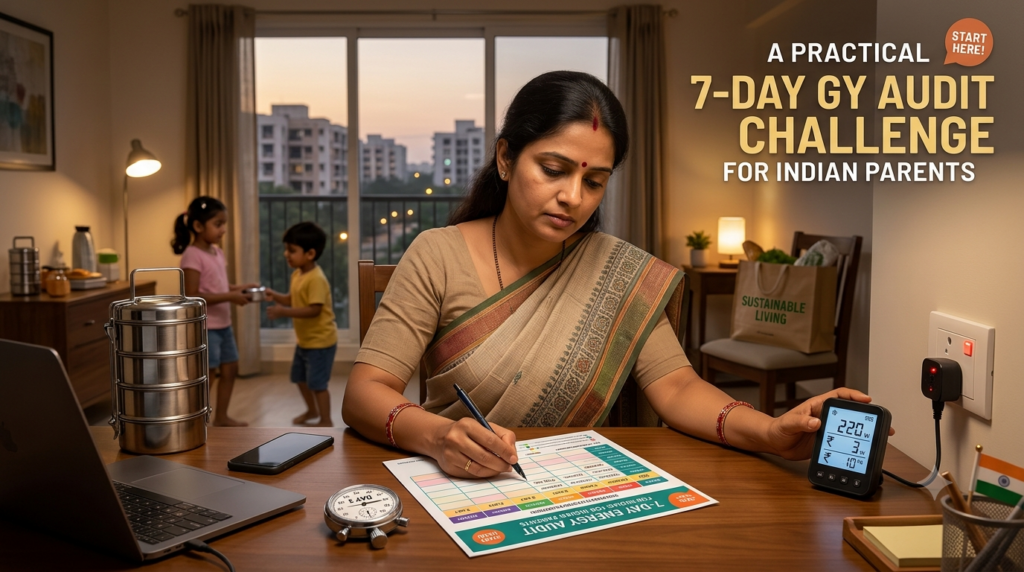
If you want to make this exercise a habit, try the following seven-day plan.
Observe without judging
Track your four fuels. Don’t try to change everything yet.
Prioritise sleep
Create a calming bedtime routine and reduce late-night distractions.
Improve nourishment
Plan regular meals and keep water accessible during your workday.
Add movement
Take a walk, stretch between tasks, or play an outdoor game with your child.
Reconnect
Give your child 10 minutes of undistracted attention and reach out to someone who supports you.
Notice your triggers
When you feel irritated, pause and check whether hunger, tiredness, stress, or disconnection may be contributing.
Review and reset
Look at your ratings and choose two habits to continue next week.
Remember, this is not a challenge to complete perfectly. If one day goes off track because of work, a child’s illness, or an unexpected family responsibility, simply start again the next day.
Small, repeatable habits are often easier to maintain than dramatic changes.
Let’s consider a common situation.
Your child has an exam tomorrow but hasn’t completed the revision you expected. You have just returned from work, you’re hungry, and you are mentally exhausted.
Your first reaction might be:
“Why are you always so careless? How many times do I have to remind you?”
Now imagine approaching the same situation after checking your energy levels.
You recognise that you’re exhausted, take a few minutes to settle yourself, and then ask:
“What have you completed so far, and what is still left? Let’s work out a realistic plan.”
The problem hasn’t disappeared. Your child still needs to prepare for the exam, and you still have responsibilities to manage.
But your response has changed.
That pause can help prevent an ordinary academic problem from becoming an unnecessary conflict.
An energy audit doesn’t mean excusing every behaviour or avoiding discipline. It means recognising that how you respond to your child matters just as much as what you teach them.
When you make self-awareness a regular habit, you may begin to notice recurring patterns:
These observations can help you make more deliberate parenting choices.
Sometimes, a few lifestyle changes are not enough.
If you feel persistently exhausted, overwhelmed, irritable, or emotionally disconnected, it is important not to assume that you simply need better discipline or time management.
Work demands, financial worries, relationship difficulties, caregiving responsibilities, sleep disorders, and physical or mental health concerns may all contribute.
Research published in 2026 examining stress among parents of young children identified personal wellbeing, relationship quality, co-parenting, and support from friends and family as relevant factors.
Consider speaking with a qualified healthcare professional or mental health professional if your difficulties persist or interfere with everyday life. An energy audit can help you notice patterns, but it cannot replace professional assessment or treatment.
Equally, don’t hesitate to ask your partner, relatives, or trusted friends for practical help. Parenting was never meant to be a task that one person must manage perfectly and alone.
An energy audit for parents is a simple self-reflection exercise that helps parents review four areas of daily wellbeing: sleep, food, movement, and connection. It can help identify habits that may be contributing to tiredness, stress, or difficulty staying emotionally present.
Parents need physical and emotional resources to manage daily responsibilities, respond to their children’s needs, and maintain healthy relationships. Supporting parental wellbeing can help create a more supportive family environment, although it cannot guarantee particular outcomes for a child.
Start with a brief daily check-in for seven days. After that, a weekly review may be enough to identify patterns and decide which habits need attention.
Start with one manageable change rather than trying to fix everything simultaneously. Consider whether you need more rest, better meal planning, gentle movement, or support from others. If persistent exhaustion or emotional distress continues, seek professional advice.
It may help you recognise everyday needs and stressors earlier, allowing you to make practical adjustments. However, it is not a validated clinical test or a guaranteed solution for parental stress or burnout.
It can help you reflect on how your own energy and stress levels influence your responses to your child. Understanding your child’s individual needs, interests, strengths, and challenges is a separate but equally important part of thoughtful parenting.
As parents, we spend a tremendous amount of time trying to improve our children.
We look for better schools, additional classes, effective study techniques, extracurricular activities, and career guidance. We want our children to grow into confident, capable, and independent individuals.
But somewhere along the way, we can forget to ask an equally important question:
“Am I looking after myself well enough to give my child the guidance and support they need?”
Your child doesn’t need a parent who never gets tired, never makes mistakes, and never loses patience.
Your child needs a parent who is willing to learn, recognise personal limits, repair relationships after difficult moments, and keep growing.
Start with your four fuels:
You don’t have to transform your entire life this week. Begin by noticing where your energy goes and what helps you replenish it.
Because when you take better care of yourself, you create more opportunities to show up for your child with patience, presence, and understanding.

An energy audit helps you understand your own needs as a parent. But another important question remains:
Do you truly understand how your child learns, what motivates them, where their strengths lie, and how you can support their individual development?
Every child is different. The approach that works beautifully for one child may not work the same way for another.
At SH Development Academy, Santosh Hariharan — DMIT Consultant, Parent & Career Coach, and Success Mindset Coach for Students — helps parents explore their child’s development and make more informed parenting and educational decisions.
Through our DMIT service and personalised guidance, we aim to help parents reflect on their child’s individual needs, strengths, and development. A DMIT report should be treated as a discussion and reflection aid, not a scientifically established way to predict intelligence, personality, learning style, or future career success from fingerprints alone.
If you would like to understand our approach and explore whether a consultation is right for your family, visit our website.
Learn more about DMIT and our guidance services at SH Development Academy.Explore DMIT & Parenting Guidance
Questions or appointment enquiries?
+91 8421315400
+91 7303290862
Copy numbers
⭐ Trusted by parents and families
Read our Google reviews to learn about other families’ experiences.
Because better parenting isn’t about getting everything right. It’s about understanding yourself, understanding your child, and making small, thoughtful improvements every day.
Success & Happiness are the two most important yet elusive things which every human being yearns to achieve in life. Real success and happiness can be savoured only when one enjoys good health and good family relations, along with a good professional career and sound financial stability.
Our Visitor


 Users Today : 7