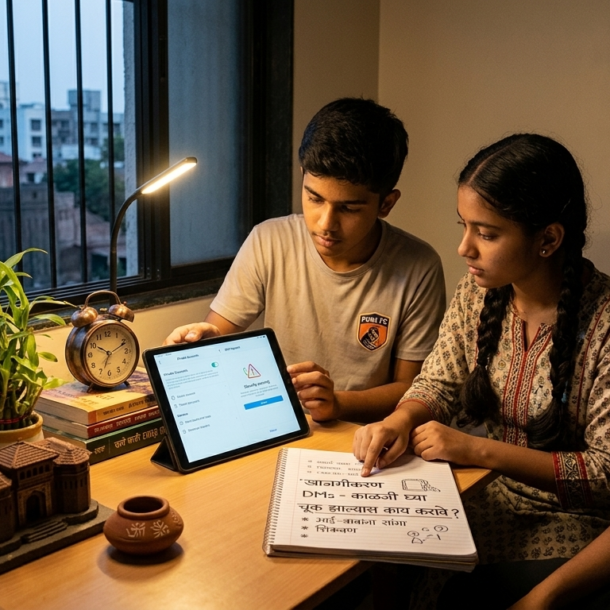

If you are a parent in India, there is a good chance you have had this argument at home:
“Bas 5 minutes aur…” 📱
And somehow those 5 minutes become 30.
Then an hour.
Then bedtime gets delayed.
The child becomes cranky when the phone is taken away, homework gets postponed, outdoor play gets skipped—and parents are left wondering:
“Exactly how much screen time is actually okay for my child?”
This is where the IAP screen time guidelines in India become important.
The Indian Academy of Pediatrics (IAP) has published age-based recommendations for children’s screen exposure and digital wellness. The guidance is not simply about counting minutes. It also looks at what children are watching, why they are using screens, whether parents are involved, and whether screen use is replacing sleep, physical activity, family interaction, studies or play. Indian Pediatrics
And there is an important 2026 update in context: IAP’s 2026 Action Plan includes dedicated work on “Screen Time Versus Green Time,” “Digital Childhood: Screen Time, Social Media and Child,” and early parental guidance, showing that digital wellness remains an active area of pediatric attention. iapindia.org
So let’s break down the IAP screen time guidelines 2026 India in a way that is actually useful for parents.
Before we go deeper, here is the simple version:
| Child’s Age | IAP Recommendation |
|---|---|
| 0–2 years | 🚫 No screen exposure |
| 2–5 years | ⏱️ Maximum 1 hour/day, supervised |
| 5–10 years | ⏱️ Less than 2 hours/day |
| 10–18 years | ⚖️ Balance screen use with sleep, activity, studies and family life |
The first three limits come directly from the IAP guideline. For adolescents, IAP emphasizes balancing digital media with other developmental needs rather than giving a single universal daily number. Indian Pediatrics
But there’s an important detail many parents miss:
The goal is not to help your child “finish their allowed screen time.”
The goal is to make sure screens don’t take away from the things a growing child actually needs.
The Indian Academy of Pediatrics Guidelines on Screen Time and Digital Wellness in Infants, Children and Adolescents were developed by an expert committee after reviewing research and existing recommendations. The guideline was finalized following an expert consultation in March 2021 and published in Indian Pediatrics in December 2021/2022. Indian Pediatrics
The IAP recommendations address:
This is important because screen time is not one single thing.
A child attending an online school lesson is not doing exactly the same thing as a child spending an hour watching random short videos.
And a parent video-calling a grandparent is very different from handing a toddler a phone to stop them from crying.
The context matters.
For children below 2 years, IAP recommends no exposure to screens.
That includes smartphones, tablets, television and other screen-based media. Indian Pediatrics
There is one practical exception mentioned by IAP:
For example, a brief video call with grandparents can be allowed as social interaction.
But there is a bigger parenting message here.
IAP specifically recommends that screens should not be used to facilitate feeding and should not become the default method for calming a crying or distressed child. Indian Pediatrics
So instead of:
📱 “Take the phone and eat.”
Try:
🗣️ Talking
🎵 Singing
📖 Storytelling
🧸 Age-appropriate toys
🏃 Physical play
❤️ Human interaction
These simple interactions are not “old-fashioned.”
They are part of how young children learn about the world.
For children aged 24–59 months, IAP recommends a maximum of 1 hour of screen time per day, with less being better. Individual sessions should ideally be limited to around 20–30 minutes. Indian Pediatrics
But here’s the part parents should pay attention to:
IAP recommends caregiver supervision and shared use.
The content should preferably be:
✅ Educational
✅ Age-appropriate
✅ Non-violent
✅ Healthy
✅ Interactive
Parents should talk with the child about what they are watching rather than treating the screen as a babysitter. Indian Pediatrics
Instead of letting your child watch an educational video alone:
Watch together.
Ask:
“What colour is that?”
“What happened next?”
“Can you show me?”
Now the screen becomes part of an interaction rather than replacing interaction.
For children aged 5–10 years, IAP recommends less than 2 hours of screen time per day, with less being better. The guideline says this includes recreational screen time as well as screen use at home for educational and extracurricular assignments. Indian Pediatrics
The IAP recommendation is that screen exposure should mainly support:
📚 Education
🧠 Learning
👫 Social interaction
while recreational screen use should be kept to a minimum. Indian Pediatrics
This age is particularly important because children are developing habits that can continue into their teenage years.
And one recommendation stands out:
IAP specifically advises against using screens simply to overcome boredom and encourages parents to allow boredom because it can support imagination and creativity. Indian Pediatrics
That means:
“I’m bored” doesn’t always require a YouTube video.
Sometimes it can lead to:
🎨 Drawing
🧩 Puzzles
⚽ Playing outside
📚 Reading
🧱 Building something
🎵 Music
💭 Imagining a game
The IAP guideline takes a fairly cautious position here.
It recommends that the device used by the child should belong to a parent rather than the child having an independent phone, tablet or laptop at this stage. It also recommends parental monitoring and co-viewing to ensure appropriate content and safety. Indian Pediatrics
This doesn’t mean every Indian family has to follow exactly the same arrangement.
But it does give parents a useful principle:
A child doesn’t necessarily need unlimited private access simply because they know how to operate a smartphone.
This is where things become more complicated.
For children and adolescents 10–18 years, IAP does not simply say, “Here is your exact number of hours.”
Instead, the emphasis shifts toward balance.
Screen use should not interfere with:
😴 Sleep
🏃 Physical activity
📚 Studies
👨👩👧 Family interaction
👫 Real-world relationships
🎯 Skill development
This is an important distinction.
A teenager might legitimately need a laptop for schoolwork, communicate with classmates online, watch educational content, or use digital tools for learning.
So asking:
“How many hours is my teenager on a screen?”
is only the first question.
The better question is:
“What is the screen replacing?”
This is probably the most important lesson for parents.
Two children can both spend two hours on a screen, but their experiences can be completely different.
📚 45 minutes online learning
👵 20-minute video call with grandparents
🎨 30 minutes creative activity
👫 25 minutes social interaction
📱 2 hours of endless scrolling
🎮 Passive gaming
🌙 Using the phone late at night
🍟 Eating while watching videos
Same device.
Similar duration.
Very different impact.
That’s why good digital parenting is not simply about using a stopwatch.
IAP recommends that children aged 2–5 should not use screens during meals, and the guideline also emphasizes healthy digital habits across the family. Indian Pediatrics
This rule can be difficult in many Indian households.
Especially when parents say:
“He doesn’t eat unless we put cartoons on.”
But using a screen to make every meal easier can gradually turn eating into something that requires external stimulation.
Try making meals a time for:
🍛 Conversation
😊 Family interaction
👂 Listening
❤️ Connection
The dining table should ideally be more interesting than the phone.
IAP recommends avoiding screens around bedtime, including avoiding screen use within one hour before sleep for children aged 2–5. Indian Pediatrics
The guideline discusses evidence linking screen exposure around bedtime with sleep-related problems. Screen light and stimulating content can interfere with normal sleep patterns, while social media and internet use can contribute to delayed sleep and poorer sleep quality. Indian Pediatrics
For parents, a simple rule can help:
Because children notice what we do much more quickly than what we tell them.
And importantly, this rule should apply to parents too.
Here’s something many parents don’t want to hear:
Children learn digital behaviour from adults.
The IAP guideline identifies parental screen use and parental perceptions as factors associated with children’s screen time. It also emphasizes parental involvement in interventions to reduce excessive screen use. Indian Pediatrics
So if a child sees:
📱 Dad checking WhatsApp during dinner
📱 Mom scrolling while talking
📱 Parents watching reels late at night
then saying:
“Don’t use your phone so much!”
is unlikely to be very convincing.
For example:
No phones during meals.
No phones in bedrooms at bedtime.
One screen at a time.
Parents follow the same rules.
Parents should look beyond the number of hours.
Pay attention if your child frequently shows:
⚠️ Irritability when the device is removed
⚠️ Difficulty sleeping
⚠️ Reduced physical activity
⚠️ Poor posture or eye discomfort
⚠️ Difficulty concentrating
⚠️ Loss of interest in offline activities
⚠️ Falling academic performance
⚠️ Increasing secrecy around online activity
⚠️ Exposure to inappropriate content
⚠️ Signs of cyberbullying
The IAP guideline highlights concerns including sleep disturbance, physical/visual problems, developmental and learning concerns, emotional effects, cyberbullying and problematic media use. Indian Pediatrics
If you notice significant or persistent problems, don’t assume it’s simply “phone addiction.” Discuss the concern with your pediatrician or an appropriate qualified professional.
You don’t need a complicated 20-page family policy.
Start with a few rules.
Make eating a family activity.
Protect sleep.
Don’t encourage constant multitasking.
Content matters.
Talk. Ask questions. Participate.
Don’t let digital entertainment replace physical activity.
A bored child doesn’t always need a phone.
A crying child doesn’t always need YouTube.
The strongest digital-wellness lesson often starts with our own phone habits.

There is another reason this topic deserves attention in 2026.
The IAP’s 2026 Action Plan includes dedicated areas such as:
That tells us something important:
Digital wellness is no longer just a question of “How many hours is my child watching TV?”
It is becoming part of the bigger conversation around childhood development, mental health, parenting and everyday family life.
Unfortunately, this is where the reality becomes challenging.
A 2025 hospital-based study published in Indian Pediatrics looked at 771 children aged 3 months to 14 years and found low adherence to the IAP permissible screen-exposure recommendations.
Adherence was reported at:
The average reported screen time in the study was 2.62 hours per day. PubMed
So if you’re struggling to implement screen-time rules at home, you’re certainly not alone.
The challenge for parents isn’t knowing that excessive screen use can be problematic.
The real challenge is changing daily habits.
If I had to simplify the entire discussion for a parent, I would say this:
Technology is now part of education, communication and everyday life.
Instead, teach your child:
When to use it.
Why to use it.
What to watch.
When to stop.
What should never be replaced by it.
A smartphone should be a tool, not the centre of childhood.
As a parent and child-development professional, I’ve seen that many parents don’t actually have a problem with their child using a phone.
Their real problem is this:
“I don’t know where to draw the line.”
And that’s understandable.
Parenting today is very different from parenting 15–20 years ago.
There were no smartphones demanding your child’s attention at the dining table.
There were no endless reels.
There were no online games designed to keep children coming back.
So don’t blame yourself.
Start small.
Set one family rule today.
Then another next week.
And most importantly, don’t just take something away from your child—replace it with something better.
Replace scrolling with conversation.
Replace passive entertainment with play.
Replace endless videos with creativity.
Replace constant comparison with understanding.
Because the goal of digital wellness isn’t to raise a child who doesn’t know how to use technology.
The goal is to raise a child who knows how to use technology without allowing technology to control them. ❤️
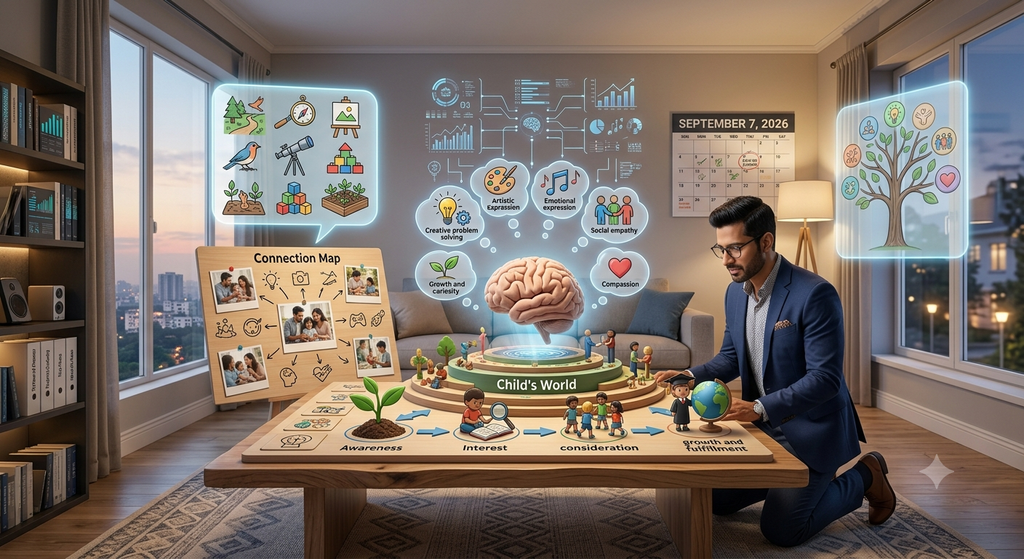
Sometimes excessive screen use is only one part of a much bigger parenting question:
Why does my child behave this way?
How does my child naturally learn?
What motivates them?
Where are their strengths?
How can I guide them without constantly fighting with them?
This is where understanding your child’s individual characteristics can make parenting more intentional.
At SH Development Academy, we offer a DMIT Consultation designed to help parents understand their child’s individual strengths, learning preferences and developmental direction, followed by guidance on how those insights can be used practically at home and in education.
The consultation is guided by Santosh Hariharan — DMIT Consultant, Parent & Career Coach, and Success Mindset Coach for Students.
If you feel you’re doing everything you can as a parent but still find yourself saying, “I wish I understood my child better,” a consultation can be a useful starting point.
📞 +91 8421315400 | +91 7303290862
⭐ 400+ Google Reviews: See what parents have shared about our guidance
Because better parenting doesn’t begin with controlling your child.
It begins with understanding your child. 🌱
Success & Happiness are the two most important yet elusive things which every human being yearns to achieve in life. Real success and happiness can be savoured only when one enjoys good health and good family relations, along with a good professional career and sound financial stability.
Our Visitor


 Users Today : 15