
Online Schooling Effects on Children: What Research Says for Indian Families
By Site Administrator
Online schooling changed the way families think about education.
For some children, learning from home offered flexibility, convenience and access to digital resources. For others, it brought new challenges—more screen exposure, reduced face-to-face interaction, distractions, connectivity problems and difficulty staying motivated.
So, as a parent, what should you actually believe about the online schooling effects on children?
The answer is not simply “online school is bad” or “online school is the future.”
The real question is:
Does this particular learning environment suit my child?
And that is where parents need to look beyond the screen and understand the individual child. 👇
What Does Research Say About Online Schooling and Children?
Research from India and international organisations shows that digital learning can provide valuable educational opportunities—but its effectiveness depends greatly on how it is designed and delivered.
UNICEF’s 2026 Digital Education Strategy emphasises evidence-based digital education, improved learning outcomes and reducing digital inequalities rather than simply increasing children’s access to technology.
This is an important distinction.
A laptop, tablet or online classroom does not automatically create better learning.
The quality of the learning experience matters.
During India’s COVID-era school closures, UNICEF found significant differences in children’s access to remote education. In one assessment, 42% of children aged 6–13 reported that they had not participated in any form of remote learning.
That experience gave Indian families an important lesson:
Digital education works differently for different children.
5 Major Online Schooling Effects Parents Should Understand
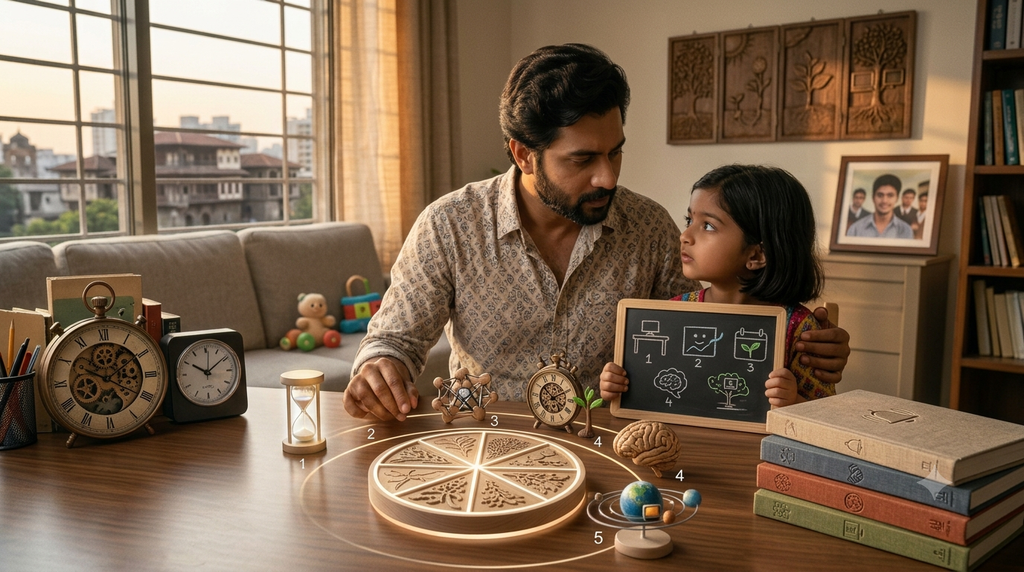
1. 📱 Increased Screen Exposure
When the classroom, homework, entertainment and social interaction all happen through digital devices, screen exposure can quickly become a concern.
The issue isn’t simply “screen = bad.”
The type of screen activity matters.
There is a significant difference between:
🎓 45 minutes of an interactive lesson
and
📱 45 minutes of endless short-form videos.
Recent UNICEF research highlights that children’s digital experiences can have both positive and negative effects depending on how technology is used, the content they encounter and their surrounding environment.
Parents therefore need to focus on healthy digital habits, not simply counting every minute of screen use.
2. 🎯 Focus and Concentration Can Become a Challenge
Have you noticed your child opening an online class but simultaneously checking another tab, phone notification or video?
You’re not alone.
Online learning requires a greater degree of self-regulation.
In a physical classroom, the teacher, classmates and classroom environment naturally provide external structure.
At home, the child may have:
📱 Notifications
🎮 Games
📺 YouTube
🏠 Household distractions
💬 Messages
This can make sustained attention more difficult for some children.
A 2024 Indian study of adolescents during compulsory online education reported increased screen time alongside changes in communication, physical activity and other aspects of wellbeing. However, it was a small cross-sectional study of 78 adolescents, so it should not be treated as proof that online schooling causes these outcomes for all children.
3. 🤝 Less Face-to-Face Social Interaction
School is not only about textbooks.
Children also learn through:
- Playing together
- Group activities
- Classroom discussions
- Friendships
- Sports
- Conflict resolution
- Reading social cues
UNICEF’s research during India’s school closures highlighted concerns around lost learning as well as reduced opportunities for social interaction and play.
This doesn’t mean an online student cannot develop social skills.
It means parents may need to deliberately create opportunities for:
⚽ Outdoor play
👫 Friend interaction
🎨 Group activities
🗣️ Family conversations
🏃 Physical activity
4. 📚 Learning Outcomes Can Vary Significantly
One of the biggest misconceptions is:
“If my child attends every online class, learning will automatically happen.”
Not necessarily.
Learning depends on:
- Quality of teaching
- Child’s attention
- Interaction with teachers
- Learning resources
- Feedback
- Practice
- Home environment
- Digital access
UNICEF’s review of remote learning in South Asia found substantial differences in access to devices and connectivity and noted that teacher and caregiver engagement can improve the effectiveness of remote learning.
So parents should monitor learning outcomes, not merely attendance.
Ask:
“What is my child actually understanding?”
rather than only:
“Did my child attend today’s class?”
5. 🧠 Every Child Responds Differently
This is perhaps the most important point for parents.
Two children can attend the same online class, use the same laptop, have the same teacher, and still have completely different experiences.
Why?
Because children differ in:
- Learning preferences
- Attention patterns
- Motivation
- Confidence
- Interests
- Personality
- Self-discipline
- Learning needs
UNICEF’s work on child-centred digital equality also stresses that digital technology does not affect all children in the same way; individual circumstances and environments influence whether children benefit from digital opportunities or face digital risks.
Is Online Schooling Bad for Children?
Not necessarily.
This is where parents need to avoid extreme conclusions.
Online education can offer:
✅ Flexibility
✅ Access to educational resources
✅ Learning from home
✅ Digital skills
✅ Access to specialised teachers and courses
But it can also create challenges:
⚠️ Excessive device dependence
⚠️ Distractions
⚠️ Reduced physical activity
⚠️ Less face-to-face interaction
⚠️ Unequal access to technology
⚠️ Difficulty with self-discipline
The impact depends on the child + the learning environment + the quality of digital education + parental support.
What Can Indian Parents Do?
You don’t necessarily have to choose between “online” and “offline”.
Instead, focus on creating a healthy learning ecosystem.
Try These 6 Simple Steps:
1. Create a dedicated study space
Keep the learning environment as distraction-free as possible.
2. Establish a predictable routine
Children generally benefit from knowing when to study, play, eat and sleep.
3. Build screen-free breaks
Don’t let the entire day become device-based.
4. Encourage outdoor activity
Physical movement and play remain important parts of childhood.
5. Talk to your child—not just about marks
Ask what they enjoyed, what confused them and what they found difficult.
6. Understand how your child learns best
This is often where parents discover that the problem isn’t always a lack of effort.
What If Your Child Is Studying Hard but Still Struggling?
This is a question I hear frequently from parents.
Sometimes the child is genuinely putting in the effort.
But the approach may not match the child’s:
learning preferences + strengths + motivation + study habits.
Instead of immediately saying:
“You need to study harder.”
try asking:
“Do we need to understand how you learn better?”
That shift in thinking can change the entire conversation.
Can DMIT Help Parents Understand Their Child Better?
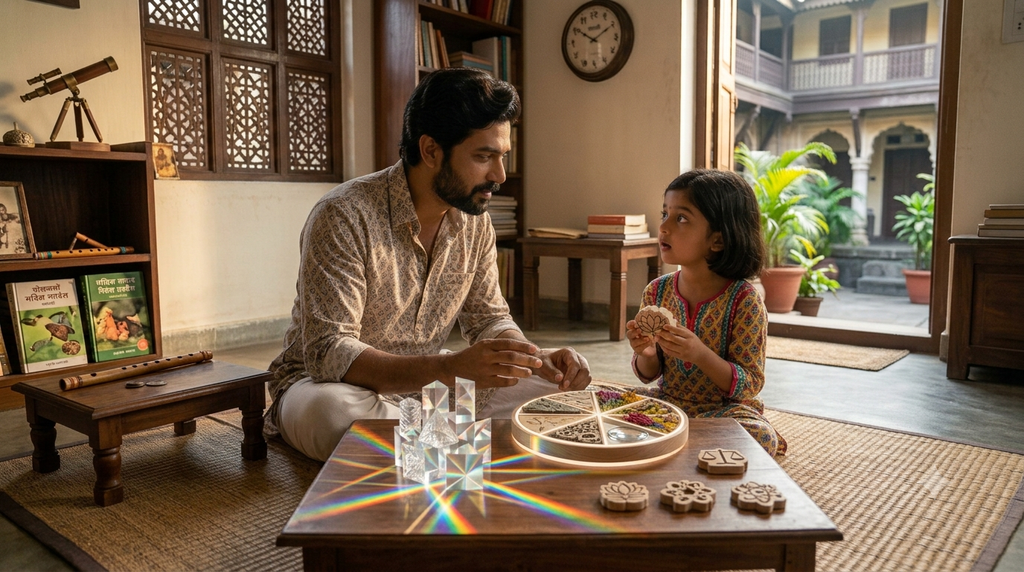
A DMIT consultation can be used as one source of guidance when parents want to understand a child’s reported learning preferences, strengths and behavioural characteristics.
But it is important to keep expectations realistic.
A DMIT report should not be treated as a medical diagnosis, a guaranteed predictor of academic success, or a substitute for observing the child and speaking with teachers or qualified professionals where needed.
For parents considering any assessment, the value comes from how thoughtfully the results are interpreted and applied to the child’s real-life situation.
The Bigger Question Isn’t Online vs Offline
The more important question is:
“What kind of learning environment helps MY child learn, grow and stay motivated?”
Because education isn’t supposed to be about putting every child into the same mould.
Some children thrive with structure.
Some need movement.
Some need more interaction.
Some need encouragement before they gain confidence.
And some simply need parents to understand how different they are from their siblings, classmates or friends.
That’s why understanding the child should come before deciding how to educate the child.
Want to Understand Your Child Better?
If you’re a parent concerned about your child’s learning style, strengths, study approach or future direction, a personalised consultation can help you look at the child beyond marks alone.
At SH Development Academy, Santosh Hariharan works with parents and students as a DMIT Consultant, Parent & Career Coach, and Success Mindset Coach for Students.
The goal isn’t to put a label on your child.
It is to help parents get more clarity about the child and make more informed parenting and educational decisions.
⭐ 400+ parents have trusted our guidance.
Click here to see our Google Reviews
📞 +91 8421315400 | +91 7303290862
Because sometimes, your child doesn’t need more pressure to perform. They need the right environment and the right understanding.
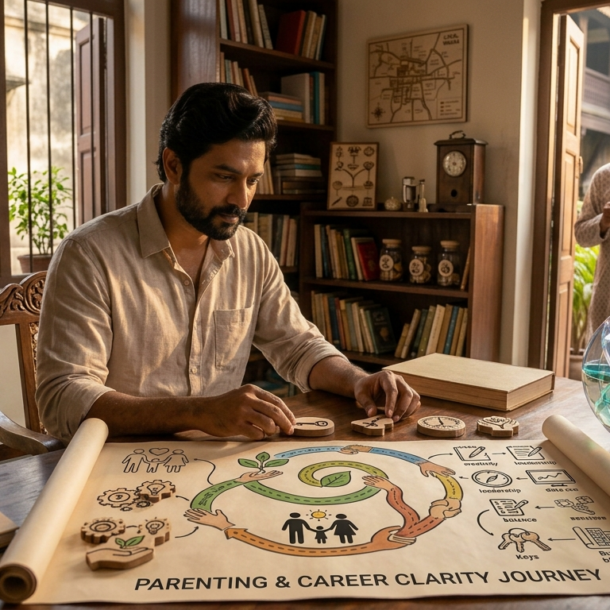
Success & Happiness are the two most important yet elusive things which every human being yearns to achieve in life. Real success and happiness can be savoured only when one enjoys good health and good family relations, along with a good professional career and sound financial stability.
Our Visitor


 Users Today : 2