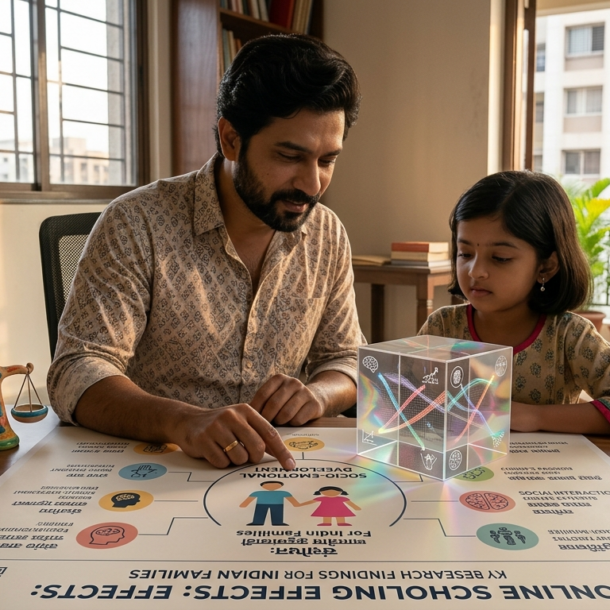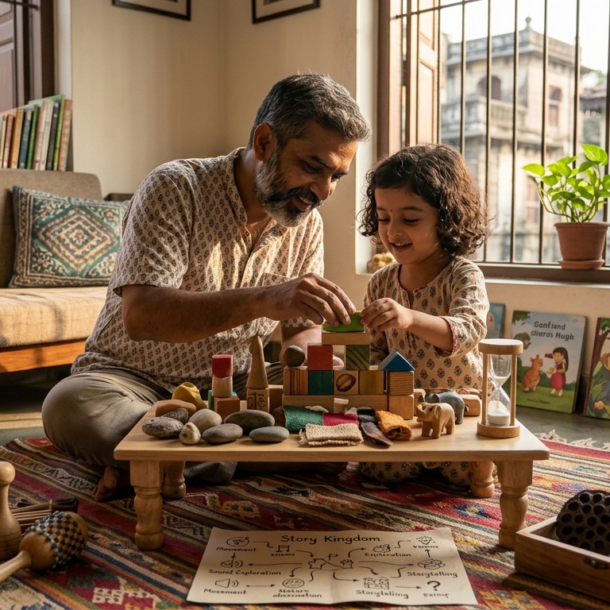

At 8 years old, your child is old enough to do much more than simply finish homework, attend school and play.
This is an important age to start building independence skills—the ability to take responsibility, make small decisions, manage time, handle simple money matters and contribute to family life.
And the good news?
You don’t need expensive classes or complicated activities for 8-year-olds to teach these skills.
Sometimes, the best learning happens right at home.
A child packing their own school bag, keeping track of their pocket money, setting an alarm for homework or helping prepare the dining table may look like small things.
But these everyday activities are quietly building confidence, responsibility and decision-making skills.
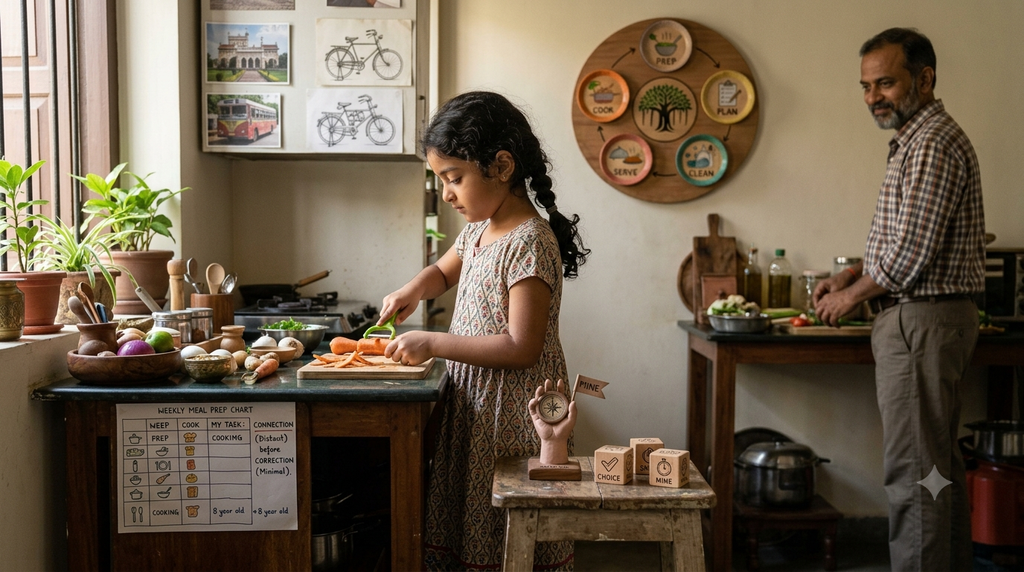
Around this age, children are becoming more capable of understanding consequences, following routines and completing tasks with less adult supervision.
But there is an important difference between doing everything for your child and teaching your child how to do things independently.
For example:
❌ “Give me your bag. I’ll pack it.”
Instead:
✅ “Check your timetable and pack tomorrow’s books yourself. I’ll help if you get stuck.”
The second approach may take a little longer initially—but your child learns something far more valuable.
“I can do this myself.”
That feeling is the foundation of healthy confidence.
Chores are not about making children “work.”
They are about teaching responsibility and contribution.
Some suitable activities for 8-year-olds include:
🧹 Keeping their room reasonably organised
🎒 Packing their school bag
👕 Folding and putting away their clothes
🍽️ Helping set or clear the dining table
🌱 Watering plants
🐾 Helping care for a family pet
📚 Organising books and school materials
🧺 Putting dirty clothes in the laundry basket
The goal isn’t perfection.
The goal is:
“This is my responsibility.”
Don’t immediately correct every small mistake.
If your child packs the bag incorrectly, ask:
“Can you check your timetable once more? Is everything you need there?”
You’re teaching them to check and solve, rather than depend on you.
Money management is another valuable life skill—and you don’t have to wait until your child becomes a teenager to introduce it.
Start small.
You can give your child a simple weekly or monthly pocket-money arrangement and teach three basic ideas:
Spend • Save • Share
For example, if your child receives ₹200:
The exact amount isn’t important.
The habit is.
The next time you’re at a shop, don’t automatically say:
“Take whatever you want.”
Instead, give your child a small budget.
Ask:
“You have ₹200. What would you like to buy, and how will you decide?”
Now a simple shopping trip becomes a lesson in:
These are powerful activities for 8-year-olds because the child is learning a real-life skill rather than memorising a concept from a textbook.
Many parents tell me:
“My child takes forever to get ready.”
“Homework takes three hours.”
“They keep getting distracted.”
Often, the child doesn’t yet have a practical understanding of how to organise time.
At 8, you can begin introducing simple time-management habits.
Create a simple routine such as:
Morning ☀️
Wake up → Brush → Get ready → Breakfast → School
After School 🎒
Lunch → Rest → Homework → Play → Dinner → Prepare school bag → Bedtime
Don’t make the schedule unnecessarily complicated.
The objective is to help your child understand:
“What needs to happen next?”
One of the most effective ways to develop independence is to give your child something that is genuinely theirs to manage.
For example:
You can remind them initially.
But gradually reduce the reminders.
That’s the progression:
Parent reminds → Child remembers → Child manages
Independence doesn’t mean allowing an 8-year-old to make every decision.
It means giving them age-appropriate choices.
Instead of:
“What do you want to do today?”
Try:
“Would you like to finish your reading before dinner or after dinner?”
Or:
“Would you like to organise your desk first or pack your school bag first?”
Small choices help children practise:
Children don’t always learn independence because we explain it to them.
They learn it because we give them opportunities to practise it.
For example:
Let your child help measure ingredients or prepare a simple snack under appropriate supervision.
Give them a small shopping list and let them help find the items.
Ask them to mark an upcoming school event, birthday or activity on a calendar.
Give them 10 minutes to organise their books and stationery.
Let them track their savings in a simple notebook.
These are excellent activities for 8-year-olds because they combine learning with everyday life.
This is an important distinction.
Independence doesn’t mean:
“My child should figure everything out without me.”
It means:
“I’ll teach, guide and support my child—but I won’t unnecessarily do everything for them.”
Your child still needs:
❤️ Encouragement
❤️ Boundaries
❤️ Supervision
❤️ Emotional support
❤️ Clear expectations
Think of yourself as a coach rather than a controller.
A coach doesn’t play the game for the player.
A coach teaches the player how to play.
Don’t panic.
Children develop differently.
One child may happily organise their school bag.
Another may need ten reminders.
One may confidently handle pocket money.
Another may struggle with choices.
Instead of immediately labelling your child as:
“lazy,”
“careless,”
“irresponsible,” or
“not serious,”
try asking:
“What is making this difficult for my child?”
Is the task too complicated?
Does the child need a visual routine?
Are there too many instructions?
Are they afraid of making mistakes?
Or perhaps they simply haven’t had enough opportunities to practise.
Understanding the reason is often more useful than simply increasing the pressure.
Try this simple approach:
Tell your child what responsibility they are taking.
Show them once or twice.
Let them try while you’re nearby.
Give them space to do it independently.
Ask what went well and what could be improved.
Recognise responsibility—not just perfect results.
Instead of:
“Why did you do it so badly?”
try:
“You remembered to do it yourself today. Next time, let’s see how we can improve it.”
That small change in language can make a big difference to a child’s confidence.
This is where understanding your individual child becomes important.
Two 8-year-olds can be completely different.
One may be highly organised.
Another may be imaginative but easily distracted.
One may enjoy numbers and budgeting.
Another may learn better through hands-on activities.
One may confidently communicate their choices.
Another may need more encouragement.
So while age gives us a general developmental framework, your child’s individual strengths, personality, interests and learning preferences also matter.
This is one reason parents often find child assessments and professional guidance useful.
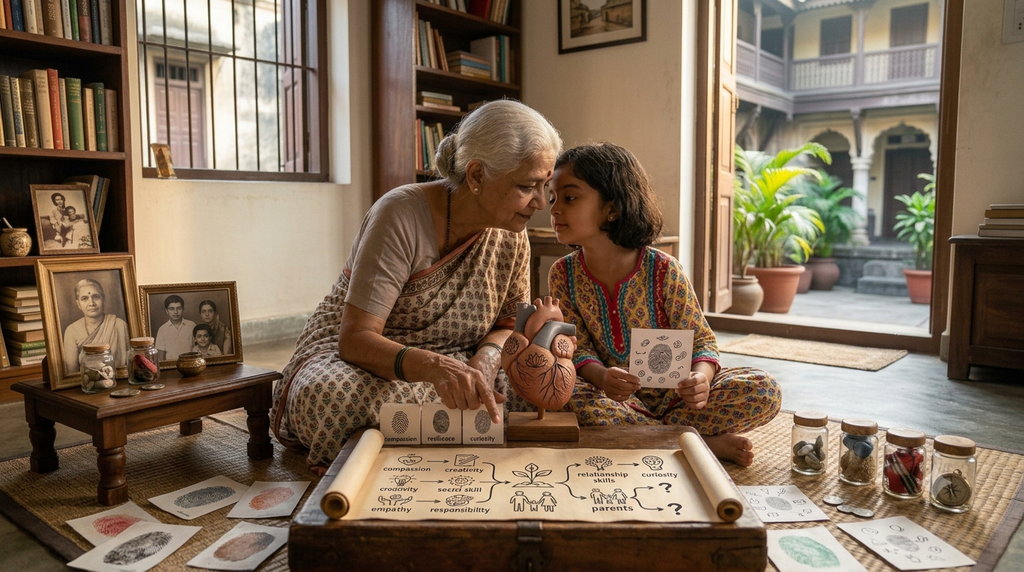
A DMIT (Dermatoglyphics Multiple Intelligence Test) is often used as a child-guidance tool to explore areas such as learning preferences, strengths, personality-related traits and potential areas of interest.
For parents, the value should not be in putting a permanent label on a child.
Instead, the conversation should be:
“Now that I understand my child better, how can I guide them better?”
For example, if a child responds better to hands-on learning, parents can incorporate more practical activities.
If a child enjoys communication and social interaction, parents can provide opportunities for speaking, teamwork and group activities.
The report should be viewed as one input into parenting and guidance, alongside observation, the child’s interests, school feedback and professional counselling—not as a guarantee of future success.
As parents, it’s natural to want to make life easier for our children.
But if we solve every problem for them, we may unintentionally take away opportunities to learn.
Let them make small mistakes.
Let them choose.
Let them organise.
Let them save.
Let them manage their time.
Let them try again.
Because eventually, your child will leave home and face the world without you standing beside them for every decision.
The question is not:
“How can I make sure my child never struggles?”
A better question is:
“How can I prepare my child to handle life’s struggles with confidence?”
That’s what independence is really about.
At 8, your child doesn’t need to become completely independent.
They need to start practising independence.
One chore.
One decision.
One small budget.
One self-managed routine.
One responsibility at a time.
And as parents, our job slowly changes from doing everything for them to teaching them how to do things for themselves.
That is one of the greatest gifts we can give our children.

Sometimes the challenge isn’t that your child isn’t capable.
The challenge is that we haven’t yet understood how our child naturally learns, thinks and responds.
If you’re looking for deeper insights into your child’s strengths, learning preferences, personality and potential areas of development, a professionally interpreted DMIT consultation can be a useful starting point for a broader parenting and career-guidance conversation.
At SH Development Academy, Santosh Hariharan — DMIT Consultant, Parent & Career Coach and Success Mindset Coach for Students — helps parents understand their children and make more informed decisions about learning, development and future direction.
You can also explore the experiences shared by parents who have worked with us:
📞 +91 8421315400 | +91 7303290862
Because the goal isn’t to raise a child who always needs your help.
The goal is to raise a child who gradually learns to trust themselves.
Success & Happiness are the two most important yet elusive things which every human being yearns to achieve in life. Real success and happiness can be savoured only when one enjoys good health and good family relations, along with a good professional career and sound financial stability.
Our Visitor


 Users Today : 2