
Parenting a strong-willed child can be both rewarding and exhausting.
One moment your child is happy and playful. The next, they are refusing to do something, arguing about everything, or having a complete meltdown because things didn’t go their way.
And as a parent, you may find yourself thinking:
“Why does my child have to argue about everything?”
“Am I being too strict?”
“Should I give in, or should I stand my ground?”
If you are searching for parenting strong willed child strategies, the first thing I want you to know is this:
👉 A strong-willed child is not necessarily a difficult child.
Often, strong-willed children are highly independent, persistent and determined. The parenting challenge is learning how to guide that determination without turning every situation into a power struggle.
Here are 9 calm-down strategies that can help you protect both boundaries and your connection with your child.
This sounds simple, but it is one of the hardest parenting skills.
When your child is shouting, refusing or throwing a tantrum, your natural reaction may be to raise your voice too.
But when two nervous systems are overwhelmed, the situation usually gets worse.
Take a breath. Lower your voice. Slow down.
🧘 Your calm can become your child’s calm.
You don’t have to win the argument. Your first job is to bring the emotional temperature down.
Strong-willed children often want control.
If parents respond to every refusal with:
“Because I said so!”
the child may push back even harder.
Instead, ask yourself:
“Does this really need to become a battle?”
Some things are non-negotiable:
But some things can have flexibility.
For example:
“Do you want to finish your homework before dinner or after dinner?”
The responsibility stays the same.
But the child gets some control over how they complete it.
Instead of:
❌ “Go and study now.”
Try:
✅ “Would you like to study Maths first or Science?”
Instead of:
❌ “Wear this dress.”
Try:
✅ “Would you like the blue one or the green one?”
For a strong-willed child, having a small amount of control can make cooperation much easier.
Choice does not mean giving up authority.
It means giving your child an appropriate sense of independence.
This is a powerful parenting distinction.
You can accept your child’s feelings without accepting inappropriate behaviour.
For example:
“I know you’re angry because I said no to the game. It’s okay to feel angry. But it’s not okay to hit.”
This tells the child:
“My parents understand me, but they also have boundaries.”
That combination builds emotional security.
When a child is extremely upset, giving a ten-minute lecture about discipline, responsibility and future consequences rarely works.
Their brain is focused on the emotion—not your lesson.
Keep your words short.
Try:
“I can see you’re upset. Let’s calm down first. We’ll talk after.”
Then discuss the situation once the child is calmer.
Connection first. Correction second.
Many parent-child battles happen around predictable situations:
⏰ Waking up
📚 Homework
📱 Screen time
🍽️ Meals
🌙 Bedtime
A consistent routine can reduce the number of decisions and negotiations happening every day.
For example:
Homework → Play → Dinner → Screen time → Bedtime
When expectations are predictable, children often resist less because they know what comes next.
Parents naturally notice when children score well, win competitions or complete something perfectly.
But don’t overlook everyday cooperation.
Say:
“I noticed you stopped playing when the timer rang. That showed self-control.”
Or:
“You were angry, but you explained what you wanted without shouting. That’s a big improvement.”
This teaches children that good behaviour isn’t only about getting good marks or being successful.
Be careful with statements such as:
❌ “You’re stubborn.”
❌ “You’re always difficult.”
❌ “You never listen.”
Children can eventually start believing the labels repeatedly given to them.
Instead of saying:
“You are stubborn.”
try:
“You really care about getting your way. Let’s find a solution that works for both of us.”
Correct the behaviour without attacking the child’s identity.
This may be the most important strategy of all.
Sometimes what looks like stubbornness is actually:
Instead of asking only:
“How do I stop this behaviour?”
also ask:
“What is my child trying to communicate through this behaviour?”
That one question can completely change the way you parent.
A strong-willed child can grow into an adult who is:
✨ Confident
✨ Independent
✨ Persistent
✨ Assertive
✨ Resilient
✨ Capable of making decisions
The goal of parenting isn’t to break the child’s will.
The goal is to teach the child how to use that will wisely.
You don’t want to raise a child who obeys everything out of fear.
You want to raise a child who can eventually make good decisions even when you aren’t standing beside them.
Every child is different.
Two children of the same age can respond completely differently to the same parenting approach.
One may need more independence.
Another may need more structure.
One may respond well to verbal explanations.
Another may understand better through activities and practical experiences.
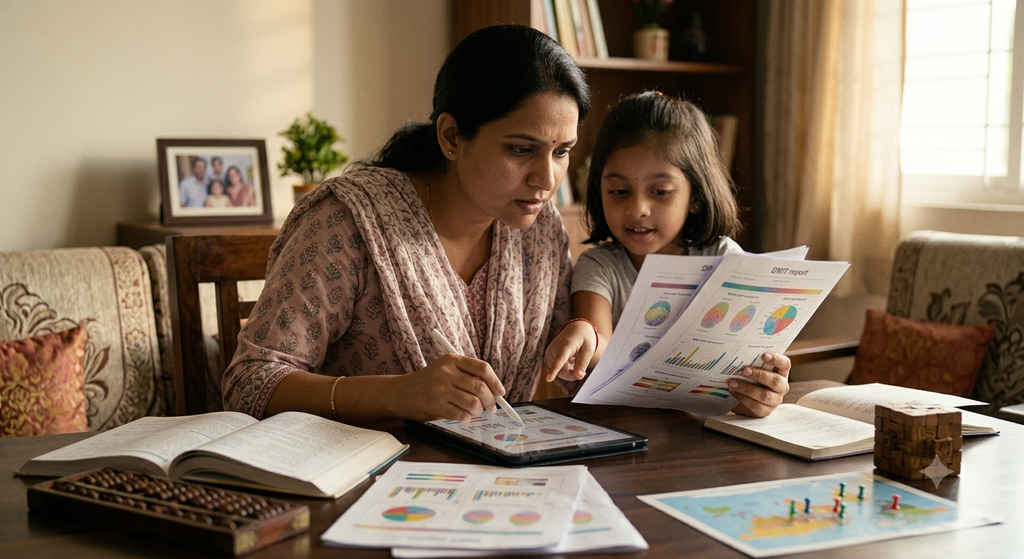
This is where a DMIT consultation can provide parents with another perspective on their child’s natural tendencies, learning preferences, strengths and areas that may need support.
A DMIT report should not be treated as a label or a prediction of your child’s future.
Instead, when properly interpreted and combined with real-life observation and professional counselling, it can become a useful parenting guidance tool.
When you become a parent, nobody gives you an instruction manual.
You learn through experience.
You make mistakes.
You try again.
And sometimes you wonder whether you’re doing the right thing.
Understanding your child’s individuality can make that journey a little clearer.
Because sometimes your child doesn’t need a stricter parent.
They need a parent who understands them better. ❤️
If you’re struggling with your child’s behaviour, learning habits, confidence, communication or future direction, a DMIT Consultation can help you look at your child from a different perspective.
At SH Development Academy, we focus on helping parents understand their child’s individual strengths and guide them with greater clarity.
Your consultation is guided by Santosh Hariharan — DMIT Consultant, Parent & Career Coach and Success Mindset Coach for Students.
👉 Book a DMIT Consultation:
https://docs.google.com/forms/d/e/1FAIpQLSd6-u-BEr3ESzoHq2CXjkYZIr41O1eqh3ip97Lj3JbZ-6xSPA/viewform
📞 Call / WhatsApp: +91 8421315400 | +91 7303290862
⭐ 400+ parents have shared their trust through Google reviews.
See 400+ Google Reviews
Because better parenting doesn’t begin with controlling your child. It begins with understanding them.
Success & Happiness are the two most important yet elusive things which every human being yearns to achieve in life. Real success and happiness can be savoured only when one enjoys good health and good family relations, along with a good professional career and sound financial stability.
Our Visitor


 Users Today : 2