Have you ever wondered why one child understands a new concept in minutes while another needs more time—even when both are equally intelligent?
As a parent, it’s natural to compare your child with classmates, cousins, or siblings. But here’s an important truth:
Learning speed is not the same as intelligence.
Every child has a unique way of learning, processing information, and applying knowledge. Some children learn quickly through pictures, others through listening, and some only truly understand when they experience something hands-on.
As a DMIT Consultant, Parent & Career Coach, I’ve met hundreds of parents who initially believed their child was a “slow learner.” In reality, many of these children simply had a different learning style that wasn’t being recognized.
Let’s understand what truly influences a child’s learning speed—and more importantly, how parents can help their child learn better without unnecessary pressure.
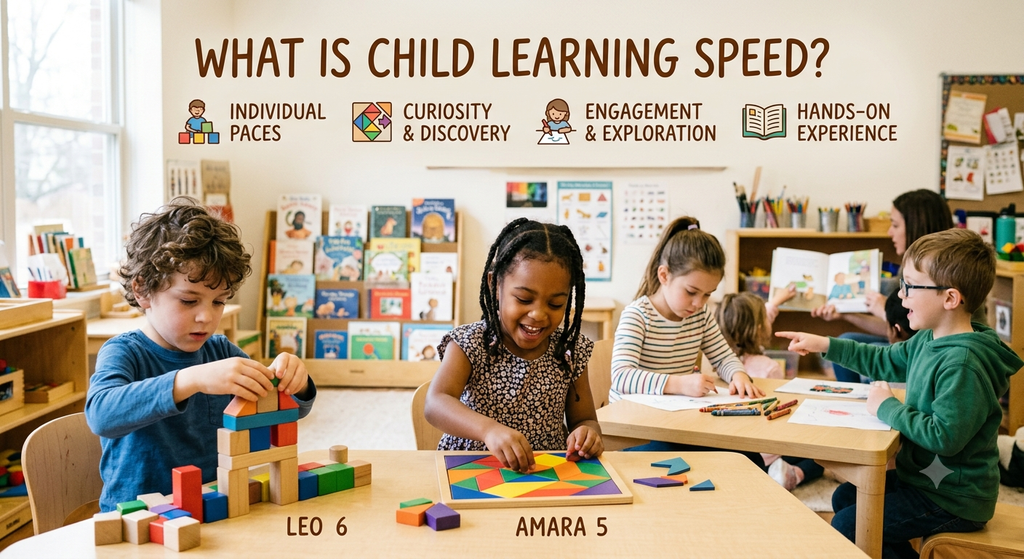
Child learning speed refers to how quickly a child can:
Learning speed is influenced by several factors, including brain development, learning preferences, environment, emotional well-being, and motivation. It should never be used as the sole measure of a child’s potential.
A child who takes longer to understand one subject may excel remarkably in another.
There isn’t one single reason. Instead, several factors work together.
Just as children grow physically at different rates, their brains also develop differently.
Some children naturally process information faster, while others take more time to absorb and understand concepts deeply. Neither approach is “better”—they’re simply different.
One of the biggest reasons behind different learning speeds is learning style.
Some children learn best by:
Imagine teaching multiplication using only lectures to a child who learns best through hands-on activities. The child may appear slow, but the teaching method—not the child—is the real challenge.
Children naturally learn faster when they’re genuinely interested.
Think about it:
A child who struggles to remember science lessons may instantly remember every cricket statistic or every detail about dinosaurs.
Interest fuels attention, and attention improves learning.
A child experiencing:
may struggle to concentrate and retain information.
Children learn best when they feel safe, supported, and encouraged.
Not every child is meant to excel in the same areas.
Some naturally shine in:
Recognizing these strengths early helps parents guide children without forcing comparisons.
Many parents unintentionally slow their child’s learning by:
“Look at your cousin… he finishes everything so quickly.”
Such comparisons often reduce confidence rather than improve performance.
Traditional classrooms generally follow one teaching style.
But children don’t all learn in the same way.
Understanding how your child learns can make studying more enjoyable and effective.
Marks show performance in exams—not a child’s complete potential.
Creativity, communication, emotional intelligence, leadership, and problem-solving are equally valuable skills for future success.
Absolutely.
While every child has a natural pace, learning efficiency can improve with the right support.
Parents can help by:
Small changes often create significant improvements over time.
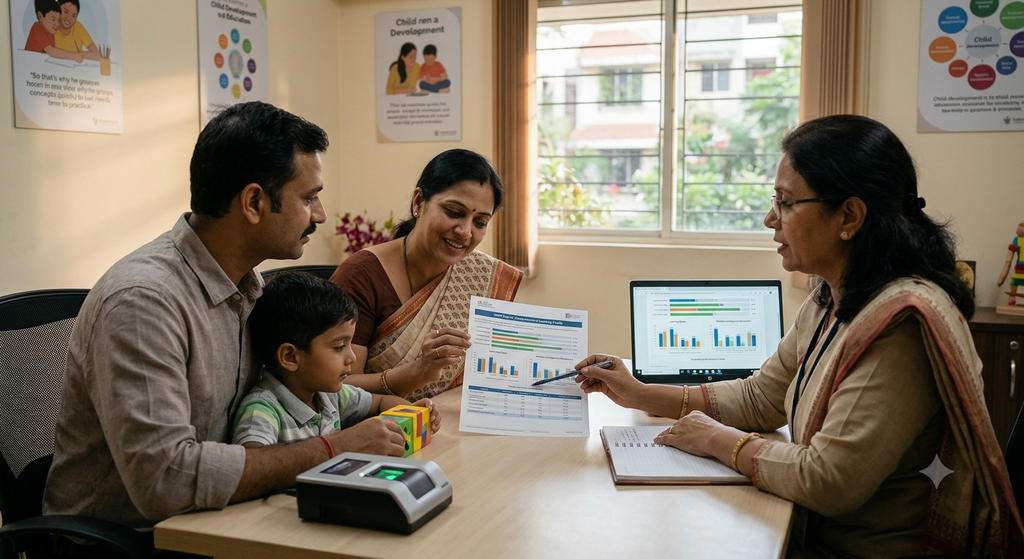
One of the biggest challenges parents face is not knowing how their child learns best.
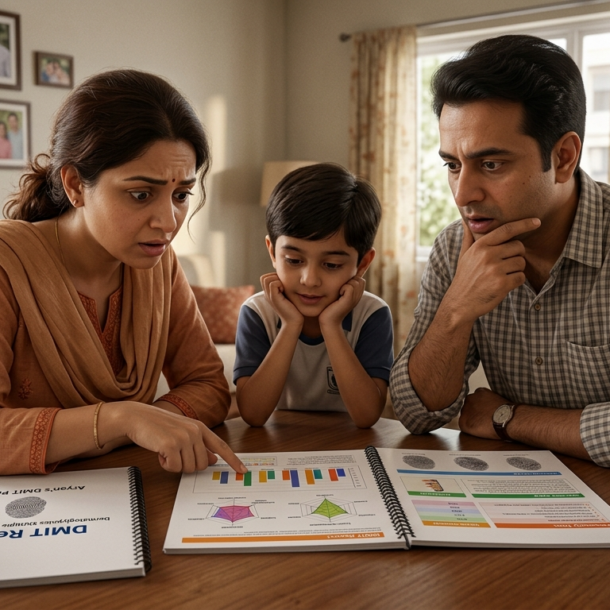
This is where a professionally interpreted DMIT (Dermatoglyphics Multiple Intelligence Test) can provide valuable insights.
A DMIT consultation helps parents understand:
Rather than labeling a child as “fast” or “slow,” the goal is to understand how they naturally learn so parents and teachers can guide them more effectively.
Some children grasp concepts quickly but forget them just as fast.
Others may take longer initially but develop a much deeper understanding.
The real goal isn’t to make children learn faster.
The goal is to help them learn better, understand deeply, and enjoy the learning process.
When parents shift their focus from comparison to understanding, children become more confident, curious, and motivated.
Not at all. Learning speed and intelligence are different. Many highly successful people learned at their own pace.
Parents often notice learning preferences from an early age. Professional assessments and observation can provide more structured guidance.
Yes. With the right learning methods, encouragement, and consistent practice, many children become more effective learners.
The classroom teaching style may not match your child’s natural learning style, or factors like confidence, stress, or distractions may affect performance.
As parents, we spend years helping our children become better learners.
But before trying to change how fast they learn, it’s worth understanding how they naturally learn best.
Sometimes, a small change in your approach can make a lifelong difference in your child’s confidence and academic journey.
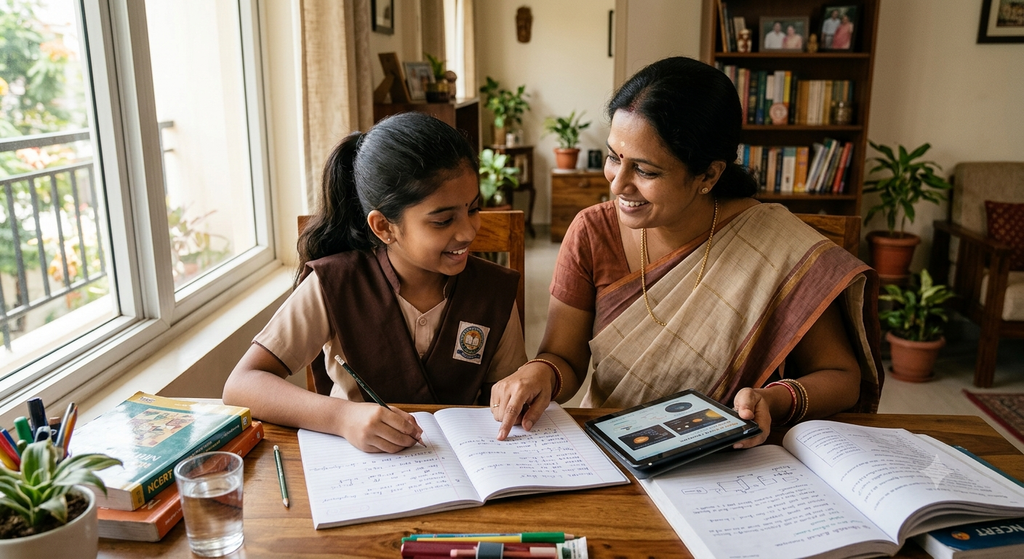
If you’ve ever wondered:
A professional DMIT Consultation can provide valuable guidance.
At SH Development Academy, Santosh Hariharan—DMIT Consultant, Parent & Career Coach, and Success Mindset Coach—has helped hundreds of parents better understand their children’s unique learning patterns and strengths.
⭐ 400+ parents have trusted our guidance.
👉 Click here to see 400+ Google Reviews:
Google Reviews
Registration:
DMIT Consultation Booking Form
Call / WhatsApp:
📱 +91 8421315400
📱 +91 7303290862
Don’t compare your child with others. Understand them first—and help them grow with confidence.
Success & Happiness are the two most important yet elusive things which every human being yearns to achieve in life. Real success and happiness can be savoured only when one enjoys good health and good family relations, along with a good professional career and sound financial stability.
Our Visitor


 Users Today : 18