
Have you ever sat down to study or work, only to realize that your mind is wandering within a few minutes?
You’re not alone.
One of the biggest challenges in 2026 isn’t a lack of intelligence—it’s a lack of focus and mental clarity. Constant notifications, social media, multitasking, academic pressure, and information overload have made it increasingly difficult for both children and adults to concentrate on what truly matters.
The good news? Focus is a skill, not a gift. It can be developed with the right habits, environment, and mindset.
As a DMIT Expert, Parent & Career Coach, I’ve worked with hundreds of students and parents. One common observation is that many children don’t struggle because they’re incapable—they struggle because no one has taught them how to focus in a way that matches their natural learning style.
Let’s explore practical, science-backed ways to improve mental clarity and focus.
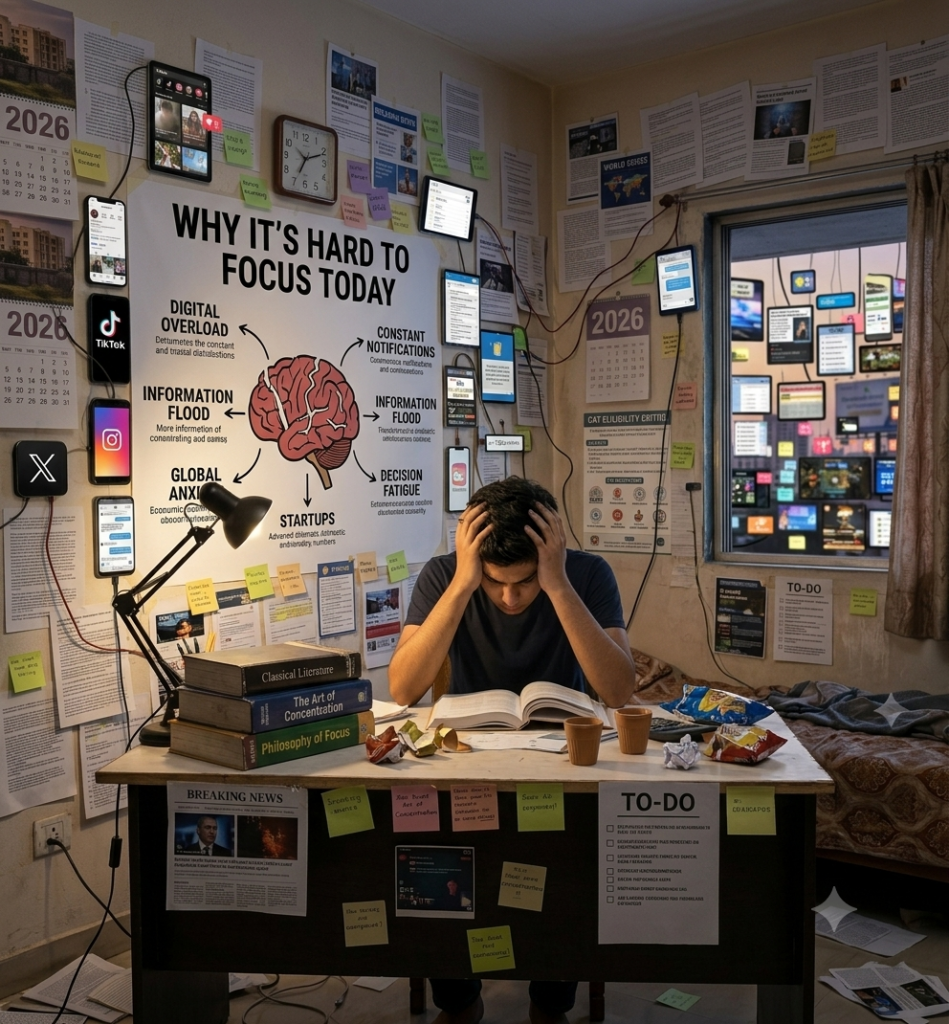
We live in a world designed to steal our attention.
Today’s students switch between:
This constant switching trains the brain to seek instant rewards instead of deep concentration.
Over time, this affects:
The first step toward improving focus is understanding what distracts you.
Mental clarity means having a calm, organized, and focused mind that helps you:
When your mind is clear, your brain uses its energy more efficiently.
You may need to improve your concentration if you or your child:
Recognizing these signs early helps prevent long-term academic and career challenges.

Your surroundings influence your concentration.
Keep your study area:
A clutter-free desk often leads to a clutter-free mind.
Multitasking reduces efficiency.
Instead of:
❌ Studying while checking WhatsApp
Try:
✅ Completing one chapter before touching your phone.
Deep work always beats divided attention.
Studying continuously for hours doesn’t always improve learning.
A simple routine works well:
Short breaks help the brain process and retain information better.
Sleep is one of the most overlooked productivity tools.
A well-rested brain:
Late-night scrolling often does more harm than missing one extra study session.
Physical activity improves blood flow to the brain.
Simple habits like:
can significantly improve attention and mental clarity.
Even five minutes of mindful breathing can calm an overactive mind.
Benefits include:
Your brain needs proper fuel.
Include foods rich in:
Avoid excessive sugary snacks and energy drinks before study sessions, as they may lead to energy crashes.
A confused mind loses focus quickly.
Instead of saying:
“I’ll study today.”
Be specific:
Clear goals create clear action.
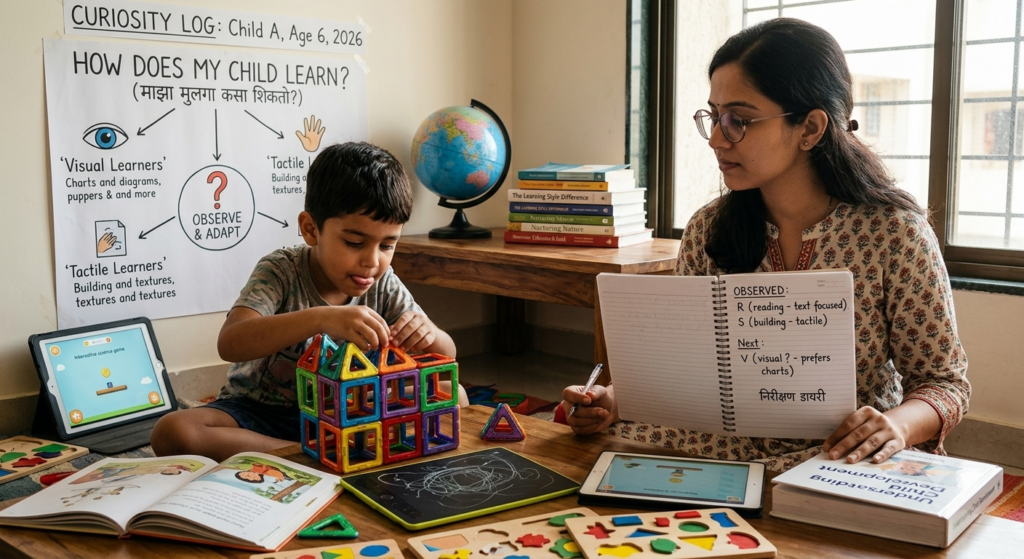
One of the biggest mistakes parents make is assuming every child learns the same way.
Some children learn best by:
👀 Seeing (Visual Learners)
👂 Listening (Auditory Learners)
✋ Doing (Kinesthetic Learners)
When study methods match a child’s natural learning style, concentration often improves significantly.
Technology is useful—but only when used wisely.
Try:
Protect your attention like you protect your time.
Parents play a crucial role in developing concentration.
Instead of constantly reminding children to “focus,” try to:
Children thrive when they feel supported rather than pressured.

Many parents ask,
“Can DMIT improve my child’s focus?”
The answer is slightly different.
A DMIT (Dermatoglyphics Multiple Intelligence Test) doesn’t directly increase concentration.
Instead, it helps identify how your child naturally learns, processes information, and responds to different learning methods.
A professionally interpreted DMIT report can provide valuable insights into:
When parents and teachers understand these aspects, they can adopt study strategies that suit the child better—often leading to improved engagement, confidence, and more effective learning.
Improving focus isn’t about making one big change.
It’s about consistently practicing small habits every day.
Better sleep.
Less screen time.
Clear goals.
Healthy routines.
Supportive parenting.
Over time, these simple habits can transform a student’s academic performance and overall wellbeing.
In today’s fast-paced world, mental clarity has become one of the greatest advantages a student can have.
Remember, every child is different.
What helps one child stay focused may not work for another.
The key is to understand your child’s unique strengths and create an environment where they can thrive—not just academically, but emotionally and personally as well.
If your child struggles with concentration, low confidence, inconsistent academic performance, or confusion about future career choices, understanding how they naturally learn can make a meaningful difference.
At SH Development Academy, Santosh Hariharan—DMIT Expert, Parent & Career Coach, and Success Mindset Coach—has helped hundreds of families better understand their children’s learning preferences, strengths, and career potential through personalized DMIT consultations.
⭐ Trusted by 400+ parents and students
👉 See what parents are saying: https://share.google/ac9hkh20zcXadkJs9
📝 Book Your DMIT Consultation: https://docs.google.com/forms/d/e/1FAIpQLSd6-u-BEr3ESzoHq2CXjkYZIr41O1eqh3ip97Lj3JbZ-6xSPA/viewform
📞 Call or WhatsApp:
+91 8421315400 | +91 7303290862
Because when parents understand how a child learns—not just what they should learn—they can guide them with greater confidence toward a brighter future.
Success & Happiness are the two most important yet elusive things which every human being yearns to achieve in life. Real success and happiness can be savoured only when one enjoys good health and good family relations, along with a good professional career and sound financial stability.
Our Visitor


 Users Today : 20