Choosing the right career after the 10th or 12th standard is one of the most important decisions in a student’s life. Yet, it is also one of the most confusing.
Every year, thousands of students in India select a stream, course, or college without truly understanding their interests, abilities, or long-term career goals. Some follow their friends, others give in to family pressure, and many simply choose what seems popular at the time.
Unfortunately, these decisions can lead to years of frustration, poor academic performance, career dissatisfaction, and even the need to change careers later in life.
As a DMIT Consultant, Parent & Career Coach, I have met hundreds of students and parents who say the same thing:
“We wish someone had guided us before making this decision.”
The good news is that these mistakes are avoidable.
In this blog, we’ll discuss the most common career mistakes students make after the 10th and 12th, why they happen, and how you can make informed decisions that align with your child’s natural strengths and future aspirations.
A decade ago, career options were relatively straightforward. Most students considered engineering, medicine, commerce, or government jobs.
Today, the landscape has completely changed.
Artificial Intelligence, Data Science, Digital Marketing, Cybersecurity, UX Design, Sports Management, Content Creation, Animation, Financial Planning, Entrepreneurship, and many more emerging careers are opening exciting opportunities.
At the same time, automation is changing traditional jobs, and employers are increasingly looking for skills rather than just degrees.
This means choosing a career based only on marks or societal expectations is no longer enough.
Students need to understand:
A thoughtful decision today can save years of confusion later.
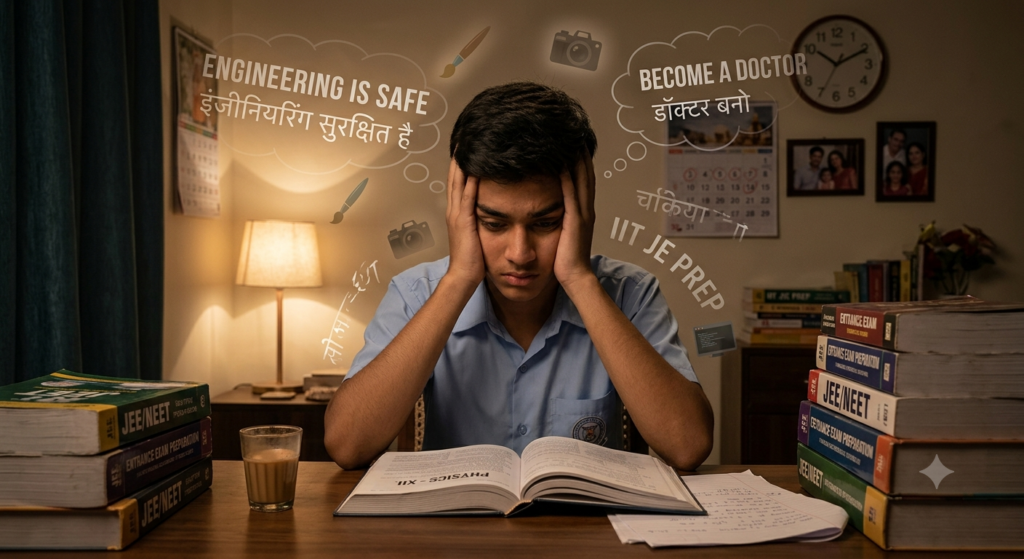
Most students don’t intentionally make poor decisions.
The problem is that they are expected to make one of the biggest decisions of their lives at the age of 15–17, often without adequate career guidance.
Parents also face challenges.
They genuinely want the best for their children but may not always be aware of the rapidly changing career landscape.
As a result, decisions are often influenced by emotions rather than informed planning.
Let’s look at the most common mistakes.
This is perhaps the biggest mistake students make.
A student scores 92%, so everyone assumes Science is the obvious choice.
Another scores 75%, so Commerce or Arts is suggested without much discussion.
But marks only tell us how well a student performed in a particular examination.
They do not reveal:
A child who enjoys designing products, creating videos, or solving business problems may not necessarily find happiness in a career chosen solely because of high marks.
Before choosing a stream, ask questions like:
A combination of academic performance, aptitude, personality, and career guidance leads to much better decisions than marks alone.
This mistake is surprisingly common.
A student says,
“All my friends are taking Science, so I will too.”
Or,
“My best friend is joining this college, so I’ll join there.”
While friendships are important, career decisions should never be based on someone else’s path.
Every child has unique strengths, interests, and goals.
Two friends may score the same marks but have completely different personalities.
One may enjoy coding.
Another may love public speaking.
One may thrive in structured environments.
The other may excel in creative fields.
Choosing a career simply to stay with friends often leads to disappointment within a few months.
Friends may remain part of your life.
Your career will shape your future.
Encourage students to choose what suits their own personality and aspirations, not someone else’s.
Many parents still hear comments like:
These beliefs may have influenced career choices years ago, but today’s world is very different.
Successful professionals now come from every field:
Success depends more on skill, passion, adaptability, and continuous learning than on choosing a “prestigious” stream.
A successful career isn’t built by following society.
It is built by understanding yourself.
One student may naturally enjoy solving logical problems.
Another may love interacting with people.
Someone else may be exceptionally creative.
Ignoring these natural tendencies often leads to frustration.
Imagine asking a fish to climb a tree.
No matter how hard it tries, it will struggle.
Similarly, asking a naturally creative student to pursue a career they have no interest in can affect confidence, motivation, and performance.
This is why understanding aptitude is so important before making career decisions.
Career guidance tools such as aptitude assessments and psychometric evaluations can provide valuable insights into a student’s strengths and preferred work styles.
Many students know the names of careers but not what those careers actually involve.
For example, a student may say,
“I want to become an engineer.”
Ask them why.
Often the answer is,
“Because everyone says it’s a good career.”
But do they know:
The same applies to medicine, law, business, and many other professions.
Choosing a career without proper research is like buying a house without seeing it.
Before selecting any career, research:
The more informed your decision, the fewer regrets you’ll have later.
One of the biggest mindset shifts parents need to make in 2026 is recognizing that the career world has evolved dramatically.
Students today have access to opportunities that simply didn’t exist a decade ago.
Fields such as:
are growing rapidly.
The goal should not be to chase trends blindly.
Instead, students should identify where their interests, aptitude, and market opportunities intersect.
That is where long-term career satisfaction is most likely to be found.
Every parent dreams of seeing their child succeed. That’s natural.
But sometimes, without realizing it, parents begin living their own unfulfilled dreams through their children.
You may hear statements like:
While these suggestions come from love and concern, every child has a different personality, aptitude, and ambition.
A career that brought happiness to one generation may not suit the next.
Instead of deciding for your child, decide with your child.
Become a guide—not a decision-maker.
The best career decisions happen when parents, students, and career experts work together.
The job market is changing faster than ever.
Many careers that are in demand today didn’t even exist 10–15 years ago.
In 2026, employers value:
At the same time, technologies like Artificial Intelligence are automating repetitive work.
Instead of asking,
“Which course is popular?”
Students should ask,
“Which skills will remain valuable over the next 10–20 years?”
Choosing a future-ready career is just as important as choosing the right stream.
One of the biggest mistakes students make is relying only on advice from relatives, neighbours, or social media.
While everyone may have good intentions, career guidance should be based on the individual student—not on opinions.
Every child is unique.
Professional career counselling helps students understand:
Instead of making decisions based on assumptions, students receive structured guidance backed by assessments and expert interpretation.
This often saves years of confusion and regret.
Many students believe,
“If I get admission into the best college, my future is secure.”
The reality is different.
A college provides opportunities.
Your attitude, skills, discipline, and continuous learning determine success.
Today, employers look beyond degrees.
They value candidates who can:
The course matters—but the person matters even more.
Choosing the right career doesn’t have to be confusing.
Before making any decision, ask yourself these five questions.
Think about activities that come naturally to you.
Passion keeps you motivated even when things become difficult.
Explore professions that align with your personality and aptitude.
Research industry demand, growth potential, and required skills.
Sometimes a single career counselling session can prevent years of confusion.
Many parents ask,
“Can a test really help in career planning?”
The answer is:
A good assessment doesn’t decide your child’s future.
It helps you make better-informed decisions.
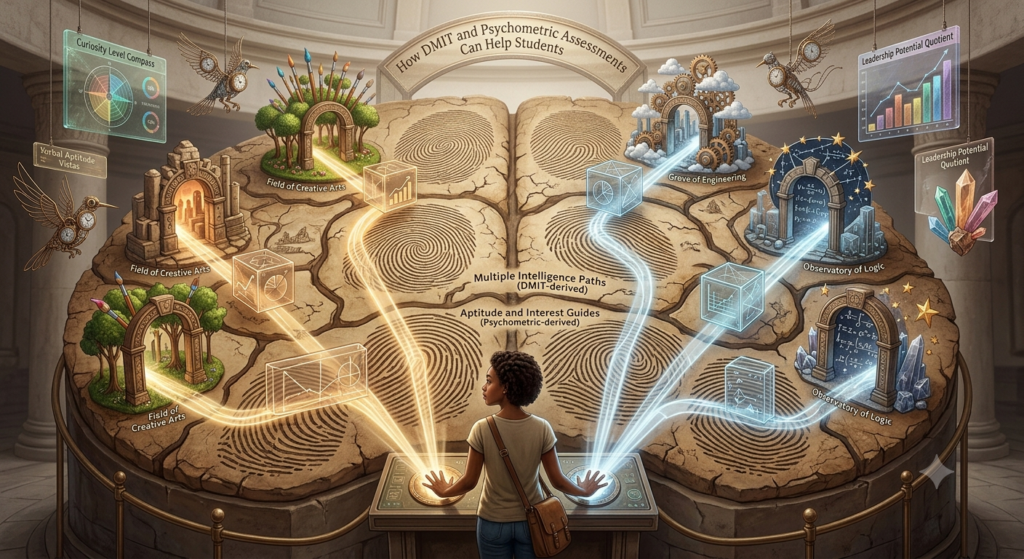
A professional DMIT and Psychometric Assessment can provide insights into:
Is your child a:
Understanding this can improve study techniques and academic performance.
Every child has a different way of thinking and interacting.
Understanding personality helps choose careers that match the student’s natural working style.
Students discover where their natural strengths lie, whether in:
Instead of randomly selecting a career, students receive guidance on options that align with their strengths and interests.
One of the biggest benefits isn’t just for students.
Parents also gain a better understanding of how to support their child without unnecessary pressure or comparisons.
During career counselling sessions, we often meet students who say,
“I never wanted this stream.”
When asked why they chose it, common answers include:
Unfortunately, many realise this only after spending valuable years pursuing a path they never truly enjoyed.
The earlier career planning begins, the better the chances of making confident and informed decisions.

As parents, your role is more important than ever during this stage.
Here are a few practical suggestions:
Allow your child to express their interests without judgment.
Attend career seminars, webinars, college open days, and counselling sessions together.
Every child’s journey is different.
Comparison creates pressure, not motivation.
A successful career is one that combines ability, interest, and purpose—not just salary.
Sometimes an external expert can provide clarity that even well-meaning parents cannot.
Choosing a stream based only on marks, peer pressure, or family expectations without understanding aptitude and interests.
Students should explore different career options, understand their strengths, research industries, and seek professional career guidance before making a decision.
The right career is usually one that matches your interests, personality, aptitude, values, and long-term goals. Career counselling and assessments can make this process easier.
Yes. Career counselling helps students make informed academic and career decisions, reducing the chances of choosing the wrong stream or profession.
DMIT can be used as a guidance tool to understand a child’s learning preferences, natural strengths, and behavioural tendencies. It should be considered alongside aptitude assessments, personal interests, academic performance, and expert counselling—not as the sole basis for career decisions.
Your child’s career is not a race against relatives, neighbours, or classmates.
It is a journey of discovering their unique strengths and building a future around them.
The decisions made after the 10th and 12th can shape not only academic success but also confidence, job satisfaction, and overall happiness.
Instead of asking,
“Which stream is the best?”
Ask,
“Which path is the best fit for my child?”
That one question can make all the difference.
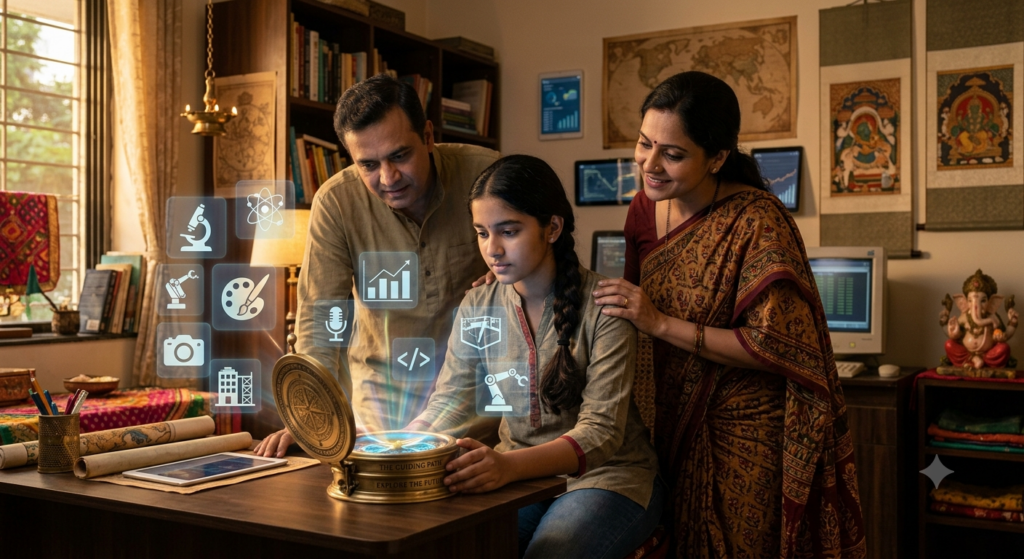
If your child is in 8th–12th Standard and is feeling confused about stream selection, career options, or future planning, don’t leave such an important decision to guesswork.
At SH Development Academy, we help students and parents make informed career decisions through a comprehensive DMIT & Career Guidance Consultation.
Under the guidance of Santosh Hariharan—DMIT Consultant, Parent & Career Coach, and Success Mindset Coach for Students—your child receives personalized insights into:
✅ Natural strengths and abilities
✅ Learning style and personality traits
✅ Aptitude and career interests
✅ Stream selection guidance after 10th
✅ Career planning after 12th
✅ Actionable recommendations for future growth
Hundreds of parents have trusted our guidance to help their children make confident career choices.
⭐ See what parents are saying:
310+ Google Reviews: Click here to read our Google Reviews
Book Your DMIT & Career Guidance Consultation:
Book Your Consultation Here
📱 Call / WhatsApp:
+91 8421315400
+91 7303290862
The best career decisions aren’t made by chance—they’re made with the right guidance. Give your child the clarity and confidence to build a successful future. 🚀
Success & Happiness are the two most important yet elusive things which every human being yearns to achieve in life. Real success and happiness can be savoured only when one enjoys good health and good family relations, along with a good professional career and sound financial stability.
Our Visitor


 Users Today : 2