“My child should become an engineer.”
“She must become a doctor.”
“He should complete an MBA.”
These are dreams that many Indian parents have nurtured for decades. And there’s nothing wrong with wanting a secure and successful future for your child.
But here’s a question worth asking in 2026…
Will a degree alone be enough for success by 2030?
The answer is becoming increasingly clear: No.
Around the world, companies are changing the way they hire. Employers are no longer looking only at college degrees—they’re looking for people who can solve problems, think creatively, communicate effectively, adapt to change, and learn continuously.
Artificial Intelligence (AI), automation, robotics, and digital transformation are reshaping industries faster than ever before. Jobs that existed a few years ago are evolving, and many future careers haven’t even been invented yet.
This doesn’t mean degrees have lost their value. A degree still provides knowledge, credibility, and professional qualifications for many careers. However, a degree without practical skills is no longer enough to stand out in a competitive world.
As a DMIT Consultant, Parent & Career Coach, I’ve interacted with hundreds of students and parents over the years. One common concern I hear is:
“My child studies hard, but how do I prepare them for the future?”
The answer isn’t simply “study more.”
It’s learn the right skills.
Today’s employers value individuals who can think independently, collaborate with others, solve real-world problems, embrace technology, and keep learning throughout their lives.
That’s why parents should start focusing not only on report cards but also on developing future-ready skills.
In this blog, we’ll explore 7 skills that could become even more valuable than a degree by 2030—and how parents can help children start developing these skills from an early age.

There was a time when earning a degree almost guaranteed a stable career.
Today, the situation is very different.
A student may graduate with excellent marks but still struggle during interviews because they lack communication skills.
Someone else may possess outstanding technical knowledge but fail to work effectively in a team.
Another graduate may have multiple certificates yet feel completely confused about choosing the right career.
This isn’t because they’re not intelligent.
It’s because the world of work has changed.
Today’s organizations are looking for people who can:
According to global workforce trends, employers increasingly value skills-based hiring, where practical abilities and demonstrated competence often matter as much as—or sometimes more than—formal qualifications.
This is particularly relevant in rapidly evolving fields such as:
In these industries, your ability to create value often speaks louder than the degree on your résumé.
For parents, this doesn’t mean discouraging higher education.
Instead, it means encouraging children to develop both strong academic foundations and essential life skills.
Degrees may open the first door.
Skills help you keep walking through every door that follows.
Imagine two students graduating in 2030.
Who do you think employers will choose?
In many cases, they’ll choose Student B.
Because businesses don’t just hire knowledge.
They hire people who can create results.
The workplace of 2030 will reward those who continuously upgrade themselves.
The most successful professionals won’t necessarily be those who know the most today.
They’ll be the ones who can learn the fastest tomorrow.
That mindset starts during childhood—not after graduation.
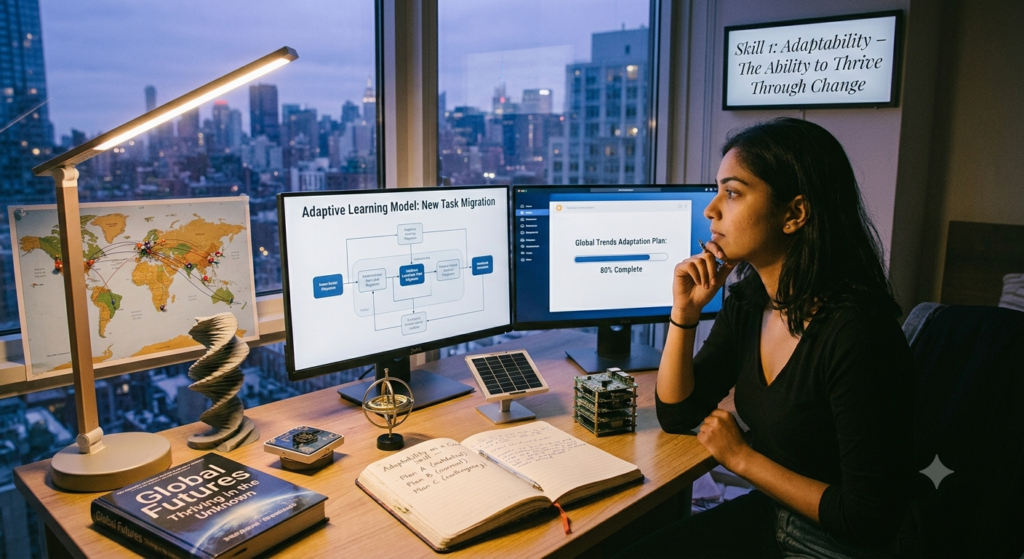
One of the biggest challenges today’s children will face isn’t passing exams.
It’s adapting to constant change.
Technology is evolving rapidly.
New careers are emerging.
Industries are transforming almost every year.
Children entering school today may eventually work in professions that don’t even exist yet.
That’s why adaptability is becoming one of the most valuable life skills.
Adaptable people:
As parents, we often encourage children to look for the “right answer.”
But the future belongs to children who can ask better questions and discover new solutions.
A child who learns to embrace change today will be better prepared for tomorrow’s opportunities.

No matter how intelligent someone is, their ideas have little impact if they cannot communicate them effectively.
Communication is no longer just about speaking English fluently.
It includes:
Whether your child becomes a doctor, engineer, entrepreneur, designer, or scientist, communication will remain one of their greatest professional assets.
Many talented students miss valuable opportunities simply because they hesitate to express themselves.
Instead of focusing only on textbooks:
Confidence grows when children feel heard.
Communication improves when children are encouraged to speak.
Future employers won’t pay people merely for what they know.
They’ll pay people who can solve problems.
Every successful business is built around solving someone’s problem.
That’s why problem-solving is becoming one of the most valuable skills for 2030.
Children should learn how to:
Problem-solving isn’t developed through memorization.
It’s developed through experience.
Instead of immediately giving answers, ask:
These simple conversations gradually build independent thinking.
Children who learn to solve problems become more confident, resilient, and capable of handling future challenges.
Imagine two students with the same marks.
Both are equally intelligent.
But when life throws challenges at them…
One panics, gets frustrated easily, gives up after failure, and struggles to work with others.
The other stays calm, learns from mistakes, communicates well, manages emotions, and bounces back stronger.
Who do you think will succeed in the long run?
Most likely, the second one.
That’s the power of Emotional Intelligence (EQ).
In fact, many leadership experts believe that while IQ may help you get opportunities, EQ often determines how far you grow in life and your career.
Emotional Intelligence is the ability to:
By 2030, these skills will become even more valuable because AI may automate many technical tasks—but it cannot replace genuine human empathy, emotional awareness, or meaningful relationships.
EQ isn’t taught through textbooks.
It is learned through daily conversations and experiences.
Parents can help by:
❤️ Listening without immediately judging.
❤️ Encouraging children to express their feelings.
❤️ Teaching empathy instead of comparison.
❤️ Helping children understand that failure is part of learning.
❤️ Appreciating effort, not just results.
When children feel emotionally safe at home, they develop the confidence to face challenges outside.
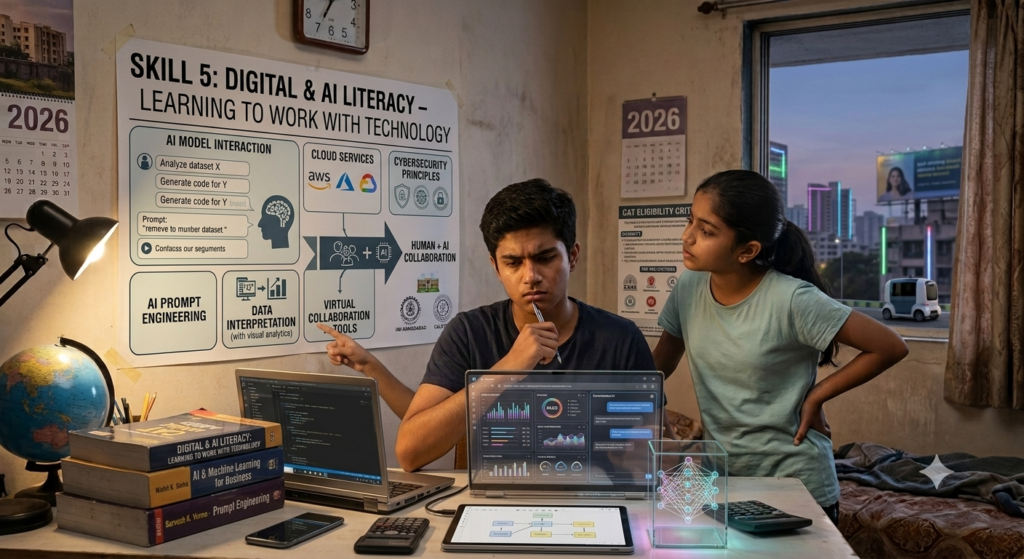
Artificial Intelligence is no longer the future.
It is already here.
From healthcare and education to finance, marketing, engineering, and creative industries, AI is transforming the way we live and work.
Many parents worry:
“Will AI take away jobs?”
The better question is:
“Will my child know how to use AI better than others?”
By 2030, employers won’t simply ask whether candidates know technology.
They’ll expect them to use technology intelligently.
Digital literacy includes understanding:
Children don’t need to become programmers unless they choose to.
But they should become confident technology users rather than passive consumers.
Instead of spending hours only scrolling social media, imagine your child learning:
These practical digital abilities can become lifelong assets.
Replace the question:
“How much screen time?”
with:
“What is my child creating with that screen?”
Technology becomes powerful when children learn to create, solve, and innovate—not just consume.
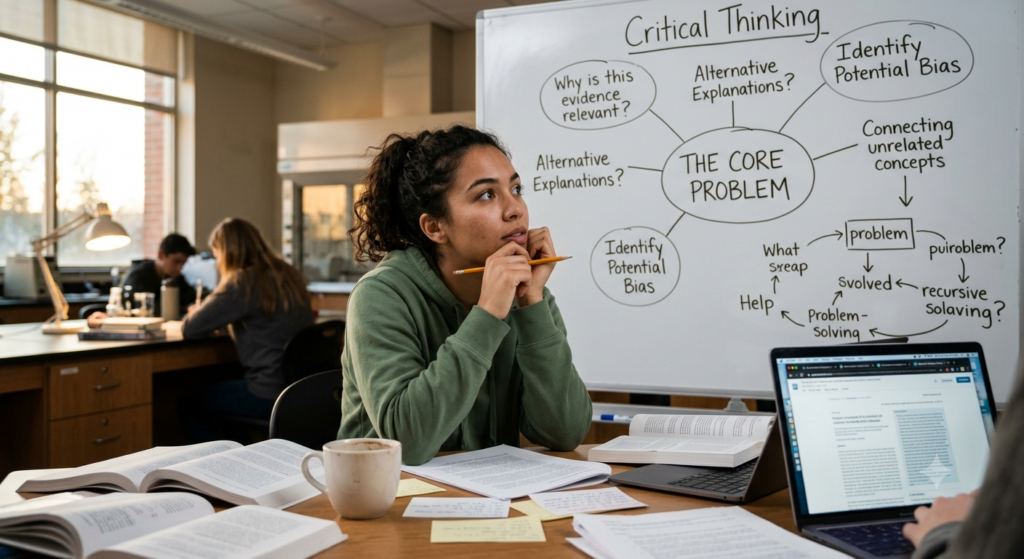
One of the biggest changes happening in education is that memorizing information is becoming less valuable.
Why?
Because information is available everywhere.
With a few clicks, anyone can find facts online.
What employers value now is the ability to:
This is called Critical Thinking.
Children who develop critical thinking don’t simply accept information.
They learn to ask:
“Why?”
“How?”
“Is there another way?”
These are the children who become innovators, entrepreneurs, researchers, and effective leaders.
Instead of giving ready-made answers:
Ask:
👉 “Why do you think this happened?”
👉 “Can you solve this differently?”
👉 “What would you do if you were in that situation?”
Family discussions, puzzles, debates, reading, and project-based learning all help strengthen this skill.
The goal isn’t to raise children who memorize answers.
It’s to raise children who know how to think.
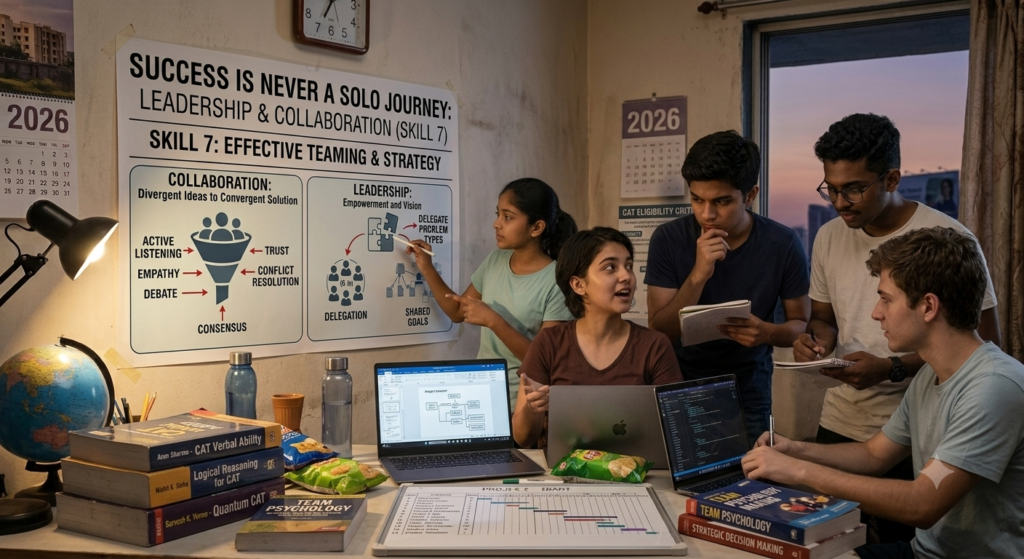
Many parents assume leadership means becoming a CEO.
In reality, leadership begins much earlier.
A child who can:
…is already developing leadership qualities.
Today’s workplace values collaboration more than competition.
Projects are completed by teams.
Ideas grow through discussion.
Innovation happens when people work together.
Children who only focus on individual success may struggle later if they cannot collaborate effectively.
Parents can nurture leadership by:
✔ Giving children age-appropriate responsibilities.
✔ Allowing them to make small decisions.
✔ Encouraging participation in group activities.
✔ Appreciating initiative instead of perfection.
Leadership is not about controlling others.
It is about influencing others positively.
That lesson begins in childhood.
Many parents believe these skills can be learned after graduation.
Unfortunately, that’s often too late.
The foundation for confidence, communication, emotional intelligence, leadership, and problem-solving is built during childhood and adolescence.
Children who develop these skills early often:
Academic excellence is important.
But academic excellence combined with future-ready skills creates truly successful individuals.
As parents, our role is not just to prepare children for the next exam.
It is to prepare them for life.
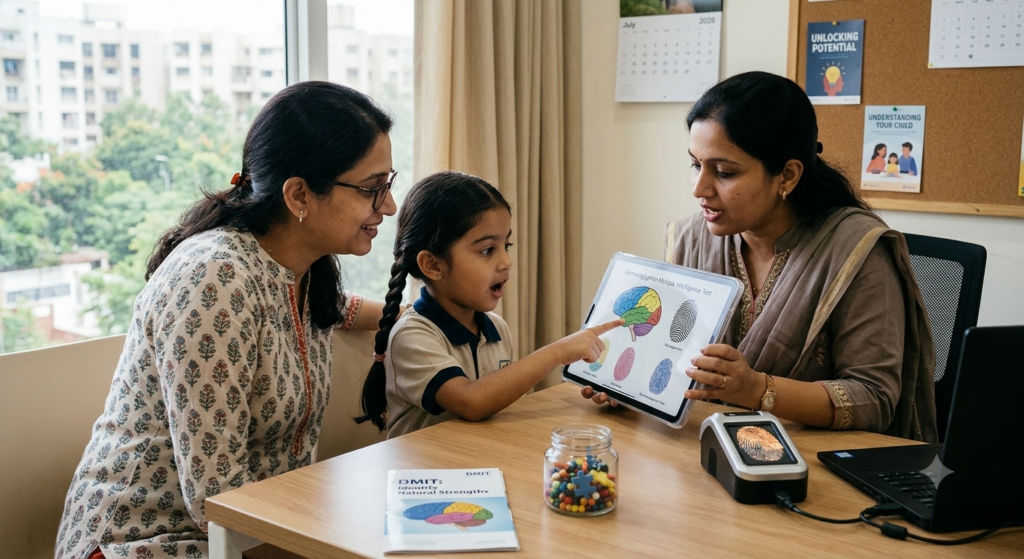
Every child has unique abilities.
Some children naturally communicate well.
Some excel in logical thinking.
Others show creativity, leadership, empathy, or analytical skills from a young age.
The challenge for most parents is not that these strengths don’t exist.
The challenge is recognizing them early.
This is where a professionally interpreted DMIT (Dermatoglyphics Multiple Intelligence Test) can become a valuable guidance tool.
A DMIT assessment can help parents better understand their child’s:
✅ Natural learning style
✅ Multiple intelligence profile
✅ Personality traits
✅ Brain dominance preferences
✅ Communication tendencies
✅ Potential strengths
✅ Areas that may need additional support
When parents understand how their child naturally learns and thinks, they can focus on nurturing the right future-ready skills instead of forcing every child into the same path.
Think of it this way:
A gardener doesn’t force every plant to grow the same way.
They understand each plant’s nature and provide the right environment.
Parenting works much the same way.
Understanding comes first.
Development follows naturally.
One thing is certain—the job market in 2030 won’t look like today’s.
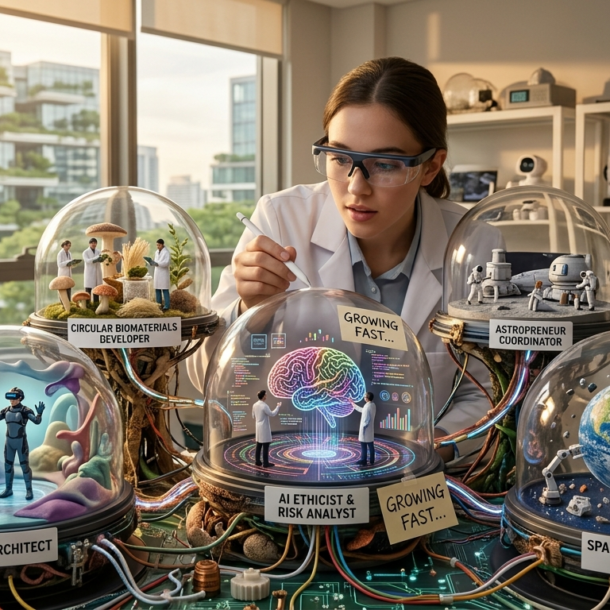
Artificial Intelligence, automation, climate technology, biotechnology, digital transformation, and remote work are reshaping industries at an incredible pace. While some traditional roles may become automated, many exciting new opportunities will emerge for people with the right skills.
Some of the fastest-growing career fields expected over the next decade include:
Interestingly, these careers have one thing in common.
They don’t just require knowledge—they demand adaptability, creativity, communication, emotional intelligence, and continuous learning.
This is why preparing children for the future isn’t just about choosing the “right profession.” It’s about helping them develop the right skills that will remain valuable, regardless of how careers evolve.
There was a time when people studied for 20 years and worked for the next 40 using the same knowledge.
That era is ending.
The professionals who will thrive by 2030 are those who never stop learning.
The future belongs to students who are curious enough to say:
“I don’t know this yet… but I can learn it.”
That mindset is far more powerful than memorizing facts for an exam.
Parents can encourage lifelong learning by:
📚 Promoting reading beyond school textbooks.
🎯 Encouraging online courses and practical learning.
🎨 Supporting hobbies that develop creativity and problem-solving.
🤝 Helping children explore real-world experiences through projects, volunteering, competitions, and teamwork.
The goal isn’t to raise children who know everything.
The goal is to raise children who are always ready to learn something new.
Many parents ask me,
“What is the best investment I can make in my child’s future?”
My answer is simple.
Invest in understanding your child before investing in their career.
Every child has different:
The mistake many families make is comparing children with others instead of understanding who they truly are.
When parents understand their child’s natural abilities, they can:
✔ Choose suitable extracurricular activities.
✔ Develop the right future-ready skills.
✔ Reduce unnecessary academic pressure.
✔ Build confidence instead of comparison.
✔ Help children make informed career decisions.
A confident child with the right guidance often goes much further than a child who simply follows the crowd.
Degrees will continue to matter for many professions such as medicine, law, engineering, and accounting. However, employers are increasingly hiring based on demonstrated skills, practical experience, adaptability, communication, and problem-solving abilities. The strongest candidates will combine a relevant degree with future-ready skills.
Some of the most valuable skills expected by 2030 include:
These skills are useful across almost every industry.
Absolutely.
Many of these skills begin developing at home through everyday experiences.
Parents play a significant role by encouraging curiosity, independent thinking, communication, teamwork, and resilience from an early age.
Every child has unique abilities and learning preferences.
A professionally interpreted DMIT (Dermatoglyphics Multiple Intelligence Test) can provide valuable insights into a child’s natural learning style, multiple intelligences, personality traits, and potential strengths. It is best used as a guidance tool alongside observations, academic performance, and discussions with experienced mentors.
Yes.
Academic education remains an important foundation.
However, future success is likely to depend on a combination of:
The goal should never be choosing between academics and skills—it should be building both together.
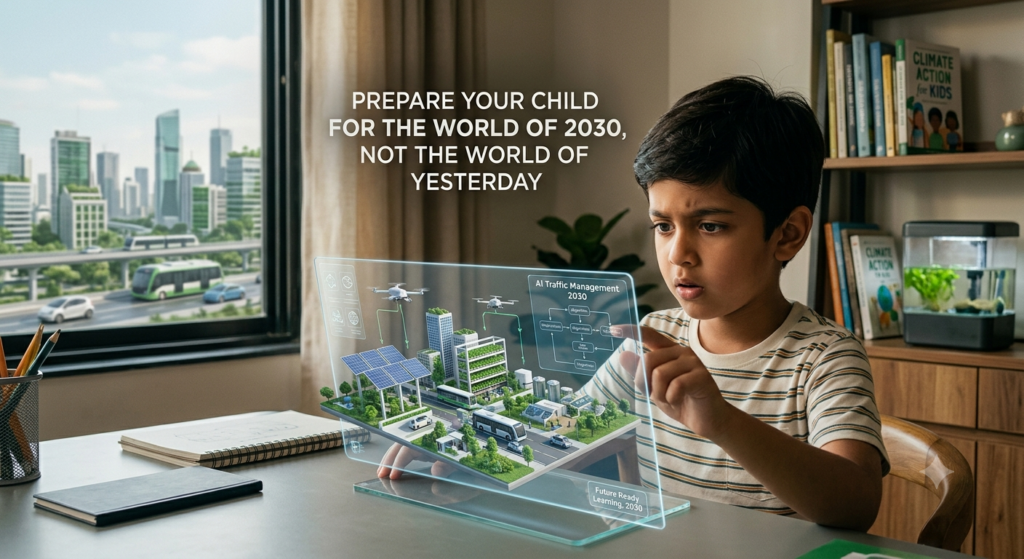
As parents, it’s natural to dream of giving our children the best education possible.
But perhaps an even bigger gift is helping them become confident, adaptable, emotionally strong, and lifelong learners.
The future won’t belong only to students with the highest marks.
It will belong to those who know how to:
✔ Learn continuously
✔ Solve meaningful problems
✔ Work with people
✔ Embrace technology
✔ Adapt to change
✔ Lead with confidence
✔ Keep growing throughout life
The sooner we start developing these qualities, the better prepared our children will be for a future full of opportunities.
Remember…
Degrees may open doors.
Skills help children walk confidently through them.

Every child is born with unique talents, abilities, and ways of learning. The challenge is that many parents discover these strengths only after years of trial and error.
At SH Development Academy, we believe that career planning should begin with understanding the child—not just the marks they score.
Our DMIT Consultation is designed to help parents gain deeper insights into their child’s:
✅ Natural strengths and talents
✅ Preferred learning style
✅ Multiple intelligences
✅ Personality traits
✅ Potential career inclinations
✅ Areas that need nurturing and support
Your consultation is personally guided by Santosh Hariharan — DMIT Consultant, Parent & Career Coach, and Success Mindset Coach for Students, who has helped hundreds of families make informed educational and career decisions.
Whether your child is in primary school, high school, or preparing for college, understanding their natural potential today can help them build the skills needed for tomorrow.
👉 DMIT Consultation Registration: Book Your Consultation Here
⭐ See why 400+ parents have trusted our guidance:
Read 400+ Google Reviews
📞 Call / WhatsApp:
+91 8421315400
+91 7303290862
Because the best career guidance doesn’t start with choosing a profession—it starts with understanding the child. 🌱
Success & Happiness are the two most important yet elusive things which every human being yearns to achieve in life. Real success and happiness can be savoured only when one enjoys good health and good family relations, along with a good professional career and sound financial stability.
Our Visitor


 Users Today : 24