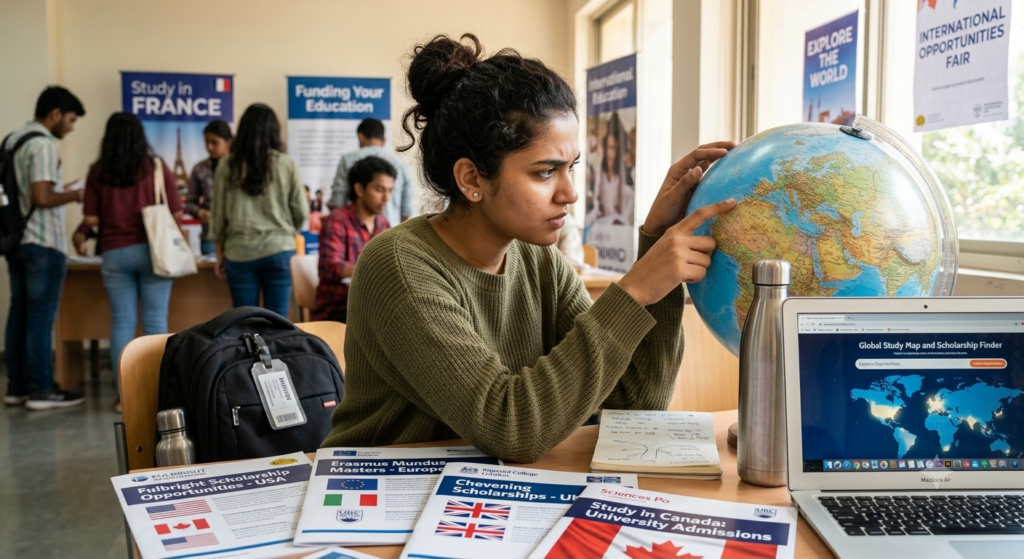
Dreaming of studying in the UK, USA, Canada, Germany, Australia, or another international destination?
You’re not alone.
Every year, thousands of Indian students choose to study abroad—not just to earn an international degree, but to gain global exposure, better career opportunities, world-class education, and a chance to build a brighter future.
In fact, 2026 is shaping up to be one of the best years for Indian students to explore study abroad opportunities. Countries are introducing new post-study work options, universities are offering scholarships to attract international talent, and employers worldwide continue to value graduates with international education and cross-cultural experience.
However, here’s something many students and parents overlook…
Choosing to study abroad isn’t just about selecting the “best country” or the “highest-ranked university.” It’s about choosing the right country, the right course, and the right career path based on your individual strengths, interests, personality, and long-term goals.
As a DMIT Expert, Parent & Career Coach, I’ve met many students who were excited about studying abroad but were confused about one important question:
“Which course and country are actually right for me?”
The answer isn’t the same for everyone.
Some students thrive in research-oriented environments, while others excel in practical, industry-focused programs. Some enjoy analytical subjects like engineering and finance, while others naturally perform better in creative fields, business, psychology, healthcare, design, or communication.
That’s why proper career planning should always come before university applications.
In this guide, we’ll help you understand everything about study abroad opportunities in 2026—from the available programs and top destinations to choosing a path that aligns with your future aspirations.
Let’s begin.
Simply put, study abroad opportunities are educational programs that allow students to pursue part of their education—or even an entire degree—in another country.
These opportunities are available for students at different stages of their academic journey, including:
Today’s study abroad landscape offers much more flexibility than it did a decade ago. Students can now choose from short-term academic experiences, semester exchanges, internships, research collaborations, or complete bachelor’s and master’s degree programs.
The objective isn’t just earning a foreign qualification.
Studying abroad helps students develop:
These qualities are increasingly valued by employers across the world.
The demand for overseas education has grown significantly over the past few years.
While earning an international degree has always been attractive, today’s students are looking beyond classroom education.
They want experiences that prepare them for a global workforce.
Here are some of the biggest reasons why more Indian students are exploring study abroad opportunities in 2026.
Many internationally recognized universities provide cutting-edge research facilities, industry-focused curriculum, experienced faculty, and strong academic support systems.
Students benefit from:
Rather than memorizing information for examinations, students are encouraged to think critically, solve real-world problems, and develop practical skills.
One of the biggest advantages of studying abroad is increased career exposure.
International universities often maintain strong relationships with multinational companies, allowing students to participate in:
Many countries also offer post-study work opportunities, enabling graduates to gain valuable international work experience before deciding whether to return to India or continue working overseas.
Living independently in another country teaches life skills that cannot always be learned in a classroom.
Students learn to:
These experiences often contribute significantly to both personal and professional growth.
Students interested in science, engineering, healthcare, technology, artificial intelligence, environmental studies, business analytics, or research-intensive careers often benefit from advanced facilities available at many international universities.
Access to modern research infrastructure allows students to participate in innovative projects that may not always be available locally.
Although studying abroad requires careful financial planning, many graduates experience improved earning potential due to:
However, it’s important to remember that success depends more on choosing the right field than simply studying in another country.
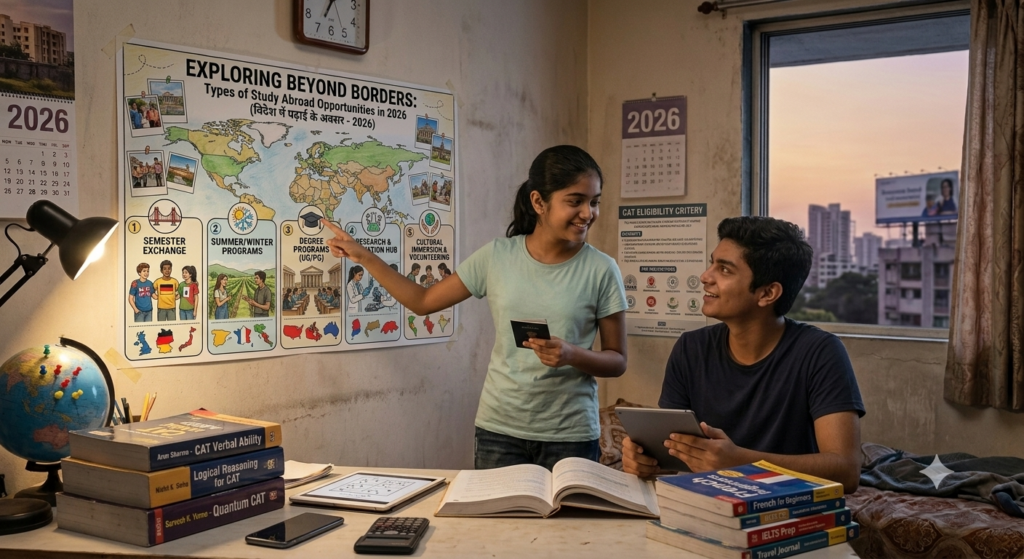
One of the biggest misconceptions among students is that studying abroad only means completing a full degree overseas.
In reality, there are several pathways available depending on your goals, budget, and stage of education.
Let’s explore the most common options.
Semester exchange programs allow students to study at an international university for one semester or an academic year while remaining enrolled at their home institution.
The credits earned during the exchange are usually transferred back to the student’s original university.
These programs are ideal for students who want international exposure without completing an entire degree abroad.
Summer programs typically last between 4 and 12 weeks.
These short-term courses focus on specific subjects while allowing students to experience another country’s education system and culture.
Summer programs are particularly popular among undergraduate students who want to strengthen their academic profile before applying for higher studies.
Many Indian students now pursue complete undergraduate degrees abroad immediately after Class 12.
Popular fields include:
Completing an undergraduate degree abroad often gives students more time to build local industry connections and gain internship experience.
This remains the most popular study abroad option among Indian graduates.
Students pursue master’s degrees to:
Courses typically range from one to two years depending on the country and university.
Some universities integrate internships into academic programs.
This combination allows students to gain practical industry experience while completing their studies.
For many employers, internship experience is just as valuable as academic performance.
Some students choose structured gap-year programs that combine:
These programs help students gain maturity and clarity before committing to higher education.

Choosing the right destination is one of the most important decisions in your study abroad journey.
Every country has its own strengths, education system, tuition costs, work opportunities, and immigration policies.
Here are some of the top destinations Indian students continue to prefer in 2026.
The UK remains one of the most preferred destinations due to its globally respected universities, shorter master’s programs, and post-study work opportunities.
Popular courses include:
Students also appreciate the multicultural environment and strong employer connections.
The USA continues to lead in higher education, research, and innovation.
Students choose the US for:
Its flexible education system allows students to explore multiple subjects before finalizing their specialization.
Canada remains highly attractive because of:
Popular programs include healthcare, technology, business, engineering, and environmental sciences.
Germany is becoming increasingly popular among Indian students due to its affordable public universities and strong engineering education.
It is particularly attractive for students pursuing:
Students looking for quality education at relatively lower costs are increasingly exploring countries like Poland and Austria.
These destinations offer:
One of the biggest mistakes students make is selecting a course simply because it’s trending.
Just because a particular program is popular doesn’t mean it’s the right fit for every student.
As a Parent & Career Coach, I often tell students and parents:
“Choose a career first, then choose a course, and finally choose the country.”
Unfortunately, many students do the exact opposite—they first decide the country, then the university, and only then think about the course.
A well-planned career journey starts with understanding your strengths, interests, aptitude, and long-term goals.
Here are some of the most sought-after courses for Indian students in 2026.
Technology continues to dominate the global job market.
With rapid advancements in Artificial Intelligence, Machine Learning, Cybersecurity, Cloud Computing, Robotics, and Data Analytics, the demand for skilled professionals is growing across the world.
Popular career options include:
Top destinations:
Healthcare remains one of the fastest-growing sectors globally.
Students interested in biology, patient care, medical research, or public health have excellent international opportunities.
Popular fields include:
Countries like Canada, Australia, the UK, and Germany continue to experience strong demand for healthcare professionals.
Students with leadership qualities, entrepreneurial thinking, or an interest in business often pursue programs such as:
These programs often include internships and industry projects that improve employability.
Global businesses need professionals who understand international finance, taxation, investments, and financial planning.
Career opportunities include:
Countries like the UK, Canada, Australia, and Ireland are popular choices.
Engineering continues to be one of the most preferred choices among Indian students.
Popular branches include:
Germany, the USA, Canada, and the UK remain leading destinations.
Not every successful career begins with science or engineering.
Creative industries have grown tremendously in recent years.
Students interested in:
can build rewarding international careers.
As climate change becomes a global priority, careers in environmental sciences are expanding rapidly.
Popular specializations include:
Many European universities are leading this field.
Awareness around mental health has increased significantly in recent years.
Students interested in understanding human behaviour can pursue:
These programs are increasingly popular in countries like Canada, the UK, and Australia.
Every university has its own admission criteria, but most institutions evaluate students based on a combination of academic performance, language proficiency, and overall profile.
Generally, students need:
✅ Good academic records
✅ Valid passport
✅ Statement of Purpose (SOP)
✅ Letters of Recommendation (LOR)
✅ Updated Resume (for postgraduate programs)
✅ English language proficiency where required
Depending on the country and university, students may also need standardized test scores such as IELTS, TOEFL, PTE, GRE, or GMAT. However, many universities now offer admissions through alternative pathways or waive language tests under specific conditions, making overseas education more accessible in 2026.
One of the biggest myths about studying abroad is:
“Only wealthy families can afford international education.”
The reality is quite different.
Thousands of scholarships are available every year for deserving students.
These include:
Awarded to students with excellent academic performance.
Designed for students requiring financial assistance.
Many universities automatically consider international applicants for scholarships during admission.
Several countries provide scholarships to attract talented international students.
Students pursuing master’s or doctoral programs may receive funding based on research projects.
Proper planning can significantly reduce the overall cost of overseas education.
The cost depends on several factors, including:
Your overall expenses generally include:
Some countries, such as Germany, Poland, and Austria, offer relatively affordable education compared to others, while destinations like the USA and the UK may involve higher tuition fees but often provide excellent career opportunities and strong earning potential after graduation.
Yes.
Many countries allow international students to work part-time during their studies, subject to local regulations.
This enables students to:
However, students should remember that part-time work is intended to complement their studies—not replace proper financial planning.
A global degree can open doors to exciting career opportunities, but success ultimately depends on the skills you develop during your academic journey.
Students who actively participate in internships, networking events, industry projects, and skill-building activities often have stronger career prospects.
International graduates commonly pursue careers in:
Many students also return to India with valuable international experience, giving them a competitive edge in multinational companies and fast-growing startups.
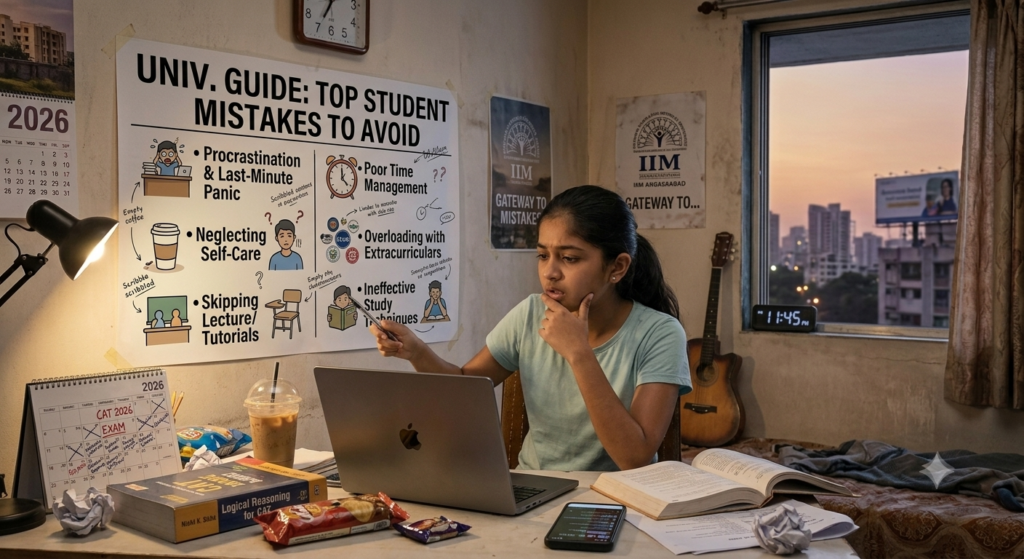
Over the years, I’ve seen many students make avoidable mistakes while planning their overseas education.
Here are some of the most common ones.
Your career journey is unique.
Never select a destination simply because someone else has chosen it.
A degree without a clear career direction can lead to frustration later.
Always start with understanding your interests and strengths.
Don’t focus only on university rankings.
Research:
Scholarships and admissions often have strict deadlines.
Starting your planning early gives you more options.
Create a realistic financial plan that includes tuition, living expenses, emergency funds, and travel costs.
Every student has unique goals.
Professional career guidance can help you make informed decisions and avoid costly mistakes.
Popular destinations include the UK, USA, Canada, Germany, Australia, Poland, and Austria. The best choice depends on your preferred course, budget, career goals, and lifestyle.
Yes. For students who choose the right course and university, studying abroad offers world-class education, international exposure, career opportunities, and personal growth.
Countries such as Germany, Poland, and Austria are often considered more affordable compared to several other popular destinations, though total costs vary depending on the university and city.
Absolutely. Many universities across the world offer undergraduate programs specifically designed for international students after completing Class 12.
Not always. While many universities accept IELTS, some institutions also recognize TOEFL, PTE, Duolingo English Test, or may waive English language requirements under certain conditions. Always check the specific university’s admission policy.

This is perhaps the most important section of this entire guide.
Every year, I meet students and parents who ask questions like:
“Should I go to Canada or Germany?”
“Is the UK better than Australia?”
“Which country offers better salaries?”
While these are important questions, I usually ask them one question in return:
“Do you know which career is truly right for you?”
Surprisingly, most students don’t have a clear answer.
They have already shortlisted countries, universities, and even education loans—but they haven’t identified their own strengths, interests, personality, or aptitude.
This is where many students make a costly mistake.
A student who naturally enjoys creativity may choose Computer Science simply because it’s popular.
Another student with strong analytical abilities may select Business Management because friends are doing the same.
Some choose a country because a relative lives there.
Others follow social media trends.
Unfortunately, career decisions based on comparison or peer pressure often lead to dissatisfaction later.
Remember:
The right country cannot compensate for the wrong career choice.
But the right career choice can help you succeed almost anywhere in the world.

Studying abroad is one of the biggest financial and emotional investments a family makes.
Between tuition fees, accommodation, travel, insurance, and living expenses, families often invest several lakhs of rupees.
Before making such an important decision, ask yourself:
These are questions that deserve thoughtful answers—not guesses.
At SH Development Academy, we’ve guided hundreds of students and parents who were unsure about career choices.
Many students know what they can study, but they don’t know what they are naturally suited for.
That’s where structured career guidance can make a real difference.
Our DMIT (Dermatoglyphics Multiple Intelligence Test) and Psychometric Aptitude Assessment help students understand themselves better by exploring areas such as:
Every student has unique abilities. Some excel in analytical thinking, while others thrive in creativity, communication, leadership, or problem-solving.
Knowing whether a student learns best through visual, auditory, or hands-on experiences can improve both academic performance and confidence.
Rather than choosing a course based on trends, students gain insights into careers that align more closely with their interests and abilities.
Understanding personality traits helps students choose environments where they are more likely to grow, contribute, and feel fulfilled.
Career assessments don’t predict the future.
Instead, they provide valuable information that helps students and parents make more informed decisions.
Think of them as a compass—not a crystal ball.

One lesson I’ve learned after years of working with students and parents is this:
The most successful students aren’t always the ones with the highest marks.
They are the ones who understand:
Once these questions are answered, choosing a country or university becomes much easier.
Career clarity comes first.
Everything else follows.
Studying abroad is more than earning an international degree.
It’s about preparing yourself for a meaningful career and a fulfilling life.
The opportunities available in 2026 are exciting, with students able to choose from short-term exchange programs, international internships, bachelor’s degrees, master’s programs, and research opportunities across countries like the UK, USA, Canada, Germany, Poland, and Austria.
However, don’t let excitement replace careful planning.
Take time to understand your strengths, evaluate your options, speak with experienced mentors, and make decisions based on your long-term goals—not temporary trends.
The best investment isn’t just studying abroad.
It’s choosing a path that’s truly right for you.
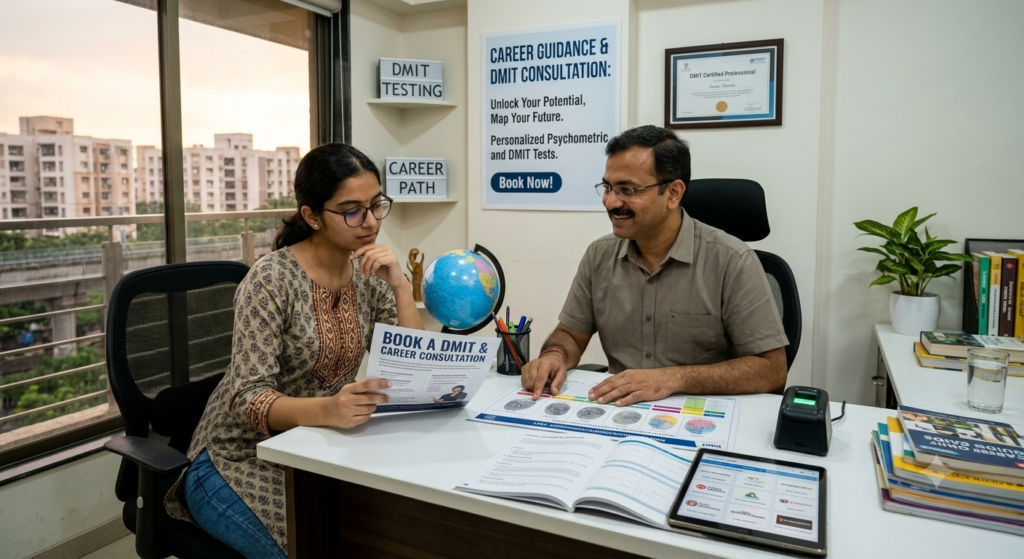
If you’re planning to study abroad but are still confused about which course, career, or country is the right fit, don’t leave such an important decision to guesswork.
At SH Development Academy, we believe that every student deserves clarity before making one of the biggest investments of their life.
Our Career Guidance Consultation combines professional counselling with DMIT and Psychometric Assessments (where appropriate) to help students understand:
✅ Their natural strengths and abilities
✅ Suitable career pathways
✅ Learning style and personality traits
✅ Subject and stream selection
✅ Career options aligned with future global opportunities
The consultation is personally guided by Santosh Hariharan — DMIT Consultant, Parent & Career Coach, Student Success Coach, and Certified Career Analyst, with over 30 years of corporate experience and 5+ years of counselling experience, helping 1,000+ students and parents make informed academic and career decisions.
⭐ See what parents and students say about us:
👉 Click here to see 400+ Google Reviews
📞 Call Us:
+91 8421315400 | +91 7303290862
📝 Book Your Career Guidance & DMIT Consultation:
👉 Career Guidance Consultation Booking Form (Click Here)
Because choosing the right career is the first step toward choosing the right university, the right country, and ultimately, the right future.
Success & Happiness are the two most important yet elusive things which every human being yearns to achieve in life. Real success and happiness can be savoured only when one enjoys good health and good family relations, along with a good professional career and sound financial stability.
Our Visitor


 Users Today : 0