

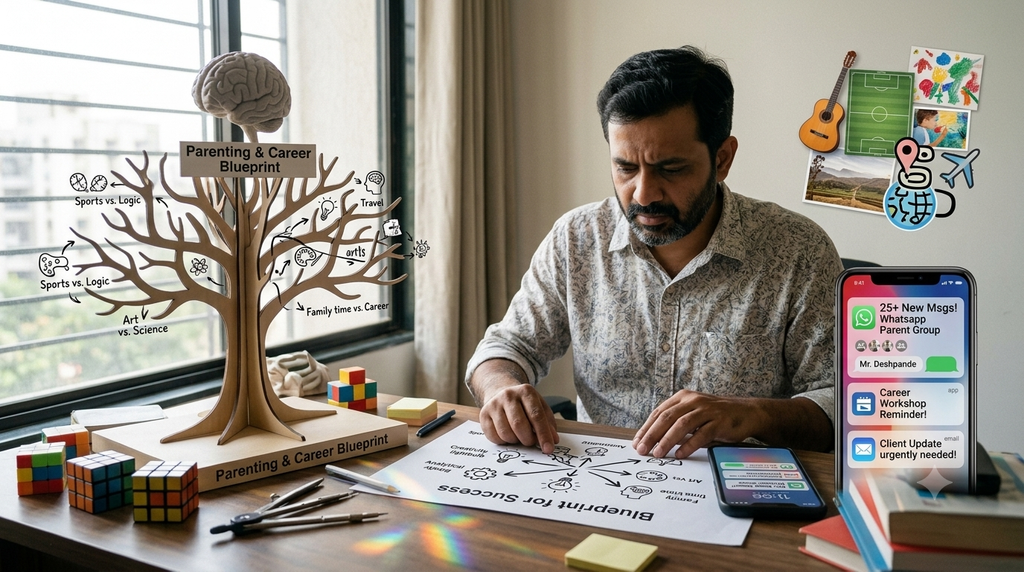
It’s 10:30 PM. You have finally finished your household work, your child is asleep, and you’re ready to relax. Suddenly, your phone starts buzzing.
“Parents, is tomorrow a regular school day?”
“Has anyone received the maths homework?”
“Why did the teacher give so many marks to that answer?”
“Please check the circular sent last week.”
Within minutes, 50 new messages appear in your child’s school WhatsApp group. You open the chat to check one important announcement, only to find yourself scrolling through messages, forwarded information, questions, and discussions that could easily have waited until morning.
Sound familiar? 😅
WhatsApp parent group stress is becoming a familiar challenge for many Indian parents. School WhatsApp groups can be incredibly useful for sharing homework updates, timetable changes, school circulars, examination schedules, and important announcements. But when messages never seem to stop, a useful communication channel can turn into another source of mental pressure.
For parents in Pune, where school schedules, tuition classes, extracurricular activities, and family responsibilities already keep everyone busy, managing these groups can feel like a full-time job.
The solution isn’t necessarily to leave every school group. It is to learn how to use these groups without allowing them to control your time, mood, or peace of mind.
In this guide, we’ll explore why school WhatsApp groups become stressful, how to manage notifications, avoid unnecessary drama, verify information, and maintain a healthier balance between staying informed and protecting your mental well-being.
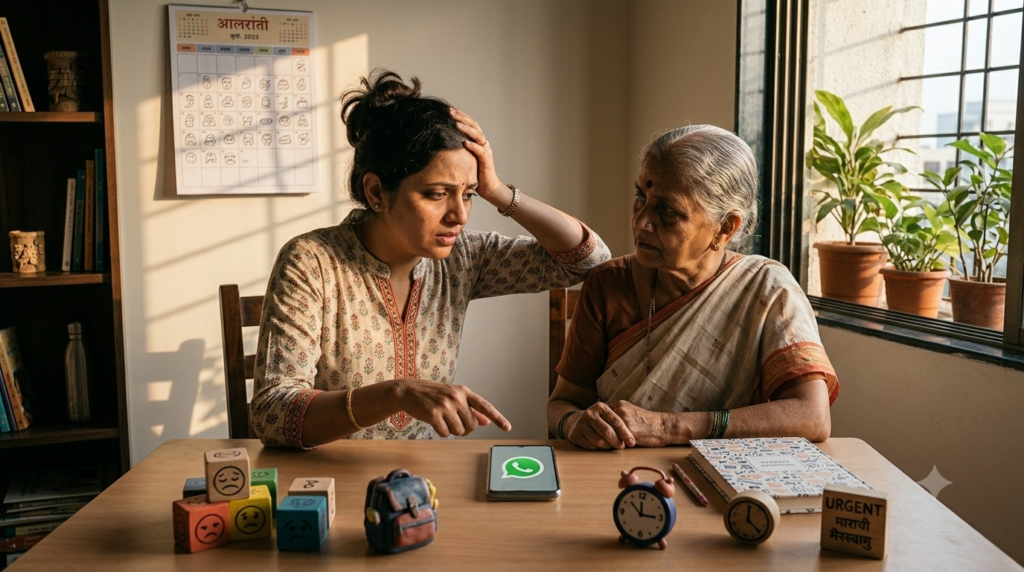
WhatsApp parent group stress refers to the frustration, anxiety, mental overload, or social pressure parents may experience while participating in school-related WhatsApp groups.
It can happen when parents feel they must constantly check messages to avoid missing important information about their child.
For example, you might experience this stress when:
One important distinction: being informed about your child’s education is helpful; feeling permanently available to the parent group is not a requirement of good parenting.
You can be an involved, responsible parent without reading every message the moment it arrives.
A group created to share essential school information can gradually become a space for everything from homework questions to birthday invitations.
When dozens or hundreds of messages arrive daily, parents have to spend time identifying which messages are genuinely important.
This creates a repetitive mental task: open the group, scan the conversation, identify useful information, ignore irrelevant messages, and repeat the process a few hours later.
Over time, even a notification sound can become irritating because you expect another task waiting for you.
What helps: Mute non-essential groups and check them at specific times instead of reacting to every notification.
Many parents hesitate to mute a group because they fear missing a sudden timetable change, a holiday announcement, or an examination-related instruction.
This is understandable, particularly when school communication is inconsistent across different channels.
However, constantly checking WhatsApp is not always the best solution. Important information can still be missed when it gets buried in a busy conversation.
What helps: Identify the school’s official communication channels, such as its website, school portal, email, or official announcements. Use the parent group as a supplementary source rather than your only source of information.
This is one of the more emotionally challenging aspects of parenting groups.
A parent shares that their child scored 98% in an examination. Another announces a national-level competition achievement. Someone else posts about a new certificate, music performance, or sports medal.
Before you realise it, you may start asking yourself:
“Why isn’t my child achieving the same things?”
“Am I doing enough as a parent?”
“Should I enrol my child in more classes?”
Remember, a WhatsApp group gives you selected snapshots of other children’s lives, not a complete picture of their abilities, challenges, interests, or emotional well-being.
Your child’s development is not a competition being judged inside a WhatsApp group. Every child has a different pace, personality, interests, and support needs.
A simple question about homework can sometimes turn into a lengthy discussion about a teacher’s teaching style, examination marks, school fees, or classroom discipline.
When messages become personal, parents may feel pressured to take sides or defend their opinions.
There is also a practical risk: messages can be forwarded or screenshotted, and comments intended for a private group may eventually reach the people being discussed.
What helps: Keep group conversations respectful and focused on school-related matters. Discuss individual concerns directly with the teacher or school through the appropriate channel.
Have you ever seen a message asking, “Can someone please confirm tomorrow’s homework?” and felt guilty because you knew the answer but didn’t want to interrupt your work?
Or perhaps you worry that other parents might consider you unhelpful if you don’t respond.
A parent group is not an emergency helpline. Unless a message genuinely requires urgent attention, there is usually no need to reply immediately.
What helps: Set a personal rule that you will respond when convenient, rather than treating every message as an immediate responsibility.
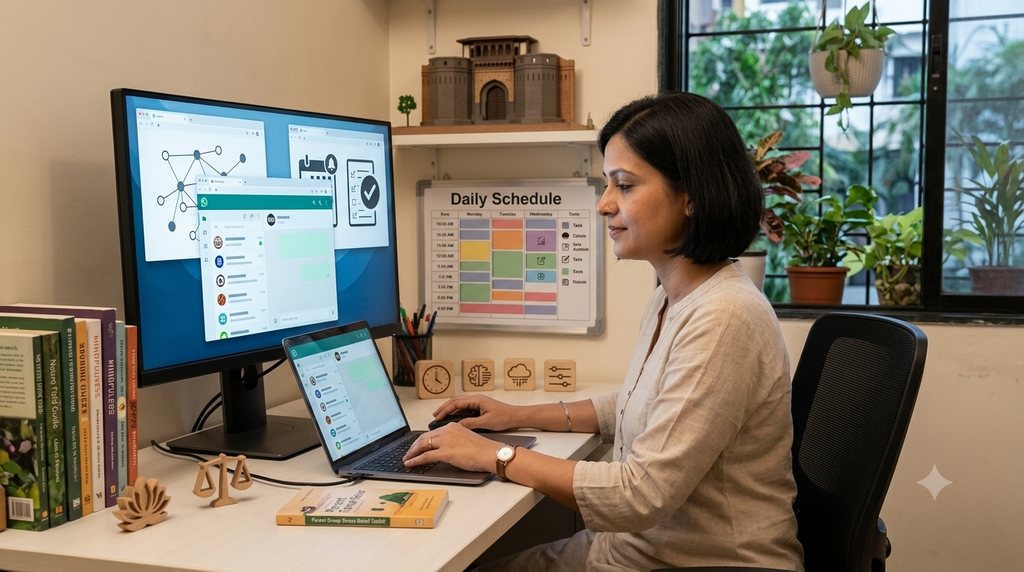
The good news is that you don’t need to change the behaviour of every parent in the group to make your own experience better. Start with the things you can control.
Open the relevant WhatsApp group, tap its name, and look for the notification or mute option. The exact menu may vary depending on your phone and WhatsApp version.
Choose a suitable mute duration, such as always, if that option is available.
Muting notifications does not ordinarily remove you from the group or prevent you from opening it and reading messages. Check the group’s settings if you need to manage other notification types as well.
This simple change can help reduce interruptions during work, meals, family time, and sleep.
Remember: You can mute the noise without ignoring your child’s education.
Instead of opening WhatsApp every time you receive a notification, choose two or three convenient times to check the group.
For example:
Adjust this routine to your child’s school schedule. Some parents may need to check more frequently, while others can manage with fewer checks.
The objective is to replace constant monitoring with a predictable routine.
Before asking the group whether school is closed tomorrow, check the school’s official notice, email, portal, or other designated communication channel.
The same applies to examination dates, holiday schedules, uniform instructions, and fee deadlines.
Why does this matter? A parent may forward an outdated circular or misunderstand a message. If everyone forwards the same unverified information, confusion spreads quickly.
A useful rule: verify first, forward later.
If you frequently communicate with other parents individually, save their names in a way that helps you identify them easily.
For example:
This is especially useful in large classes where parents may recognise a child’s name but not immediately remember the parent’s name.
It also reduces confusion when you need to contact someone about a school-related matter.
A school group works best when its purpose is clear.
Useful messages generally include:
Try to avoid unrelated forwards, chain messages, memes, repeated reminders, or promotional posts that distract from the group’s main purpose.
Before sending a message, ask yourself: Will this information help other parents manage an actual school-related responsibility?
If the answer is no, a separate chat may be more appropriate.
It is natural for parents to feel concerned when they believe something has gone wrong at school.
However, a group chat is rarely the best place to resolve an individual complaint.
Avoid publicly criticising a teacher, discussing another child’s behaviour, sharing private information, or making accusations without verified facts.
If you have a genuine concern, document the relevant details and contact the teacher or school administration privately.
This protects your child’s privacy, respects other families, and gives the school an opportunity to address the matter properly.
This may be the most important rule for maintaining peace of mind.
A group message about another child’s marks does not tell you everything about that child’s learning journey. Equally, your child’s lower score in one examination does not define their intelligence, character, or future.
Instead of asking, “Why can’t my child be like that child?”, try asking:
Celebrate your child’s progress, even when it looks different from someone else’s.
Unless there is a genuine emergency, avoid starting or continuing lengthy school-related conversations late at night.
Late-night messages can interrupt rest and make small concerns feel more urgent than they really are.
If you think of a question after bedtime, write it down and ask the teacher or group at an appropriate time the next day.
You don’t need to solve every school-related issue before going to sleep.
One practical improvement is to ask the group administrator to maintain a clear description containing key school information.
Where appropriate, this could include:
WhatsApp features and administrator permissions can vary, so use the available group description, pinned messages, or announcement features as appropriate.
When important information is easy to find, parents don’t have to repeatedly ask the same questions or scroll through old conversations.
If a group is no longer useful and the school communicates through reliable official channels, you may decide to archive it or leave it, depending on your circumstances.
Before leaving, check whether the school requires parents to remain in the group and whether any essential information is shared exclusively there.
If the group becomes persistently hostile or exposes private information, discuss the issue with the administrator or school.
You do not need to make a dramatic announcement or engage in an argument to establish a boundary.

One of the biggest concerns for parents is that reducing notifications might mean missing something important. The answer is to create a simple information system.
Try this approach:
Step 1: Identify the official source. Know whether the school uses email, a portal, an official app, or WhatsApp for important announcements.
Step 2: Separate urgent from non-urgent information. A bus delay may require immediate attention; a discussion about next month’s classroom activity usually does not.
Step 3: Save important information. Add examination dates, event timings, and deadlines to your calendar rather than relying on the message history.
Step 4: Clarify uncertainty directly. If two parents share conflicting information, confirm it with the teacher or school office.
Step 5: Review your system periodically. If you continue missing important updates, adjust your checking routine instead of returning automatically to constant notifications.
The aim is not to disengage from school communication. It is to make sure important information reaches you without requiring your attention every minute of the day.
There is another side to this problem that parents don’t always notice.
Sometimes, the stress doesn’t end when you close WhatsApp. The messages stay in your mind.
You may find yourself worrying about whether your child has completed enough homework, whether other children are performing better, or whether you are doing enough to support your child’s development.
Over time, these small concerns can influence how you interact with your child.
For example, you might see a message about an upcoming test and immediately ask your child whether they have finished studying. You might read about another child’s achievement and start questioning your own child’s progress. You might feel frustrated when your child doesn’t follow the same routine as the children being discussed in the group.
Before reacting, pause and ask yourself:
Am I responding to my child’s actual needs, or am I reacting to the pressure I am experiencing?
This simple question can help you separate useful information from unnecessary comparison.
Your child needs your attention, encouragement, and guidance—not the pressure of constantly measuring up to other families.
The next time a WhatsApp message makes you anxious, try these three steps:
Sometimes, the best response is to take action. At other times, it is to do nothing.
Learning to recognise the difference is an important part of calm, thoughtful parenting.
A well-managed parent group should make school communication easier, not more complicated.
Here are a few simple principles that can help parents and administrators create a healthier environment.
| Healthy group habit | Why it helps |
|---|---|
| Clear group purpose | Keeps discussions focused |
| Relevant school updates | Reduces unnecessary messages |
| Respectful communication | Prevents avoidable conflicts |
| Verified information | Reduces rumours and confusion |
| Respect for privacy | Protects children, parents, and teachers |
| Appropriate messaging hours | Supports personal and family time |
| Accessible school information | Reduces repeated questions |
If you are a group administrator, consider sharing these expectations in the group description when appropriate.
If you are a parent, you can contribute to a healthier group simply by following these habits yourself.
You may not be able to control every message, but you can influence the tone and quality of the conversations you participate in.
Managing WhatsApp parent group stress is part of a bigger skill: setting healthy boundaries around technology.
Here are five boundaries worth practising.
Keep phones aside during meals, conversations, and family activities whenever possible.
Your child benefits from having your undivided attention, even if that means responding to a non-urgent school message later.
Avoid making late-night group checking a daily habit. Use your phone’s Do Not Disturb settings or notification controls where appropriate.
Make exceptions for genuine emergencies, not routine discussions.
You are allowed to read a message without replying.
If another parent has already answered the question, there is often no need to add another response.
For individual academic concerns, behavioural issues, bullying, or disagreements with teachers, contact the appropriate school representative rather than trying to resolve everything in a group conversation.
Every family has different routines, resources, and challenges.
Choose what works for your child based on their actual needs, school requirements, interests, and well-being—not because several other parents are doing the same thing.
Occasional irritation is normal. However, it may be worth changing your habits if you notice that school group messages regularly lead to:
If these feelings persist or begin affecting your daily life, consider speaking with a qualified mental health professional.
There is no need to wait until stress becomes overwhelming before seeking support.
WhatsApp parent group stress is the mental pressure, frustration, or anxiety parents experience due to excessive school group messages, social comparison, misinformation, arguments, and the fear of missing important announcements.
Start by muting unnecessary notifications, checking messages at scheduled times, verifying important information through official school channels, and avoiding conversations that encourage gossip or comparison.
Yes, provided you have a reliable way to receive important school announcements. Muting notifications can reduce interruptions while allowing you to check the group when convenient. Make sure you understand the school’s official communication arrangements before relying on this approach.
Focus on your child’s individual progress, interests, strengths, and areas for improvement. Remember that group messages show only selected achievements and experiences, not the complete picture of another child’s development.
If the group is consistently hostile, consider discussing the issue with the administrator or school. You can also archive the group or leave if appropriate, but first make sure you have access to essential school information through another reliable channel.
Groups work better when administrators establish clear rules, keep important information accessible, discourage gossip, protect children’s privacy, and limit messages to relevant school matters.
School WhatsApp groups are not inherently bad. They can help parents coordinate activities, clarify instructions, and stay informed about their children’s education.
The problem begins when staying informed turns into constantly checking, comparing, worrying, and reacting.
As parents, we already have plenty of responsibilities. We don’t need to add the pressure of being available to every group conversation throughout the day.
So, the next time your phone starts buzzing with another 50 messages, remember:
🌿 You don’t have to read every message immediately.
🌿 You don’t have to respond to every question.
🌿 You don’t have to compare your child with every achievement shared.
🌿 And you certainly don’t have to let a WhatsApp group decide whether you are a good parent.
Your child needs a parent who understands and guides them—not a parent who feels compelled to keep up with everyone else.
Sometimes, becoming a better parent begins with something as simple as putting your phone down and paying attention to the child sitting in front of you.

Every child is different. One child may respond well to a structured study routine, while another may need a different approach to motivation, learning, or confidence-building.
As parents, the challenge is understanding what works for our own child rather than following every suggestion or comparison we encounter online.
At SH Development Academy, Santosh Hariharan, DMIT Consultant, Parent & Career Coach, and Success Mindset Coach for Students, helps parents gain a better understanding of their children’s strengths, learning preferences, and developmental needs.
A DMIT consultation can be an opportunity to discuss your child’s needs and explore practical parenting approaches. It should be viewed as a guidance tool—not a definitive scientific diagnosis or a substitute for professional assessment when one is needed.
If you would like to explore whether a DMIT consultation is appropriate for your child, you can book a discussion with us.
Book your DMIT consultation:
👉 Click here to book your consultation
⭐ Read our 400+ Google reviews
📞 Call or WhatsApp: +91 8421315400 | +91 7303290862
Let’s help you replace unnecessary parenting pressure with greater understanding, practical guidance, and confidence in your child’s individual journey.
Success & Happiness are the two most important yet elusive things which every human being yearns to achieve in life. Real success and happiness can be savoured only when one enjoys good health and good family relations, along with a good professional career and sound financial stability.
Our Visitor


 Users Today : 19