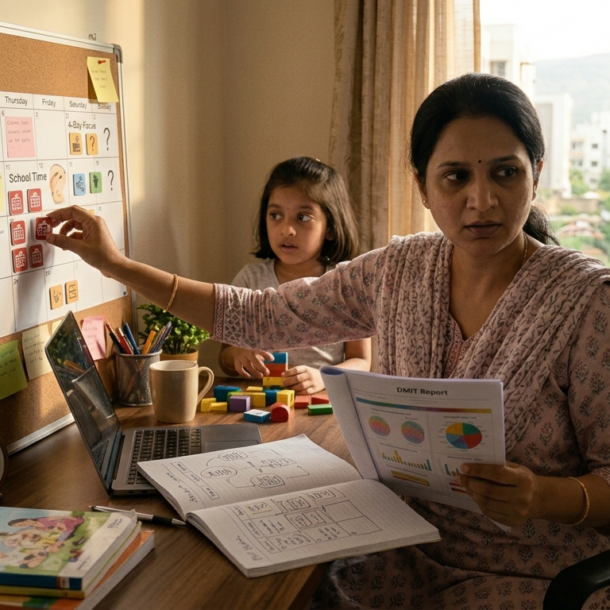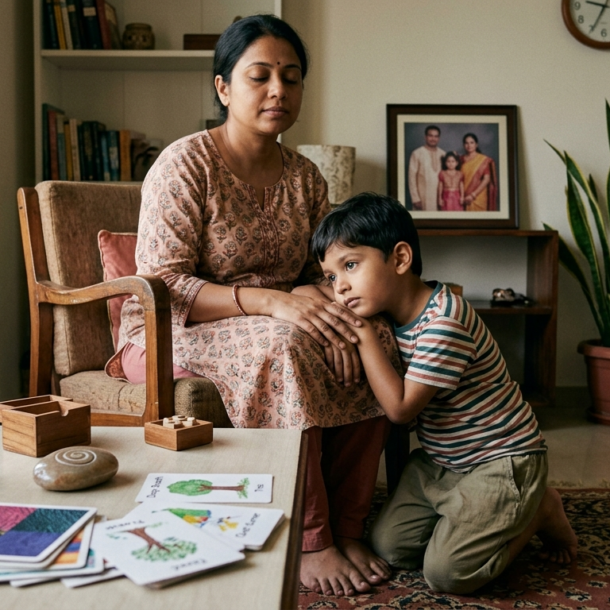

The new school year brings excitement for children—and a surprisingly long to-do list for parents! 🎒
From uniforms and notebooks to lunch boxes, school transport, sleep routines and helping your child settle back into school life, the days before school reopens can get busy very quickly.
But there is one thing that often gets missed in a back-to-school checklist for parents:
Preparing the child—not just preparing the school bag.
For children from Nursery to Class 5, the transition back to school is also an opportunity to rebuild routines, encourage independence, understand their learning needs and start the academic year on the right note.
Here is a practical back-to-school checklist for parents to help you prepare without unnecessary stress.
Before the first day, check your child’s school requirements carefully.
☐ School uniform
☐ School shoes and socks
☐ ID card
☐ School bag
☐ Notebooks and textbooks
☐ Pencil box
☐ Pencils, erasers and sharpeners
☐ Colour pencils/crayons
☐ Water bottle
☐ Lunch box
☐ Raincoat/umbrella, depending on the season
☐ Art and craft supplies, if required
Parent tip: Don’t buy everything blindly. Schools often provide a specific book, stationery or uniform list. Keep that list handy and tick items off one by one.
This small step can save you from a lot of unnecessary searching later.
Put your child’s name or identification label on:
For younger children, use labels they can easily recognize.
Your child doesn’t need an expensive study room.
What they need is a simple, consistent place where they know it’s time to study.
Try to keep the study area:
✔️ Well-lit
✔️ Comfortable
✔️ Away from television
✔️ Away from unnecessary toys
✔️ Free from constant phone notifications
For Nursery and primary-school children, don’t expect long hours of sitting at the desk.
Short, focused learning sessions are often much more practical.
One of the biggest mistakes parents make is trying to change the child’s sleep schedule the night before school starts.
If your child has been sleeping late during the holidays, gradually move bedtime and wake-up time earlier in the days leading up to school.
A consistent sleep routine can make those first few school mornings much easier.
And remember:
A sleepy child isn’t necessarily a lazy child.
Sometimes they simply haven’t adjusted to the routine yet.
Children are more likely to eat food they are familiar with.
Before school starts, discuss lunch and snack options with your child.
Depending on your child’s preferences and your family’s routine, consider simple options such as:
Keep hydration in mind too, especially during warmer months.
The goal isn’t to create a “perfect” lunch box every day.
Consistency is more important than perfection.
If your child uses a school bus, van or private transport, make sure they know:
☐ Pick-up/drop-off location
☐ Approximate travel routine
☐ Emergency contact details
☐ Who is authorized to pick them up
For younger children, practice the routine once or twice before school begins.
This can reduce first-day anxiety considerably.
Children in Nursery to Class 5 are still developing everyday habits.
Remind them about:
🧴 Hand washing
💧 Drinking water regularly
🧻 Using the washroom independently, where age-appropriate
🪥 Brushing teeth
🤧 Covering coughs and sneezes
🎒 Keeping their belongings organized
Don’t turn this into a lecture.
Make it part of their daily routine.
This is the part of the checklist parents often overlook.
After a long break, your child may feel:
All of these reactions can be normal.
Instead of saying:
“You must behave properly from the first day.”
Try asking:
“What are you most excited about?”
or
“Is there anything about going back to school that you’re worried about?”
Sometimes a five-minute conversation can tell you more than a long lecture.
Yes, children should remain connected with learning.
But Nursery–Class 5 children also need:
You can encourage simple learning through:
📖 Storybooks
🧩 Puzzles
🎨 Drawing
🔢 Everyday counting
🗣️ Conversations
🌱 Nature observation
Learning doesn’t always have to look like a textbook.
Here is something worth remembering before the academic year begins:
Two children can sit in the same classroom, listen to the same teacher and still learn very differently.
One child may enjoy reading.
Another may understand better through pictures.
Another may learn more effectively through activities and hands-on experiences.
Instead of immediately assuming:
“My child is not interested in studies.”
first ask:
“Does my child learn best in the way I am teaching?”
This shift in thinking can make a significant difference to your parenting approach.
This deserves a separate place on every parent’s back-to-school checklist.
Avoid statements like:
❌ “Look at your cousin.”
❌ “Your friend scores better than you.”
❌ “Why can’t you concentrate like her?”
Comparison may create pressure, but it doesn’t necessarily create motivation.
Instead, compare your child’s progress with their own previous performance.
Ask:
“What can we improve this term?”
rather than:
“Who scored more than you?”
Nursery to Class 5 is a wonderful period for children to gradually become more independent.
Depending on their age, encourage them to:
✔️ Pack their school bag
✔️ Keep shoes in the right place
✔️ Organize stationery
✔️ Prepare their uniform
✔️ Keep their water bottle ready
✔️ Check their homework
You may have to supervise initially.
That’s okay.
The objective isn’t to make them completely independent overnight.
The objective is to slowly make them responsible.
During holidays, screen habits can easily become relaxed.
Don’t wait until the first school morning to suddenly remove everything.
Instead, start bringing back predictable boundaries.
For example:
Study → Play → Screen → Dinner → Family time → Sleep
The exact routine will differ from family to family.
What matters most is that your child knows what to expect.
You don’t need a complicated timetable.
For primary-school children, a basic routine could include:
School → Rest → Snack → Play → Study/Reading → Family Time → Dinner → Sleep
Keep some flexibility.
Children aren’t machines, and every day won’t go according to plan.
A routine should support your child—not control every minute of their day.
As parents, it’s natural to look at report cards.
But don’t let marks become the only measure of your child’s progress.
During the new academic year, also observe:
These observations can become extremely valuable when making future academic and career decisions.
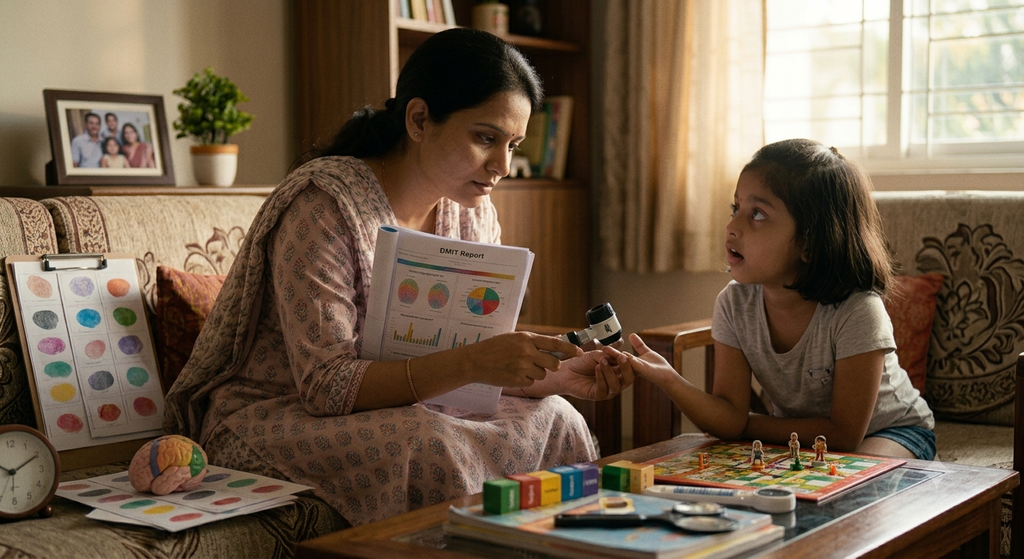
This is where a DMIT consultation can become an additional tool for parents who want deeper insight into their child’s individual strengths and learning preferences.
A DMIT (Dermatoglyphics Multiple Intelligence Test) is commonly presented as a fingerprint-based assessment intended to provide insights into areas such as learning preferences, multiple-intelligence profiles and personality-related characteristics.
However, parents should use DMIT as a guidance and self-understanding tool—not as a guaranteed predictor of a child’s future or a substitute for professional psychological assessment.
The most useful approach is to combine any assessment with:
✔️ Your child’s interests
✔️ School observations
✔️ Academic performance
✔️ Behavioural observations
✔️ Conversations with your child
The purpose should always be to understand the child better—not to put a label on them.
A new academic year is more than buying a new uniform and filling a school bag.
It is a fresh opportunity to ask:
“What does my child need from me this year?”
Maybe they need more confidence.
Maybe they need better routines.
Maybe they need more independence.
Maybe they need help discovering what they are naturally good at.
And sometimes, they simply need parents who listen a little more and compare a little less.
That is the kind of preparation that can make a difference throughout the school year.
If you’re a parent looking for deeper insight into your child’s natural strengths, learning preferences and individual potential, a professionally guided DMIT consultation can be a useful starting point for a broader parenting and development conversation.
At SH Development Academy, consultations are guided by Santosh Hariharan — DMIT Consultant, Parent & Career Coach and Student Success Mindset Coach.
The focus isn’t simply on handing parents a report.
It’s about helping you understand the report, ask the right questions and think about practical ways to support your child.
👉 Book a DMIT Consultation:
https://docs.google.com/forms/d/e/1FAIpQLSd6-uBEr3ESzoHq2CXjkYZIr41O1eqh3ip97Lj3JbZ-6xSPA/viewform
⭐ 400+ parents and families have shared their experience with us.
Read our Google reviews:
https://share.google/ac9hkh20zcXadkJs9
📞 Call / WhatsApp: +91 8421315400 | +91 7303290862
Because preparing your child’s school bag is important—but preparing yourself to understand your child is even more important. ❤️
Success & Happiness are the two most important yet elusive things which every human being yearns to achieve in life. Real success and happiness can be savoured only when one enjoys good health and good family relations, along with a good professional career and sound financial stability.
Our Visitor


 Users Today : 17