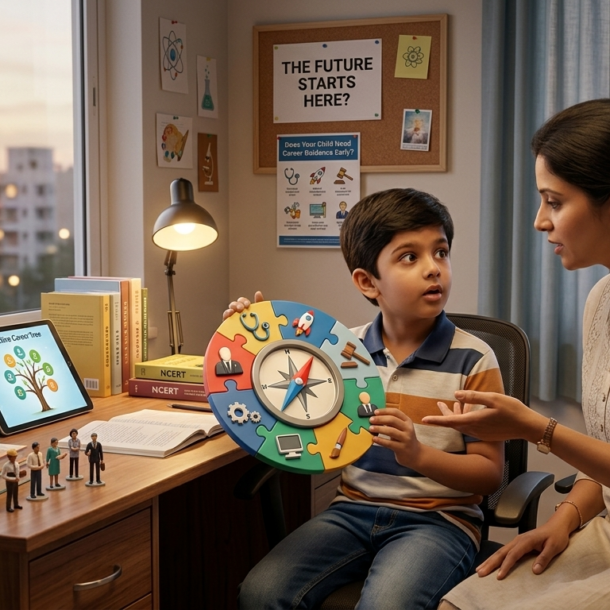

Success is often associated with intelligence, talent, education, or luck. While these factors certainly matter, one powerful element influences them all—your mindset.
Have you ever noticed how two people with similar abilities achieve completely different results in life? One sees challenges as opportunities, while the other gives up after a few setbacks. The difference usually isn’t their talent—it’s their mindset.
As a DMIT Expert, Parent & Career Coach, I’ve worked with hundreds of students and parents over the years. One lesson stands out every time: success begins in the mind before it appears in reality.
In this blog, let’s understand the true relationship between mindset and success, why mindset also determines failure, and how parents can help children develop a success-oriented mindset from an early age.

Mindset is the collection of beliefs, attitudes, and thought patterns that shape how you respond to situations, challenges, failures, and opportunities.
It influences:
In simple words, your mindset determines how you think, and your thinking ultimately shapes your actions and results.
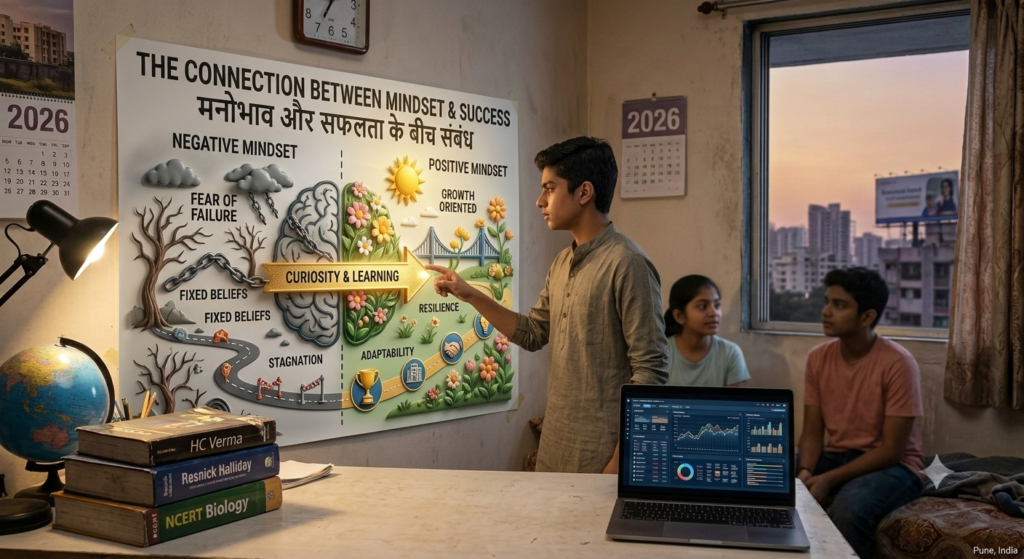
Success isn’t achieved overnight. It is built through thousands of small decisions, consistent effort, and the willingness to keep learning.
People with a positive, growth-oriented mindset generally:
On the other hand, people with a fixed mindset often believe that talent alone determines success. When faced with challenges, they may avoid risks, fear failure, or stop trying too soon.
The biggest difference isn’t intelligence—it’s perspective.
Failure rarely happens because someone lacks potential.
More often, it happens because of limiting beliefs like:
These thoughts quietly affect confidence, motivation, and performance.
Over time, they become habits—and those habits influence results.
The encouraging part is that mindset isn’t permanent. It can be developed.
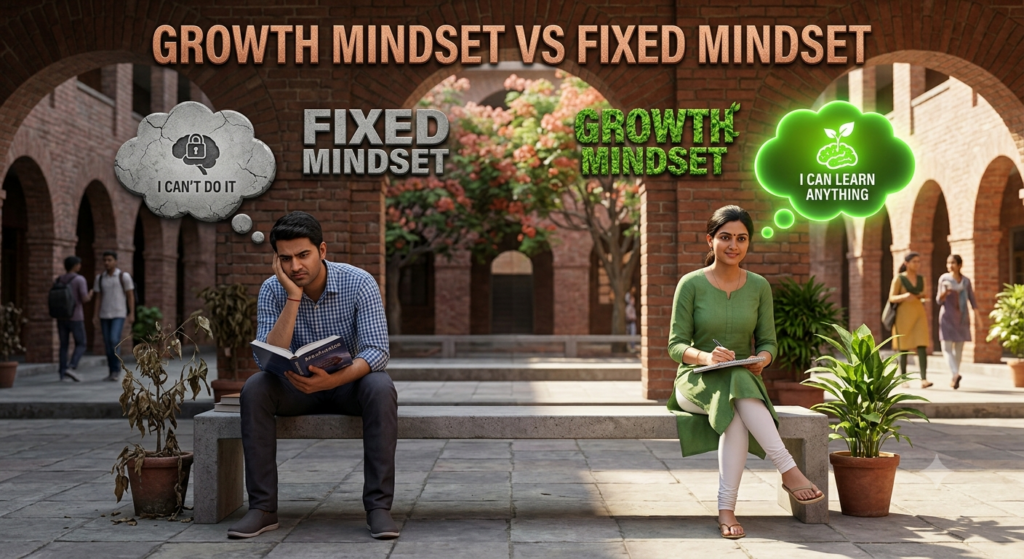
A person with a growth mindset believes:
Common thoughts include:
Someone with a fixed mindset often believes:
These beliefs can prevent people from reaching their true potential.
Many parents worry when children don’t score well in exams.
However, marks are only one indicator of performance.
A child with the right mindset can:
In today’s world, employers and universities increasingly value qualities like adaptability, problem-solving, emotional intelligence, and lifelong learning alongside academic performance.

Children aren’t born with fixed beliefs about themselves.
They develop them through daily experiences—especially at home.
Parents play a significant role in shaping mindset through:
Comparing children with others often reduces confidence.
Instead, appreciate effort, improvement, and consistency.
Instead of saying,
“You’re so intelligent.”
Try saying,
“I’m proud of the effort you put into solving that problem.”
This encourages children to value learning rather than only results.
Children who never experience failure often struggle more later in life.
Failure teaches:
Children observe far more than they listen.
Parents who embrace learning, remain positive during setbacks, and continue growing inspire similar attitudes in their children.
Absolutely.
Mindset isn’t fixed at birth.
It develops through:
Even adults can transform their mindset with conscious effort.
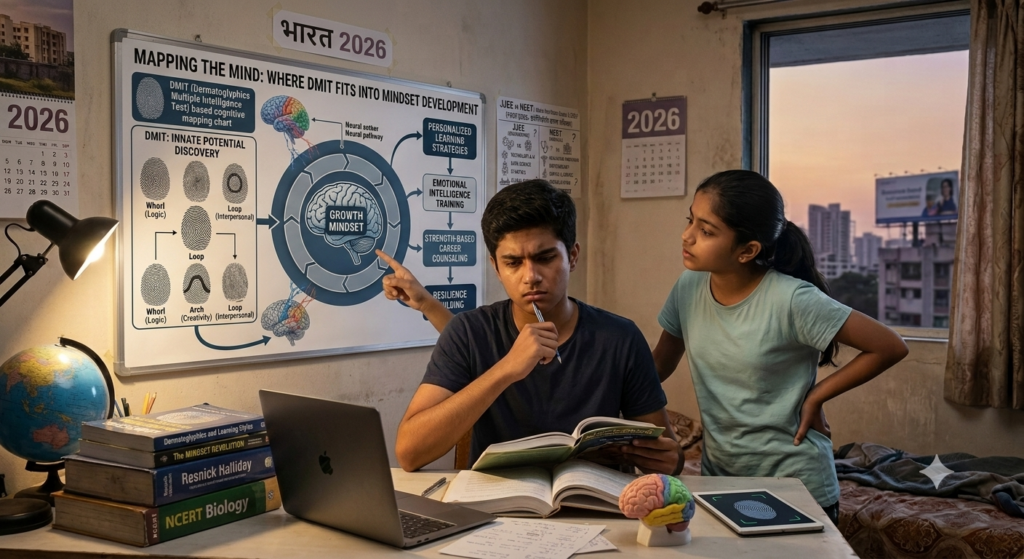
While mindset can be developed, understanding a child’s natural strengths can make that journey much smoother.
A DMIT (Dermatoglyphics Multiple Intelligence Test) doesn’t create a mindset—but it helps parents understand:
When parents understand how their child naturally learns and thinks, they can encourage growth without placing unrealistic expectations on them.
Instead of comparing children, they begin nurturing each child according to their unique potential.
That’s where meaningful confidence begins.
The most successful people aren’t those who never fail.
They’re the ones who continue learning, adapting, and improving after every setback.
Whether you’re a parent guiding your child or a student working toward your dreams, remember this:
Your mindset shapes your decisions. Your decisions shape your habits. Your habits shape your future.
Choose a mindset that helps you grow.
Mindset influences how you approach challenges, learning, setbacks, and opportunities. A positive growth mindset encourages continuous improvement, resilience, and long-term success.
Yes. Students with a growth mindset are generally more willing to learn from mistakes, seek feedback, and stay motivated during difficult subjects.
Parents can encourage effort over perfection, avoid comparisons, allow children to learn from mistakes, celebrate progress, and provide a supportive environment.
Both matter, but mindset often determines how effectively intelligence is used. A positive mindset helps individuals continue learning and adapting throughout life.
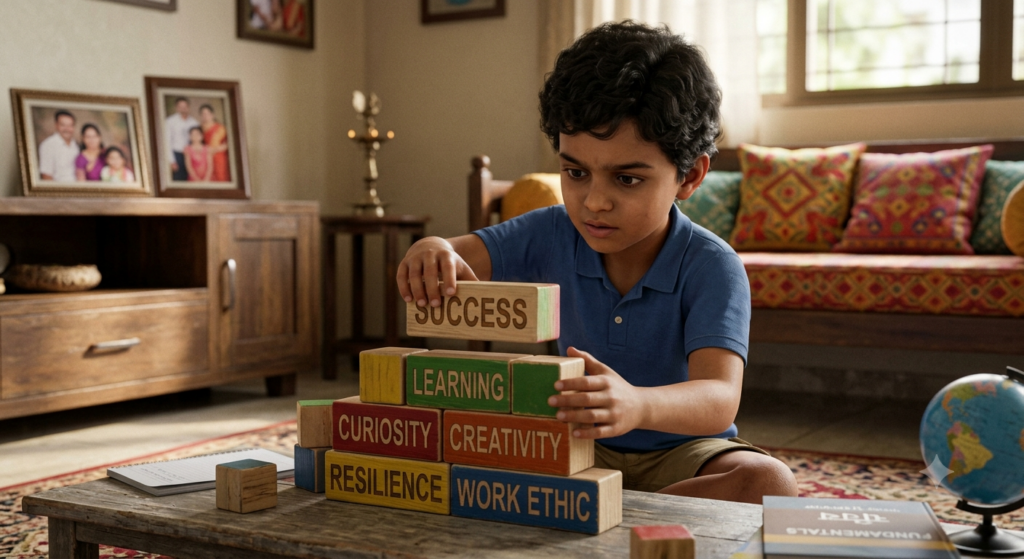
Every child has unique strengths, learning patterns, and natural abilities. Understanding them early can make parenting more effective and career guidance more meaningful.
At SH Development Academy, we help parents move beyond guesswork through professional DMIT Consultation and personalized guidance.
Your consultation is personally guided by Santosh Hariharan—DMIT Consultant, Parent & Career Coach, and Success Mindset Coach—who has helped hundreds of families understand their children’s potential and guide them with greater clarity.
👉 Book your DMIT Consultation today:
DMIT Consultation Booking Form
⭐ See why 400+ parents have trusted our guidance:
Read 400+ Google Reviews
📞 Call Us: +91 8421315400 | +91 7303290862
The greatest gift you can give your child isn’t just a good education—it’s the right mindset to make the most of every opportunity life offers.
Success & Happiness are the two most important yet elusive things which every human being yearns to achieve in life. Real success and happiness can be savoured only when one enjoys good health and good family relations, along with a good professional career and sound financial stability.
Our Visitor


 Users Today : 19