

Every child is unique. The real challenge isn’t raising a “perfect” child—it’s becoming the parent your child truly needs.
Have you ever caught yourself thinking…
“Why doesn’t my child listen to me?”
“Why is my child always distracted?”
“Am I being too strict… or too lenient?”
“Am I making the right parenting decisions?”
If your answer is yes, you’re certainly not alone.
The truth is, parenting is one of the most important responsibilities in life, yet it’s the only role we begin without any formal training or instruction manual. We spend years studying to become engineers, doctors, teachers, or managers—but when we become parents, we’re simply expected to “figure it out.”
Every child is born with a different personality, learning style, emotional needs, and natural strengths. What works beautifully for one child may not work at all for another. That’s why many parents unknowingly compare siblings, apply the same parenting style to every child, and become frustrated when the results don’t match their expectations.
In 2026, parenting has become even more challenging. Children are growing up in a digital world filled with smartphones, social media, gaming, academic competition, and constant distractions. Along with helping children score good marks, parents now have the responsibility of building emotional resilience, confidence, discipline, communication skills, and future readiness.
The good news?
You don’t need to become a perfect parent.
You simply need to become a more aware, understanding, and intentional parent.
As a DMIT Expert, Parent & Career Coach, I’ve interacted with hundreds of parents over the years. One lesson stands out every single time:
Children don’t need perfect parents. They need parents who understand them.
This guide will help you do exactly that.
Let’s begin with the most important question.
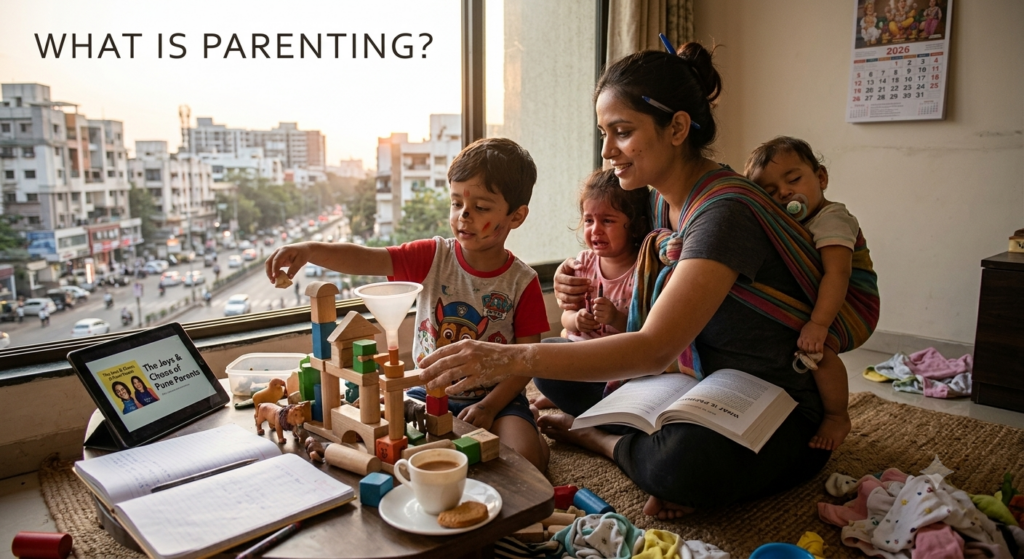
Parenting is much more than providing food, education, and financial security.
Parenting is the lifelong process of guiding a child towards becoming an independent, responsible, emotionally healthy, and confident individual while maintaining a strong emotional connection with them.
Good parenting is not about controlling your child.
It’s about coaching them.
It’s about helping them discover who they are rather than deciding who they should become.
Modern parenting is built on three important pillars:
When these three work together, children feel both safe and empowered.
Unfortunately, many parents unknowingly focus only on one side.
Some parents provide unlimited freedom but very little discipline.
Others enforce strict discipline but rarely express affection or appreciation.
Healthy parenting requires balance.
Children need to know:
“My parents love me no matter what… but they also expect me to be responsible.”
That balance creates emotionally secure children.
Many parents tell me,
“Our parents raised us without reading parenting books. Why is parenting so difficult today?”
The answer is simple.
Today’s children are growing up in a completely different environment.
Today’s parents must deal with:
Children today are exposed to more information before the age of 15 than previous generations experienced in their early adulthood.
That changes how they think, learn, communicate, and behave.
This is why traditional parenting methods don’t always work anymore.
Parents must evolve too.

One of the biggest mistakes parents make is comparing children.
“Your cousin scores higher than you.”
“Your sister studies without complaining.”
“When I was your age…”
Comparison may temporarily change behaviour, but it slowly damages confidence.
Here’s something every parent should remember:
One child may be naturally analytical.
Another may be artistic.
Another may be a born leader.
Another may learn best through movement and practical activities.
The goal of parenting isn’t to make every child the same.
The goal is to help every child become the best version of themselves.
This understanding changes everything.
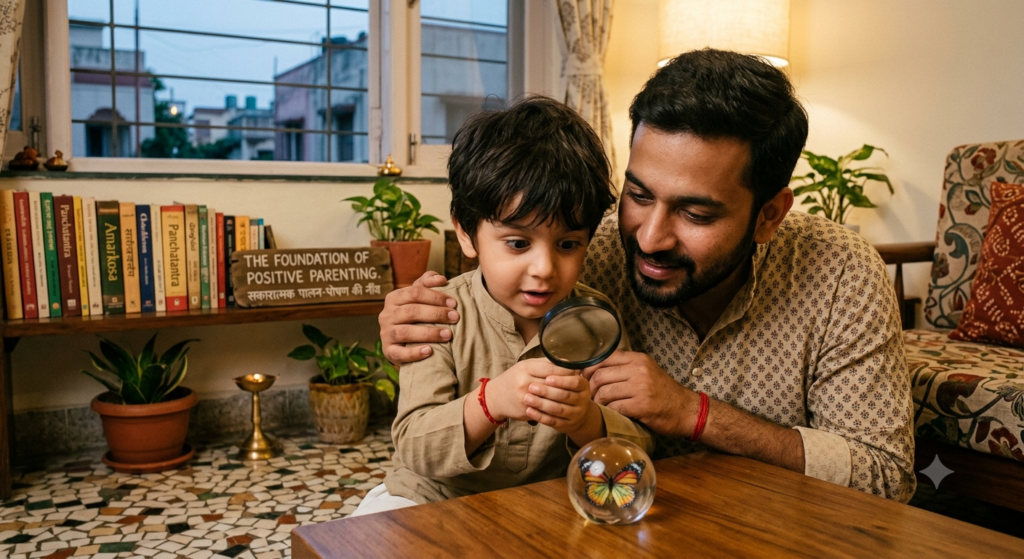
Positive parenting doesn’t mean saying “yes” to everything.
It means creating an environment where children feel:
Children who feel emotionally secure are more likely to:
✔ Develop confidence
✔ Handle failures positively
✔ Build stronger relationships
✔ Make better decisions
✔ Become independent adults
Positive parenting is not about raising obedient children.
It’s about raising capable human beings.
Parenting is not about being perfect.
It’s about being consistent, emotionally available, and willing to learn alongside your child.
After working with hundreds of parents through DMIT consultations and career guidance sessions, I’ve realized something interesting:
Most parents genuinely love their children.
But love alone isn’t enough.
Children also need guidance, structure, understanding, and trust.
Here are five parenting principles that can make a remarkable difference in your child’s growth.
Every child wants to know one thing:
“Will my parents still love me if I make mistakes?”
When children feel loved only when they score good marks or behave perfectly, they slowly begin to connect their self-worth with their achievements.
This creates fear.
Fear of failure.
Fear of disappointing parents.
Fear of trying new things.
Instead, help your child understand:
“I may not always like your behaviour, but I will always love you.”
That one sentence builds emotional security.
Children who feel emotionally secure are more likely to:
✔ Try new things
✔ Learn from failures
✔ Build confidence
✔ Communicate openly
Remember…
Correct the behaviour.
Never reject the child.
Many parents think discipline means punishment.
It doesn’t.
Discipline simply means teaching children how to make better choices.
Children actually feel safer when they know:
Create simple family rules such as:
✅ Homework before screen time
✅ Family dinner without mobiles
✅ Respect everyone at home
✅ Sleep on time
The important part isn’t making dozens of rules.
It’s following them consistently.
Children quickly notice when parents change rules depending on their mood.
Consistency builds trust.
One of the biggest parenting mistakes is assuming we already know what our child is thinking.
Sometimes children don’t need advice.
They simply want someone who listens.
Instead of immediately saying,
“You should have…”
Try asking,
“Tell me what happened.”
Instead of correcting,
Try understanding.
When children feel heard, they become more willing to accept guidance.
Strong communication always begins with listening.
Children learn far more from what they see than from what they hear.
If parents shout while asking children to stay calm…
Children learn shouting.
If parents spend hours on mobile phones while telling children to reduce screen time…
Children notice the contradiction.
If parents apologise after making mistakes…
Children learn humility.
If parents read books…
Children become curious readers.
The truth is:
Your daily behaviour is your child’s biggest classroom.
Before asking,
“Why is my child behaving like this?”
Ask yourself,
“What is my child observing every day?”
Children imitate before they understand.
Many parents unknowingly do everything for their children because they want to protect them.
But protection should never stop growth.
Allow your child to:
These small responsibilities teach:
✔ Confidence
✔ Accountability
✔ Decision-making
✔ Problem-solving
Children become capable adults only when they are given opportunities to practice responsibility.
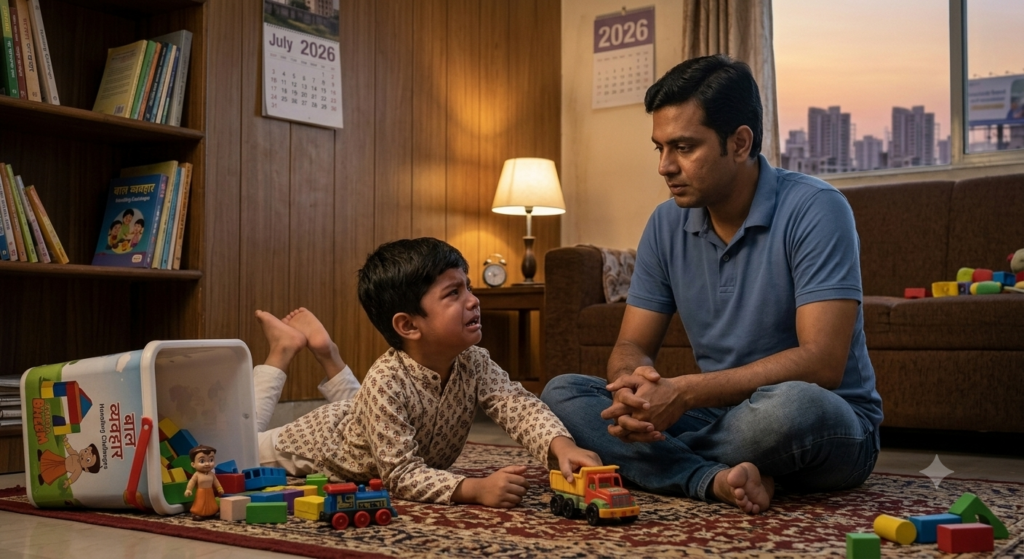
Almost every parent asks this question sooner or later.
“My child doesn’t listen. What should I do?”
The first step is to understand that every behaviour is a form of communication.
Instead of asking,
“How do I stop this behaviour?”
Ask,
“What is my child trying to tell me?”
A child who is constantly angry may actually feel unheard.
A child who refuses to study may be overwhelmed, anxious, or struggling with a learning style that isn’t being supported.
A child who spends hours on a mobile phone may simply be looking for stimulation or connection.
When you understand the reason behind the behaviour, finding a solution becomes much easier.
This is one of the most powerful parenting lessons I share with parents.
Children are far more likely to listen to people they feel connected with.
Spend time together without giving instructions.
Talk during dinner.
Go for a walk.
Play a game.
Ask about their day.
Sometimes a 20-minute conversation builds more trust than a two-hour lecture.
Children don’t remember every rule.
But they always remember how their parents made them feel.
Imagine two children.
One scores 95%.
Another improves from 50% to 75%.
Which child deserves appreciation?
Both.
Unfortunately, many parents celebrate only high marks.
But growth deserves appreciation too.
Instead of saying,
“You’re so smart.”
Try saying,
“I’m proud of how consistently you worked.”
This teaches children that success comes from effort—not luck or talent alone.
Children who are praised for effort become more resilient when facing challenges.
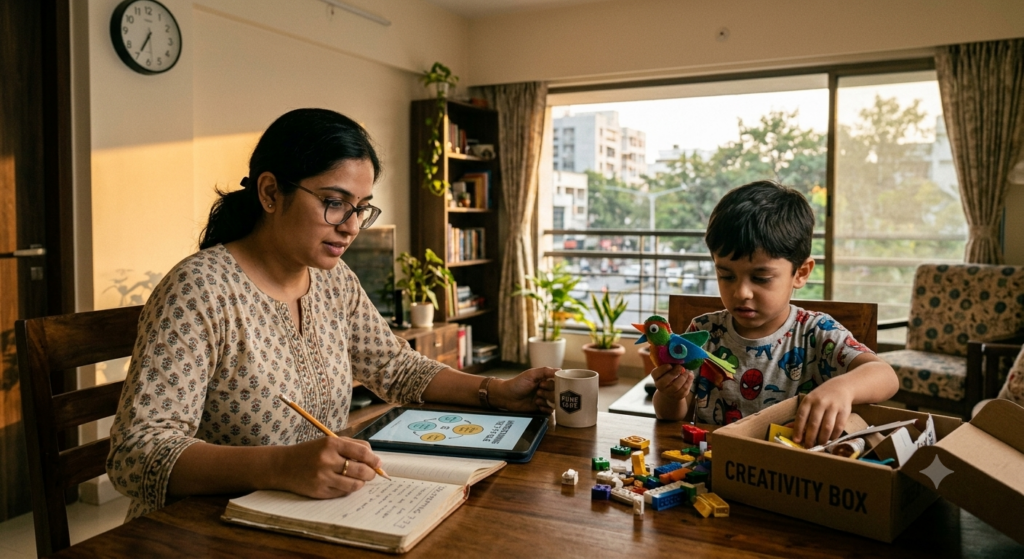
You may have heard parents discussing the 7-7-7 Rule.
While there are different interpretations, one popular parenting framework explains that a child’s needs evolve significantly in three stages:
This is the age of emotional security.
Children need:
The stronger the bond during these years, the stronger the emotional foundation for life.
During these years, children begin developing:
This is the best time to teach life skills—not just academic skills.
Teenagers don’t want constant control.
They want trusted guidance.
Parents should gradually shift from giving orders to having meaningful conversations.
Support them in making informed decisions while allowing them to develop independence and accountability.
This is perhaps the biggest lesson I’ve learned as a DMIT Consultant and Parent Coach.
No two children are exactly alike.
Some children learn by seeing.
Some learn by listening.
Some need practical experiences.
Some require frequent encouragement.
Others prefer independence.
When parents understand their child’s natural personality, learning style, and strengths, parenting becomes much less stressful—and far more effective.
That’s why understanding your child is often more valuable than trying to control them.
If there’s one lesson I’ve learned after counselling hundreds of parents over the years, it’s this:
Children don’t need parents who know everything. They need parents who are willing to understand them.
Most parenting struggles don’t happen because parents don’t love their children.
They happen because parents misunderstand them.
A quiet child is often called shy.
An energetic child is labelled naughty.
A curious child is told they ask too many questions.
A creative child is criticized for not being “serious enough.”
The reality?
Many behaviours that worry parents are simply expressions of a child’s natural personality.
When parents begin to understand how their child naturally thinks, learns, communicates, and reacts, parenting becomes less about correcting and more about guiding.
And that’s where a deeper understanding of your child makes all the difference.
Imagine visiting a doctor.
Would the doctor give the same medicine to every patient?
Of course not.
Because every person is different.
Then why do we expect one parenting style to work for every child?
Some children respond well to encouragement.
Some need more structure.
Some require emotional reassurance.
Others thrive when given independence.
As parents, our role is not to change our child’s personality.
Our role is to understand it and help them grow.
This is one of the biggest reasons why many families experience unnecessary conflict.
Parents often try to parent according to what worked for them—not according to what their child actually needs.

One of the most common things parents tell me after a DMIT consultation is:
“I wish I had understood my child this way much earlier.”
A professionally interpreted DMIT (Dermatoglyphics Multiple Intelligence Test) is not about predicting your child’s future.
It is not a magic solution.
Instead, it provides valuable insights into your child’s natural tendencies, helping parents make more informed decisions.
A DMIT report may help parents understand:
Does your child learn best by:
Understanding this can make studying more effective and less stressful.
Every child has unique gifts.
Some naturally excel in:
Recognizing these strengths early allows parents to nurture them instead of overlooking them.
Some children are naturally:
When parents understand these traits, they stop trying to “fix” their child and begin supporting them in healthier ways.
Every child also has areas that need development.
Knowing these early helps parents provide guidance instead of criticism.
This creates confidence rather than fear.
Even the most loving parents can unknowingly make mistakes.
The good news?
Most of these can be corrected with awareness.
Comparison doesn’t inspire growth.
It often creates insecurity.
Celebrate your child’s progress—not someone else’s achievements.
Children will make mistakes.
That’s how they learn.
Instead of asking,
“Why did you fail?”
Ask,
“What did you learn?”
When parents solve every challenge, children miss the opportunity to develop resilience.
Guide them.
Don’t rescue them from every difficulty.
If every conversation begins with:
“Did you finish your homework?”
or
“Why are your marks low?”
children may begin avoiding conversations altogether.
Talk about their hobbies.
Their dreams.
Their friendships.
Their thoughts.
Strong relationships are built through everyday conversations—not only during difficult moments.
Academic success is important.
But emotional health is equally important.
A confident child often performs better than an anxious child.
Create a home where children feel safe expressing their emotions without fear of judgment.
There is no such thing as a perfect parent.
Every parent makes mistakes.
Every child teaches us something new.
The goal is not perfection.
The goal is progress.
Some days you’ll get everything right.
Some days you won’t.
That’s okay.
Children don’t remember every mistake you made.
They remember whether they felt loved, understood, and supported.
And those memories shape the adults they become.
The five most effective positive parenting practices are:
The 7-7-7 approach suggests adapting your parenting style as your child grows:
Instead of reacting immediately, first understand what the behaviour is communicating.
Stay calm, actively listen, set consistent boundaries, reinforce positive behaviour, and maintain a strong emotional connection. Children respond better to guidance than to fear.
A better parent is someone who continues to learn, listens without judgment, understands their child’s unique personality, and creates an environment where the child feels safe, respected, and encouraged to grow.
Parenting isn’t about raising a child who gets the highest marks.
It’s about raising a child who is confident enough to face challenges, kind enough to build healthy relationships, responsible enough to make good decisions, and resilient enough to keep moving forward after failures.
Your child doesn’t need a perfect parent.
They need you—at your best.
The more you understand your child’s unique personality, learning style, emotional needs, and natural strengths, the more meaningful your parenting journey becomes.
After all, every child is unique.
And every unique child deserves a parenting approach that’s equally unique.
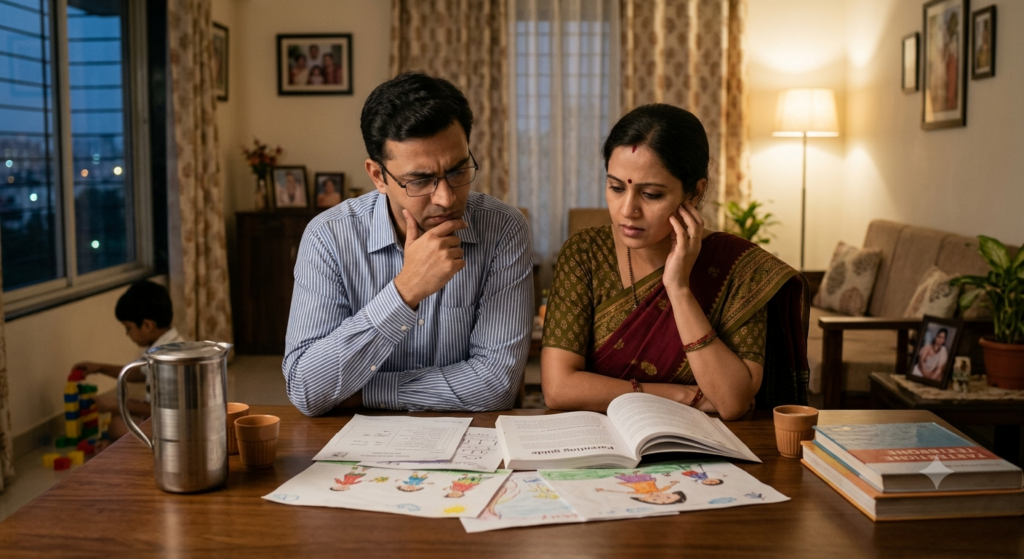
If you’ve ever wished your child came with an instruction manual, you’re not alone.
While no test can replace your love, experience, and intuition as a parent, a professionally interpreted DMIT assessment can offer valuable insights into your child’s natural learning style, personality traits, strengths, and developmental preferences. When combined with thoughtful parenting, these insights can help you guide your child with greater clarity and confidence.
At SH Development Academy, we believe parenting becomes easier when understanding replaces guesswork.
Your consultation will be personally guided by Santosh Hariharan—DMIT Consultant, Parent & Career Coach, Student Success Coach, and Certified Career Analyst—who has helped hundreds of parents make informed decisions about their child’s learning, growth, and future.
⭐ See why 400+ parents and students trust our guidance:
https://share.google/ac9hkh20zcXadkJs9
📞 Call or WhatsApp us:
+91 8421315400 | +91 7303290862
📝 Book your DMIT Consultation:
https://docs.google.com/forms/d/e/1FAIpQLSd6-u-BEr3ESzoHq2CXjkYZIr41O1eqh3ip97Lj3JbZ-6xSPA/viewform
Because the greatest gift you can give your child isn’t just a good education—it’s a parent who truly understands them. 🌱
Success & Happiness are the two most important yet elusive things which every human being yearns to achieve in life. Real success and happiness can be savoured only when one enjoys good health and good family relations, along with a good professional career and sound financial stability.
Our Visitor


 Users Today : 31