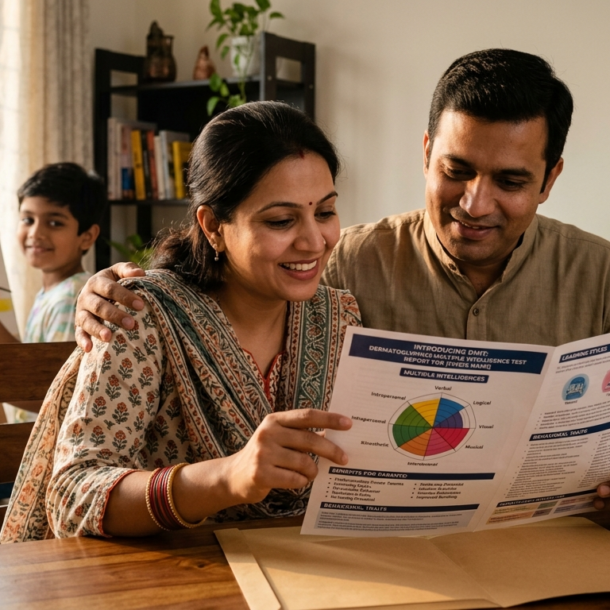

As a Parent & Career Coach, one of the most common questions I hear from parents is:
“How do I motivate my child to study?”
If you’re asking this question, you’re not alone.
Many parents struggle with children who:
The natural reaction is often to push harder.
More instructions.
More pressure.
More tuition classes.
But here’s something important I’ve learned after working with hundreds of students and parents:
Motivation cannot be forced. It must be understood and nurtured.
Before trying to motivate your child, it’s important to understand why they are not motivated in the first place.
Let’s explore what really works.
Many parents assume their child is lazy.
In reality, lack of motivation usually has deeper causes.
Some common reasons include:
Children naturally engage more with subjects they enjoy.
When they fail to see relevance or enjoyment in a subject, motivation drops.
Some children stop trying because they are afraid of making mistakes.
They may think:
Over time, fear replaces effort.
Not all children learn the same way.
Some are:
A child who learns through experience may struggle with traditional classroom methods.
This often leads to frustration and low motivation.
Ironically, too much pressure can reduce motivation.
When studying becomes associated with stress, children begin avoiding it altogether.
Let’s be honest.
Students today compete with:
Traditional study methods often struggle to compete for attention.
One mistake many parents make is waiting for their child to “feel motivated.”
Successful students don’t study only when they feel motivated.
They develop habits and discipline.
Motivation starts the journey.
Discipline keeps it going.
The goal should be helping children build consistent study habits rather than depending entirely on motivation.
Many children lose motivation because they feel they can never meet expectations.
Instead of asking:
❌ “Why didn’t you score 95%?”
Ask:
✅ “What improvement did you make this time?”
Children who feel appreciated for effort are more likely to stay motivated.
Large goals often feel overwhelming.
Instead of saying:
“Study for 3 hours.”
Try:
“Complete this chapter in 30 minutes.”
Small wins create momentum.
Momentum builds motivation.
Children are more motivated when they understand why studying matters.
Discuss:
When children see purpose, they engage more willingly.
A cluttered, noisy environment affects concentration.
Create a study space that is:
A dedicated study area sends a strong signal to the brain.
Nothing destroys motivation faster than comparison.
Avoid statements like:
Every child has different strengths and learning abilities.
Comparisons create insecurity, not motivation.
Children need encouragement.
Celebrate:
Recognition strengthens positive behavior.
Children naturally love learning.
Unfortunately, many lose that curiosity due to academic pressure.
Ask questions.
Explore topics together.
Help learning feel interesting rather than compulsory.
Many parents complain:
“My child sits to study but gets distracted within minutes.”
The issue may not be motivation.
It may be focus.
Try:
Use 25–30 minute focused study blocks.
Shorter sessions often work better than long, exhausting study marathons.
During study time:
Small changes can improve concentration significantly.
Instead of passive reading:
Active learning keeps students engaged.
Sometimes parents unknowingly reduce motivation.
Common mistakes include:
Children who hear only criticism eventually stop trying.
Not every child will become a doctor or engineer.
Success looks different for every child.
Many parents focus only on weaknesses.
Children need recognition for their natural abilities too.
What works for one child may not work for another.
Every child learns differently.
Over the years, I have observed something interesting.
Many children are not unmotivated.
They are misunderstood.
For example:
When parents understand how a child naturally learns, motivation often improves dramatically.
Imagine trying to train a fish to climb a tree.
No matter how hard the fish tries, it will feel like a failure.
The same happens when we expect every child to learn, think, and perform in exactly the same way.
The real question isn’t:
“How do I motivate my child?”
Sometimes the better question is:
“Do I truly understand my child?”
When parents understand:
they can guide children much more effectively.
Focus on encouragement, achievable goals, positive reinforcement, and helping them discover purpose in learning rather than using pressure or punishment.
Possible reasons include lack of confidence, learning difficulties, boredom, fear of failure, stress, or a mismatch between teaching methods and learning style.
Create a distraction-free environment, establish routines, use short study sessions, and identify what learning methods work best for your child.
Yes. Motivation naturally fluctuates. The key is helping children build habits, confidence, and self-awareness.

As parents, we often spend years trying to motivate our children without fully understanding how they think, learn, and grow.
What motivates one child may completely fail with another.
That’s why many parents find that the biggest breakthrough comes not from pushing harder—but from understanding their child better.
At SH Development Academy, we help parents gain deeper insights into their child’s natural strengths, learning style, personality traits, and career potential through personalized DMIT consultations and expert guidance.
Guided by Santosh Hariharan — DMIT Consultant, Parent & Career Coach, and Success Mindset Coach — our consultations help parents move from guesswork to clarity.

👉 DMIT Consultation Registration:
Book Your DMIT Consultation Here
📞 Call Us: +91 8421315400 | +91 7303290862
⭐ See what parents are saying:
Click Here to See 310+ Google Reviews
Sometimes the best way to motivate a child is not by changing the child—but by understanding them better. 🌱
Success & Happiness are the two most important yet elusive things which every human being yearns to achieve in life. Real success and happiness can be savoured only when one enjoys good health and good family relations, along with a good professional career and sound financial stability.
Our Visitor


 Users Today : 15